WHEN most people buy a home they don't usually look into the details of the property's land.
I'm not just talking about landscaping and outdoor structures, I'm talking about knowing the restrictions on the land itself: knowing what you can and can't do and knowing where you can and can't do it.
I see this happening, especially with younger couples buying their first home. They just don't know all the details and rules that come with owning a home and maintaining a property. Yes, those details are on property surveys. And yes, the realtor should have told them about it. But often people just don't hear -- especially when it might disagree with what they think.
When people check out a potential home, not only should they be looking at the house's structure, they should also be asking about the surrounding land. Does it have any culverts? Does it have rights-of-way? What about easements? And if they do, what does this mean for them as homeowners? These types of things seem minor, but they can become major problems.
Many urban and rural properties have culverts, easements or rights-of-way, but the most common are utility and drainage easements.
An easement is a section of land on your property the municipality or a utility company uses for constructing or maintaining facilities and systems. It's still part of your property, but there are restrictions on how you can use the land and surrounding area. These restrictions change, depending on the type of easement the property has. And they're automatically transferred to the next homeowner when the property is sold.
So let's say you have a gas or power line that runs under your property. The utility company that put it there should have a registered utility easement on your property that guarantees access to it. Anything that affects its safety or accessibility will be removed, including sheds, swing sets, even fences. If a utility company has to take down a fence to do utility maintenance on your property, they'll usually reset it. But if they damage a garden or need to remove trees, they don't have any obligation to replace them.
I got an email last week from a homeowner who is having problems with the land around his home. The problem is that it's eroding away. He tried to fix the problem by building a retaining wall along the inside of his fence. But now there's water pooling on his neighbour's side. What did the neighbour do? He called the city. Now the homeowner has been ordered to remove the wall and restore the land back to its original grade. What does that mean to the homeowner? A waste of money, time and materials.
In this case, the homeowner messed around with a drainage easement between his home and his neighbour's without even knowing it. Making improper changes to drainage easements and the land around them can cause damage to surrounding properties. Whenever that happens, there's the risk of getting sued by the municipality.
Most residential properties have drainage easements. Keeping them clear of debris, such as leaves and trash, is crucial for them to function properly. Even temporary obstacles can restrict the flow of water within the easement. And guess whose responsibility it is to keep them clear? The homeowner.
Drainage easements also need to have a certain slope, which, again, the homeowner is responsible for maintaining. If you the homeowner don't know what that slope is, you'll have to refer to the property's original survey drawings.
And if you don't have access to these, you will need to get a land surveyor to come to her property and survey your lot. Unfortunately, it's at the homeowner's expense and it's not cheap.
If you don't know whether your property has an easement, you need to check the certificate of title to the property. You can usually find the certificate at your city or municipality's land title/registry office. All easements, rights-of-way and culverts on a property are typically registered on that certificate.
Another option is to check the property's real property report (RPR). Its availability depends on the province and municipality you live in. But if it is available to you, get it. This document shows where all the easements, rights-of-way and culverts are located on a property.
It's a homeowner's responsibility to know the restrictions on their property's land and how it can be used. In my line of business, I've learned that it's better to be safe than sorry. You'll save money, you'll save time and you'll do it right the first time.
-- Postmedia News
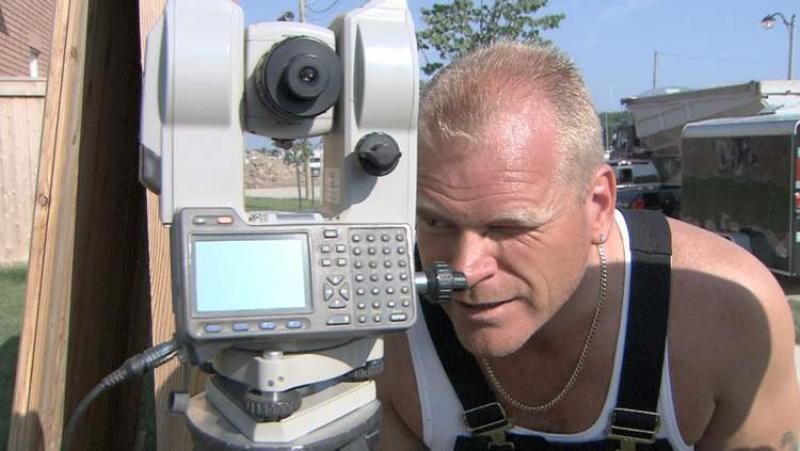
Catch Mike in his new series, Holmes Inspection, airing Thursdays at 8 p.m. ET/PT on HGTV. For more information, visit www.hgtv.ca. For more information on home renovations, visit makeitright.ca