IF you watch those design shows on TV, you'll hear people talking a lot about wish lists for a new home. More often than not, one of the items on the list is an open-concept floor plan.
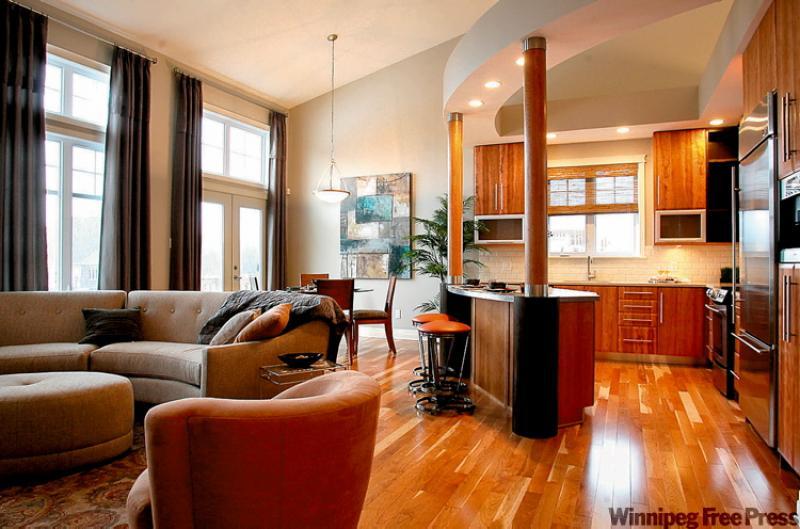
An open-concept living area is for many a modern must-have -- all the more so if they're moving into a modest urban condo where it's the only way to create a feeling of spaciousness. But you've got to pay special attention to the interior design of any open-concept area. That goes double if it's a loft, where the sleeping area is part of the mix.
Open spaces have a unique set of design problems, says interior designer Karyn Watson, explaining that the biggest challenge in a large space is defining where the living, dining and other areas will go.
The basic rule of design for any open concept, large or small, is consistency.
So when you're working with a big open space, you'll make the most of it if you follow certain guidelines.
Flooring
In a big open space, the flooring is probably the same throughout. The basic rule for defining floor spaces in a big open area is to use area rugs.
Area rugs define a space by holding a group of furniture together, says Watson.
But don't go overboard-- too many area rugs creates a busy look. Less in more: Limit yourself to one area rug, she says, and get a good one.
Colour
Judicious use of colour will help define areas and create moods. Consistency plus accents is the basic rule for colour in large open areas. Choose a really great neutral and use it for most walls.
Remember that walls in open spaces can extend a long way into other parts of the house. So before painting, follow the flow of all the walls and see where there are corners or natural breaks. If you live in a vertical space, for example, you may find one wall that extends up a floor or two and dictates colour choices in other areas of the house.
Punch things up -- and help define areas -- by adding accent walls in a different colour.
Says Watson: Using a block of accent colour behind a focal point -- for example, mirror or painting -- creates a focus which helps to define a space and break up long wall areas.
When you're thinking colour, don't just think of the walls. Remember area rugs, artwork and accessories.
Hanging artwork in groupings is another way to define areas and take advantage of the colour in the art.
Windows
The consistency rule also applies to window treatments. Whatever you use, use it all over.
Ceilings
You weren't thinking about the ceiling, were you? Yet in a big open space, the ceiling can be just an important as anything else in helping create or define areas.
Ceiling details such as coffered ceilings and bulkheads add elements that can be reflected below without dividing the space, says Watson.
Lighting
Putting a chandelier above the dining room table will define the dining area. (Don't forget to install a dimmer switch.) Use lamps and pot lights to define other areas. Watson also recommends those free-standing flexible-arm lamps to help create zones.
Furniture
Furniture groupings are key to defining areas in open spaces. Benches, desks or even screens can create transition areas, says Watson.
But open spaces, by definition, won't have as many walls as smaller rooms so you have to find furniture that looks as good from the back as it does from the front, and that can be used to separate living areas.
Sectional sofas can look great when they stick out into a room. If you don't want a sectional, create groupings where people can chat easily.
Remember to keep your style consistent: Mixing modern living room furniture and a Victorian dining room suite in one room will be jarring.
And if your space is small, consider multi-purpose furniture. One example is a coffee table that can be cranked up to dining level when needed.
-- Canwest News Service