The city fades away, replaced by something more southern, more Mediterranean, a fragrant, sun-kissed courtyard in southern Spain, say, where cicadas drone on rather than Harleys, and dinner is late, unhurried and al fresco.
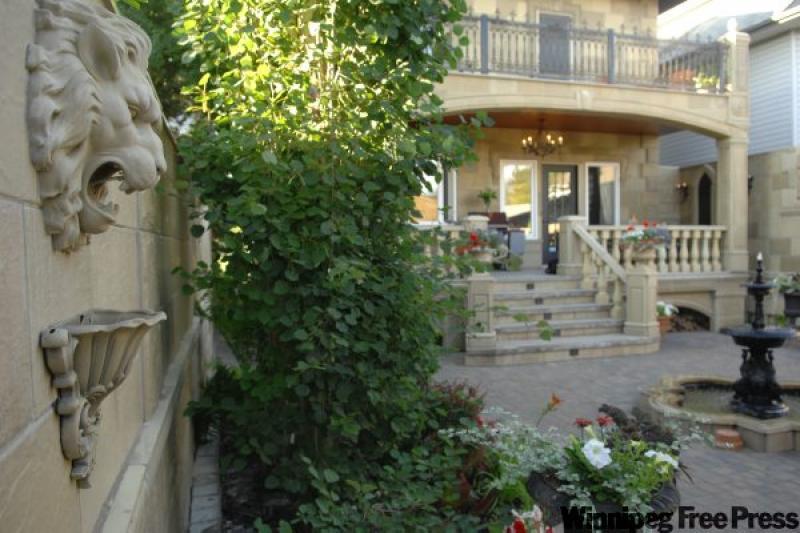
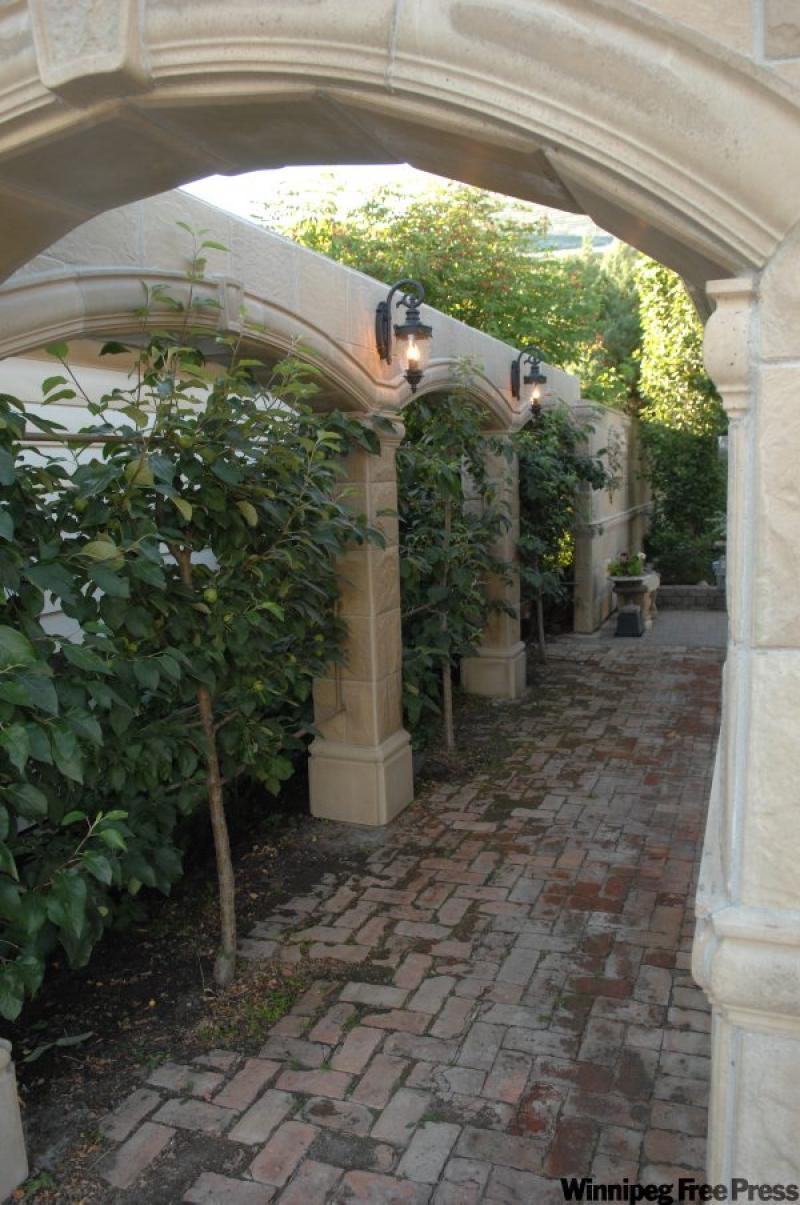
Stone-clad walls with gothic windows and cast iron details lend an almost medieval quality to the couple's backyard in Strathcona, along with an astonishing side orchard done in espalier style, the ancient gardening practice of shaping trees along one plane using trellis structures.
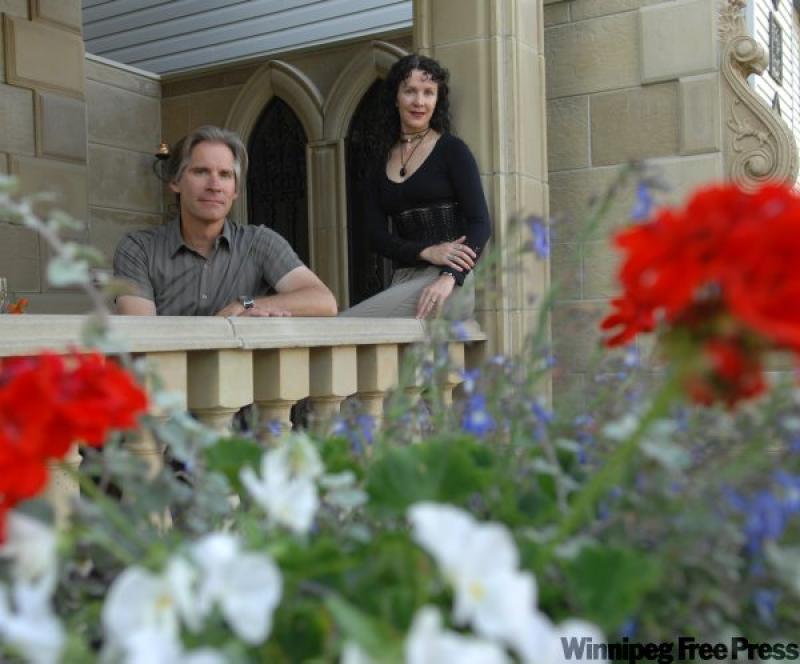
"We were very much after symmetry because it's such a small yard, almost square -- 33 feet by 30," says Annesley, an award-winning and much-collected painter of watercolours.
She and Zinger, a designer, builder travel regularly and fell in love with the courtyards of Europe and New Orleans. Here is how their own inspired riff on the style unfolded in their garden, now in its seventh year.
"We pretty much had to work from scratch," says Zinger, explaining how they bought their historic (1912) home in the late 1990s, shifted it to the back of the lot for renos, then put it back onto the foundation, leaving a graded-out backyard and a new rear garage.
"The weeds were about the size of a person," quips Annesley. "It was a jungle."
First came the hardscaping, with the cobblestone yard and the two raised planters, a start on symmetry. The idea was to choose stones in brown tones to complement the garden's lighter-coloured stone walls, and the couple opted for a mix called black and tan rather than a single hue. "To me it looks more authentically old," says Annesley. "It gives a break for the eye, some relief."
The fountain was next, to centre the symmetrical plan Zinger roughed out on computer.
"In Spain we saw a lot of the quatrefoil design, which is Moorish. I drew it out in the garage on the floor, thought, 'I like the proportions of that' and commenced building it," says Zinger, who's an amazingly handy person. "We mixed the concrete here, poured it, then the cobblestone went on top of the base of that."
Annesley found the cast aluminum fountain and had it stripped and powder-coated black rather than the original white. "It weathers in the winter and you don't have to worry about it cracking," says Zinger.
With a painter's eye -- and taking a cue from her grandmother, who was an expert gardener -- Annesley considers line, composition, texture and colour when arranging her raised beds, which are lined with plastic to retain moisture. On the west side, three Swedish aspens grow along the wall, a nod to Old World Lombardy poplars. "They're on their sixth summer and were five feet tall when I bought them," she says. "The verticality gives the space a little more depth; it feels a bit bigger because you have that third dimension."
Elsewhere, formal topiary cedars and other "structural" plants including a Diablo nine bark, dwarf cranberry, black elderberry, barberry, and a little Saskatoon bush are interspersed with lilies, tomatoes, rhubarb, petunias, impatiens and the darkest rose she could find, black baccara.
"We wanted foundation plantings to be from that dark burgundy colour family," she explains. "One of the evolutionary parts of this garden is to try to find these dark-leafed things, which go so well with the pale walls. For both of us it's been a big experiment in plants. They come and go, they die and get too big."
Four black cast iron urns emphasize the sense of Old World permanence in the garden.
"For many years I've done licorice and kale and sweet potato vine in the pots. They're silvery, black, white, and I try to get a dark red in there," Annesley says. "The beautiful thing about the licorice plant is, it'll grow to three or four feet in diameter. In the winter, we leave the urns because they look just the same as in the summer. They look like dried flower arrangements."
Along the side of the garage, the apple orchard done in espalier style is Zinger's baby. It consists of just three trees: one Norkent, one Norland and one Autumn Red, each beautifully pruned and each with its own arch, another nod, this time to the Gothic windows in the garden's walls.
"I love the idea of picking fruit off the tree, and it didn't take me long to want to plant apple trees," Zinger says. "Where do you put three trees in such a small yard? Espalier was the only way to go. I also wanted to carry on the visual length of the yard with repetitive arches, which I think do that very well. I planted them four years ago and they were quite a bit bigger until I built the (support) structure itself, then I had to chop them all back. Now I've got the poles for them to climb along, it's working pretty well. I'll trim them down hard in the fall after the season is over."
Annesley, an avid apple pie maker, notes that the espalier tradition goes back to the Middle Ages and even earlier in the Far East.
"When people had to grow their own fruit and had limited space as we do here, it's a really efficient way to grow because of the amount of light and air the fruit tree gets just by being trained along the poles."
The Zinger/Annesley garden isn't overloaded with detail, furniture or typical garden chachkas.
"We like to keep the garden quite free; if it's a nice summer night, we love to entertain, so we'll set up the dining room table down here," says Annesley, "and if it's raining we eat on the veranda."
The idea is that the architecture, the structure of the garden, carries the freight, and only a few accents are needed. "When all the plants have gone, you have the structure left, and we think it's quite beautiful to look at," says Zinger. "Because of our seasons, it's like a four-season space."
What few accents there are -- such as the classic lion's head on the wall behind one raised bed -- entice a visitor to meander through the space, he adds. "We've tried to put little details so you can go and explore rather than have everything hit you."
The Gothic windows offer lovely light and a way to communicate with fabulous neighbours, says Annesley, while Zinger notes that they "create another dimension, so your eye doesn't hit the wall."
At the same time, the mirrored windows and doors on the garage "provide the illusion of distance and depth to the yard," Zinger continues. "It really does make a difference. The doors are fake, of course, a detail very prevalent in New Orleans. We sourced the handles in Prague."
The courtyard design and hardscaping translate into a low-rather than high-maintenance yard. There's no lawn to mow; work is mainly sweeping and picking weeds, Annesley says. "Honestly, I can clean out these gardens in a day, nicely, and to put them down in the fall is another day. One thing with cobblestones is the ants; you've got to keep on top of them. Boiling water."
As Zinger installed a 300-gallon cistern beneath the veranda to hold rainwater from the roof, she finds she only has to drag out the hose and use city water once or twice a year.
Neither considers the garden finished. Annesley would like to add a couple of small beds by the stairs going to the verandah, "and then we can start growing some vines up." Zinger thinks the garden is barely out of the gate. "I see experimenting with different plants for starters. And there's stuff we'll come across and have to have it, or move things around where we think they should be. The potential of this garden has just begun."
Meanwhile, what pleases them most? For Annesley, it's the orchard. "From the inside of the house, the kitchen, you can look down and see this nice expanse of space, and at night with the lights on it's quite beautiful. And the verandah as well -- that's where we spend most of our summer."
For Zinger, it's the garden's architecture, and the feeling that it works all year round. "We can pretend we're in a different space and time because we do love to travel and we love old architecture, walking around old parts of cities is what we do when we travel. We've got our little piece of Europe here and we're happy with that. The other favourite thing is, the water in the fountain just gets rid of the sounds of the city. Tranquility is what it brings."
--Canwest News Service