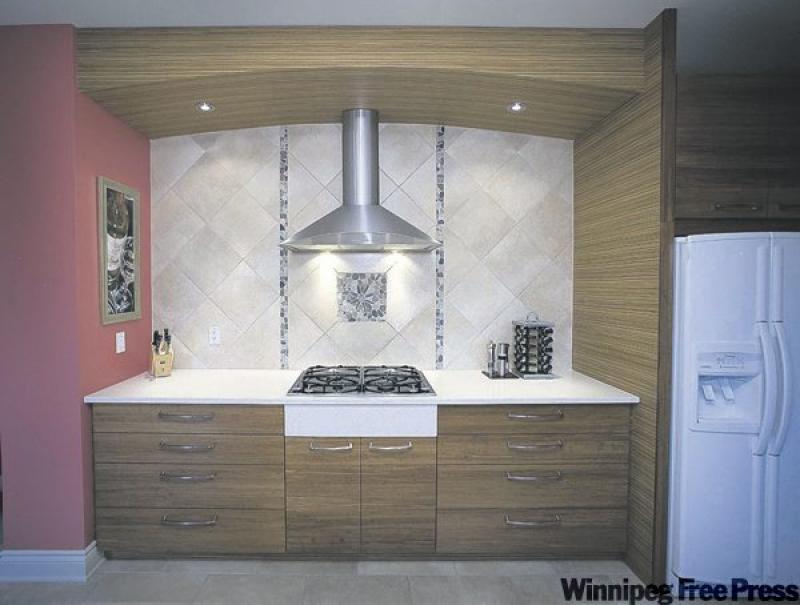
1. If you are planning to hire help for a kitchen renovation project, look for contractors who use green products and are familiar with green building techniques.
2. The refrigerator is one of the home's highest consumers of energy. Make your fridge and freezer run at their energy-efficient best and prolong their lives by cleaning the condenser once or twice a year so their motors don't have to run as long or often. Purchase approved energy efficient appliances: Once you have "green appliances" use the water and energy-saving settings on the kitchen's refrigerator and dishwasher. Tip: Keep your fridge, but make sure it is not so full that air can't circulate.
3. Inefficient cooking practices can be a huge waste of energy. Keep a lid on pots while boiling and simmering. Use the toaster oven rather than the electric oven when cooking small items, and choose a hand-held blender over a food processor whenever possible. Thaw frozen food completely to save on cooking time, and be sure to keep your oven door closed while in use. Peeking inside causes as much as 20 per cent of the heat to escape -- meaning your oven has to work hard to heat itself up again.
4. Purchase or make your own less toxic, environmentally friendly dish soaps and kitchen cleaners. Many commercial dish soaps and dishwasher detergents are made with non-biodegradable and water-polluting ingredients, such as petroleum and phosphates. To "green up" the kitchen choose a dishwashing soap that is plant-based, biodegradable, and perfume-free. Tip: Skip the bleach and other strong cleaners and replace with Household Superstars; baking soda and white vinegar (plain old soap and water is effective in killing unwanted bacteria). To get things smelling fresh, add a few drops of all-natural essential oils.
5. Going green means working with what you already have; think refresh, not necessarily remodel. New paint and updated hardware for cabinets can give you a new look without producing the landfill waste that a remodelling project generates. Most major paint manufacturers now make zero- or low-VOC paint, which means they emit fewer volatile organic compounds. VOCs are linked to health problems and are considered greenhouse gases; the fewer in your home, the better.
6. Cutting-edge cabinets. Cupboards are a major focal point in any kitchen, but many you see today contain a harmful form of formaldehyde. Shop instead for cabinets made of solid wood or wheat board, a material that's typically burned up as waste but can be a great alternative to particle board.
7. Opt for countertops made from recycled materials such as paper, hemp, glass and aluminum: these are only a few that meet the "reduce, reuse, and recycle" standard.
8. Ditch the plastic water bottles. North Americans buy more than 8 billion gallons of bottled water and some 22 billion empty plastic water bottles are thrown away each year, according to National Geographic magazine. If you really can't stand using plain old tap water, get a filter, such as Brita, and fill up a reusable neoprene bottle for your H2O to go.
9. Use reusable good quality microfiber cloth towels instead of paper towels and clean with earth-friendly water.
10. Prepare yourself, linoleum is back! Once a dated staple of the '50s linoleum is making a comeback because of its durability and the fact that it is made from natural and renewable material. Note that only real linoleum has these benefits. Note: People often confuse vinyl flooring with linoleum but it is the real linoleum that is the green choice.
11. Speaking of flooring, products manufactured from rapidly renewing forests can provide you with a beautiful, affordable, environmentally responsible and durable floor. Bamboo, cork, and eucalyptus mature in roughly half the time (or less) that it takes hardwoods, grown in colder climates, to reach market size.
12. Select metal cabinets or opt for the rustic charm of cabinets for sale at salvage shops.
13. Choose tile, granite, stainless steel, or solid wood for your countertop surfaces. Some laminates release undesirable chemicals.
14. Touchless faucets are starting to make their way into homes, with plumbing manufacturers moving to offer more design options. It's an idea that may seem strange at first, but touchless faucets are actually quite practical, especially for a children's bathroom. They are clearly beneficial in that they limit the spread of bacteria, but also save water. Consider how much water is wasted while brushing teeth. A touchless faucet ensures that water isn't running the entire time someone is brushing. Combined with a water-saving aerator, touchless faucets can save a substantial amount of water. Also, since the water is set at a specific temperature, having a touchless faucet removes the risk of a child scalding him or herself accidentally.
15. Include a recycling centre in your kitchen with bins for paper, plastics, glass, metal, and organic waste for composting, and larger bins in a garage or storage area for collection or delivery.
Solutions is compiled from various sources: renovationexperts.com, amazon.com, design.hgtv.com, ajc.com, mahalo.com, greenliving.suite101.com, greenoptions.com, kitchens.com, ecostreet.com, realtytimes.com. Similar information may be found elsewhere.
Solutions sleuth Reena Nerbas is a home economist and speaks professionally on the topic of household challenges; she is also the author of two national bestsellers, Household Solutions 1 with Substitutions and Household Solutions 2 with Kitchen Secrets. She can be heard on radio and television programs across Canada.