

The North American home-accessory industry's Academy Awards are held in February and are called, by all involved, the ARTS Awards.
And two Vancouver companies were award winners: Design Lighting, in the international retailer category, and 18 Karat, in the "decorative accessories" category.
The former is, in effect, a best-in-Canada competition; a Toronto retailer and a Vaughn, Ont. retailer were the other category finalists.
The latter is a best-in-North-America competition; three American manufacturers of decorative accessories were the other category finalists. Put another way, of the 10 manufacturing categories, one was won by a Canadian. Further, 18 Karat has won the category before, in 2004.
The ARTS Awards are organized by the Dallas Market Center -- a big "Scarborough Fair" -- and by ART, a trade association of companies active in the multibillion-dollar accessory and accent business.
Maureen Welton, co-founder and co-owner of 18 Karat, missed the awards ceremony, held in Dallas. She was at a trade show in Las Vegas before heading to this weekend's Interior Design Show in Toronto.
For someone who does 10 trade shows a year and travels 50 per cent of the time, Welton is remarkably serene.
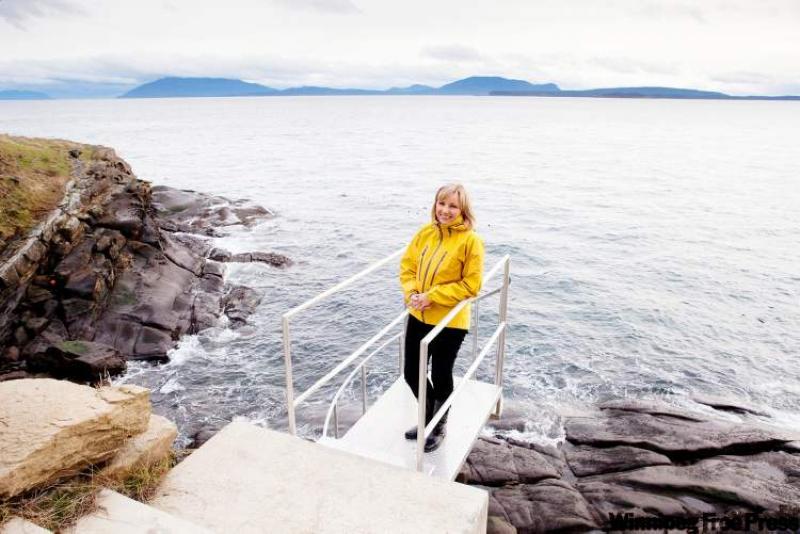
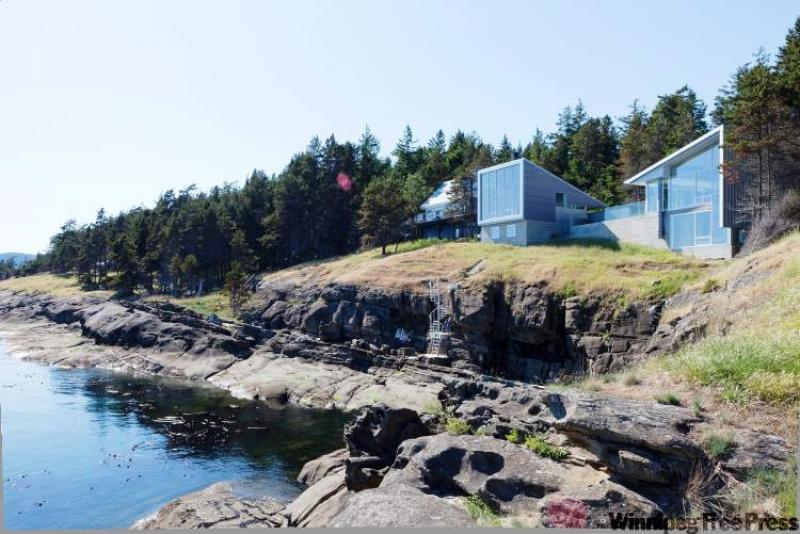
The source of her serenity is her home on Saturna Island. Although she has an apartment in Vancouver, the island home, designed by Vancouver architect Peter Cardew and finished two years ago, is where she goes to relax and recharge.
"Travelling to Asia, Europe, North Africa, India, every day I'm in a new place," Welton says. "I need a place to feel grounded -- close to the earth, by the ocean, in a forest."
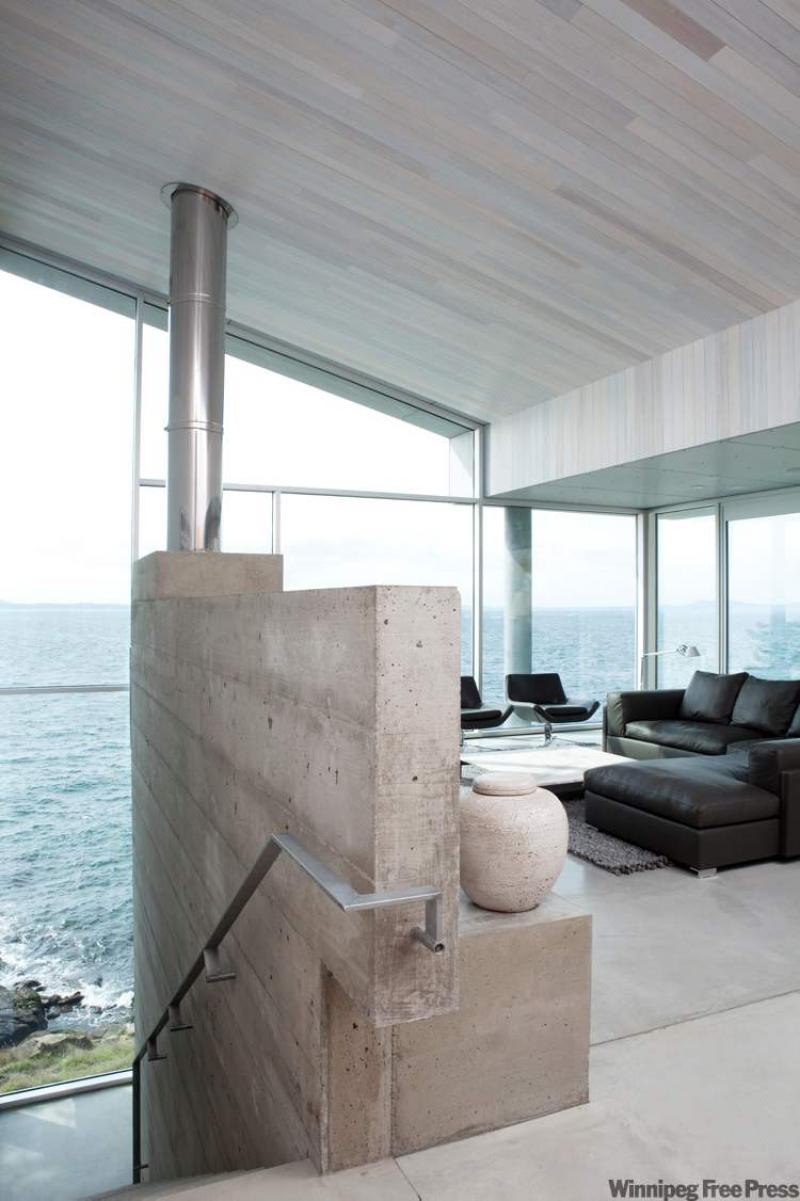
The minimalist structure of concrete, metal, glass and wood reflects the 18 Karat less-is-more philosophy of creating places that are peaceful antidotes to the hype and over-stimulation of our daily lives, plus commitment to the environment and natural, renewable materials.
All the household water is rainwater collected from the roof; heat is supplemented by wood from windfalls or construction waste; and engineers monitored the sun throughout the year so the windows could be oriented for maximum sun in the winter, but shaded in the summer.
There are two simple buildings joined by a patio: the main residence with an open living room and kitchen area up and a bedroom and bath down, and a detached studio with a kitchenette, bathroom and two bedrooms that also serves as a guest house.
Perched on a sandstone cliff, both offer soaring views of the San Juan Islands to the south and the pounding surf below. Together, they comprise less than 2,500 square feet.
"I didn't want a huge space," says Welton, "just one that felt open and went from outside to inside seamlessly." She also wanted a beautiful, carefree place by the ocean where family and kids could get together without requiring a lot of cleaning.
Colours are neutral. "I work so much with colour," says Welton, "that to create a peaceful space, there's no colour. And I spend a lot of time working with stuff, so I didn't want to deal with a lot of things. I want it to be kind of empty."
Just about everything is from 18 Karat.
Some pieces, like the Mu stools at the eating bar and low marble-topped Shi coffee table, were designed by Peter Cardew and are now sold through 18 Karat. Some are left over from photo shoots, like a bowl of pods on the concrete shelf in the living area and a huge mahogany bowl from Vietnam beside the fireplace. Since the spaces are used to shoot 18 Karat catalogues, the lack of furnishings is practical because there's less to move out of the way.
Welton's most important possessions are her books, stored in a capacious bookshelf off the kitchen, but there are few things she'd never part with. "I love beautiful things around me, but don't have to keep them. The one thing is an original photo of my great-grandparents when they married at 18. They lived till they were almost 100. They used to babysit us and left wonderful memories."
Apart from some small, colourful canvases painted by kids in the family, there is little artwork because Welton keeps changing her mind about what she wants, the house has few walls, and so much of it is about the view.
"I never get used to the view," she says. "It's always different." It includes not just the ocean, but lots of sea life: orcas, seals, sea lions and, one day, a gigantic Pacific octopus. Despite the panoramic views through the floor-to-ceiling windows, her favourite is framed in a window at the end of the long flight of stairs to the bedroom "because it's a snapshot."
The house is just 6.2 metres from the edge of the cliff. When the tide is out, Welton walks along the sandstone shelf, absorbing textures, shapes and colours for the ceramics and glassware she then sources from craftspeople and factories around the world.
"It's one of the reasons I spend time here," she says. "It's where I like to be, but also where I get my inspiration."
Tafoni, the eroded rock formations found in the Gulf Islands, inspired her not only to design a line of home furnishings and accessories, but to publish a book. In it she writes, "There's a place I go to reconnect, to reclaim myself, to be reminded of that which is constant and that which is simply transitory... that special place where we reclaim our essential self."
-- Postmedia News