QUESTION: I bought a house more than four years ago and have a monitored alarm system for security and smoke detection. The house has an existing hard-wired smoke alarm in a hallway and I would really like to have it disconnected. I have no idea how old it is and even when repair guys have been here they can't seem to figure it out to locate the power source. I would just like it removed. If it went off, I wouldn't know the first thing to do with it. I see ads for companies connecting systems but not for disconnecting them. Might you know how I could get rid of this? Thanks. Ellen Goodman
ANSWER: I have to say, it is unusual for me to receive a question about doing something to increase a health or safety risk in a home.
I will try to read between the lines and assume you are planning on replacing this unit with a new one, otherwise I would never recommend removal. There may be a way to save this unit and have it connected to a new alarm service you have chosen or use it with the buzzer only, but I will give you some guidance on removal and replacement as well.
Rather than planning to remove a device that may be perfectly functional, you should first evaluate whether it's working or not. All residential smoke detectors have a test button that can tell you whether the unit has power and is functioning. This button is normally visible on the surface of the unit and is often red or a different colour than the surrounding housing.
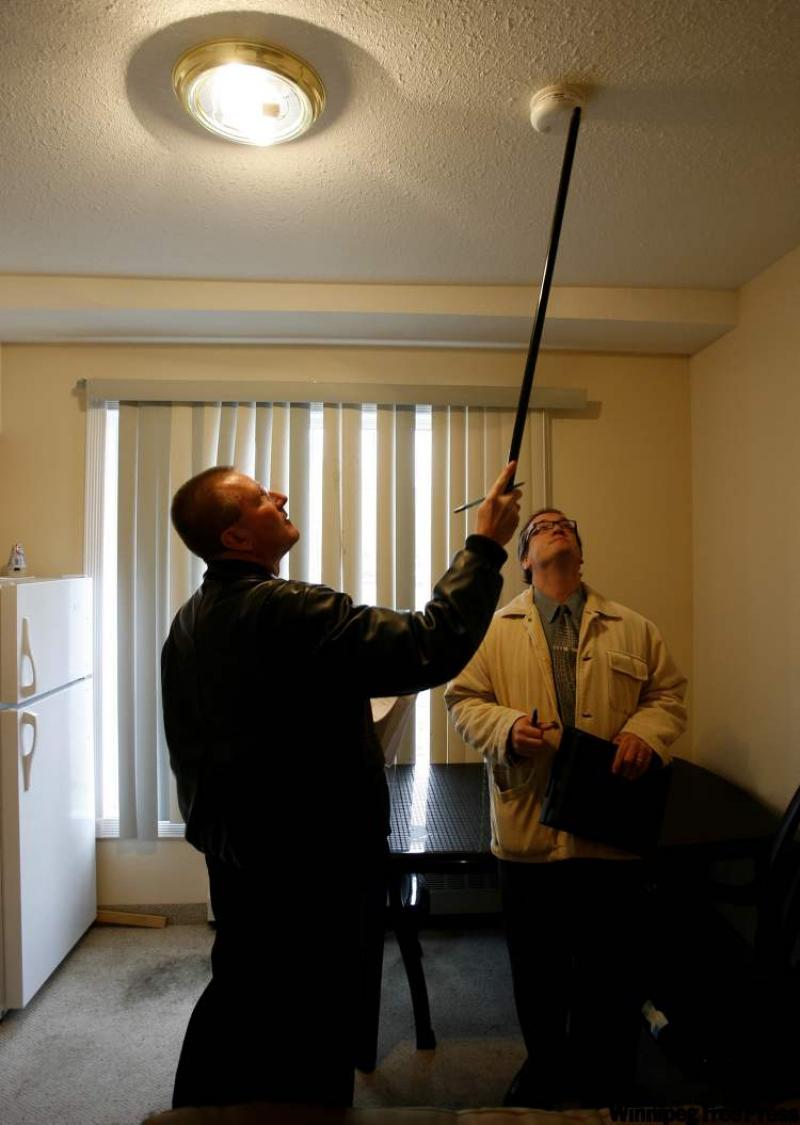
If the smoke detector is mounted on the ceiling or high up on the wall in your hallway, climb up a small ladder or stool you place under the unit and push the button firmly. You should hear a sharp sound for a few seconds. That means your smoke detector is functional and you can leave it alone.
If no sound is emitted, then the unit is disconnected from the power source or non-functional. It still may be usable if it simply has been disconnected from the power source, but you may want to replace it if you think it's older than six or seven years. Most smoke detectors have a life expectancy less than 10 years, so replacing this unit with a battery-operated version should improve your safety. These can be purchased at most department stores or home centres and can be mounted with relative ease.
If the unit does not respond to the test, it could still be connected to the power source but be broken. In that case, you should be more careful about removal. There could be a circuit breaker that is tripped or a damaged wire that is shorting out, loose or partially connected. In that case, a licensed electrician should be called to test the wiring and disconnect it from the power source before it is removed.
It's fairly straightforward to test typical house wiring with a voltage meter or circuit tester to tell the condition. I'm not sure what type of "repair guys" you have had looking at the smoke detector, but they likely did not want to fiddle with something they were unsure of.
The other possibility is the smoke detector/alarm is wired and powered with low-voltage wiring connected to your old alarm system. This wiring is quite small relative to 110-volt house wiring and may not be visible inside the device.
If you have disconnected the old alarm, or unplugged the transformer from the power source, that's likely why the unit does not seem to do anything. In that case, the current alarm company you are dealing with should be able to locate this wiring and re-connect it with their system, as long as it is compatible.
The benefits are that the monitored alarm service will be notified if the smoke detector goes off at the same time as the buzzer alert sounds in your home. That will give you additional security, as the alarm company should notify authorities or the fire department if you don't respond to their phone call upon activation of the smoke alarm.
If nobody can figure out what the current state of affairs is with this individual smoke detector and it tests there is no power feeding it, you can simply unscrew the housing from the wall or ceiling and dispose of it. Care should be taken before throwing the device out because many older units have radioactive materials inside that should be taken to a hazardous disposal facility.
If you already have additional smoke detectors on the same floor wired directly to your monitored alarm service, nothing else may be required. If you don't, I recommend calling the alarm company to install new ones or purchase new battery-operated units and install them yourself, at least one on each floor of the home. The installers that work for alarm companies should know how to test and remove defective or non-functional smoke detectors, just as they know how to put in new systems.
When in doubt, call up your current provider, ask for the service and installation department and tell them your needs. Chances are they will have the right people to do this job for you if you inquire directly.
Ari Marantz is the owner of Trained Eye Home Inspection Ltd. and the President of the Canadian Association of Home & Property Inspectors -- Manitoba (www.cahpi.mb.ca). Questions can be emailed to the address below. Ari can be reached at (204) 291-5358 or check out his website at www.trainedeye.ca.
trainedeye@iname.com