QUESTION: I'm wondering about the advantage to having the furnace fan running constantly during the heating season. I live in an older, obviously less-sealed home than newer homes. I question whether it is more expensive, electricity wise, to have the fan running. Will I save money in gas to offset the cost of electricity? Brian Boychuk
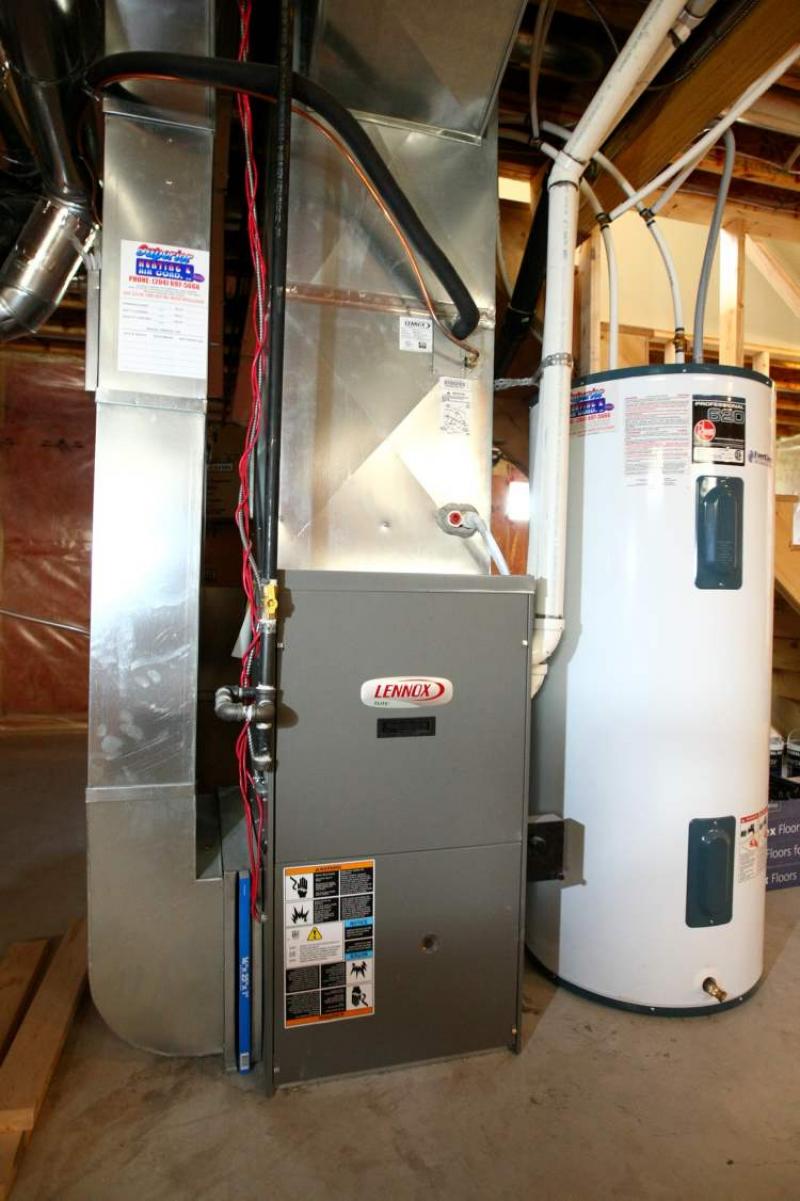
ANSWER: The purpose of running your furnace fan continuously is not normally a question of lowering your heating costs, but improving your indoor air quality. This can have several advantages, even if an economic benefit is not one of them.
It doesn't really make much sense that running your furnace fan continuously, which consumes electricity to operate, will save you money over running it only when the furnace is in a heating cycle. You will realize a slightly higher consumption rate on your Hydro bill because of this but, in my opinion, it's well worth the minimal extra expense.
While the constant movement of air through the ducts may potentially save a small amount of natural gas, it may be negligible, at best, since the heated air is more evenly distributed through your home, In other words, don't run your furnace fan all the time to save money; do it for the health of your home and its occupants.
The main benefit of having the air in your home circulated continuously through the heating ducts is to prevent areas of stale, stagnant air developing in areas away from the registers. This can most often occur on days when the outside temperature is moderate, because this is when the furnace will cycle less frequently.
On really cold or hot days, the furnace fan will operating much more often because the furnace is either firing or the air conditioner condenser is running. At these times, the air in the home will be moving more consistently and there will be less chance of damp, stale air developing in the far corners of your home. On more moderate days, the fan may only come on periodically if set on automatic, which will allow a higher chance of stagnant air developing in areas away from the registers.
Why does it matter if "stale" air pockets develop in remote areas of your home? It can cause condensation from moisture trapped within the air. If this air has moderately high relative humidity and a normal room temperature, it will have a much greater chance of condensing if it becomes stagnant, particularly along the exterior walls of the home.
These outside walls can be significantly cooler than the heated air, especially in closets or behind furniture that may prevent heat from the home warming the inside wall surface. If this temperature is below the "dew point" of the house air, the dissolved water vapour can condense on the colder wall surface. Poor air circulation will prevent quick drying and reabsorption of this moisture and damage can occur. Paint and drywall can deteriorate and allow mould growth on the wall.
In the worst cases, extreme condensation will cause the gypsum in the drywall to disintegrate and the wood studs in the walls to rot. If this occurs, significant sections may have to be cut out and replaced to preserve the structural integrity of the home. Also, mouldy drywall and framing can adversely affect the health of occupants of your home if they have respiratory problems.
The amazing thing is that a lot of these potential issues can be easily prevented by improving air circulation and keeping furniture and storage away from exterior walls and heat registers.
The final reason that continuous air circulation is a great idea is that it helps dry the air and actually absorb moisture that has already condensed on cool surfaces, especially windows. This can be a benefit in both the heating and cooling season, as air conditioning cools substantially by reducing the relative humidity in home. If air circulation is poor, the air conditioner will have to work longer and harder to make the house comfortable. In extreme cases, indoor air in homes with this issue can actually feel more "clammy" when air conditioning is used, as the moist air is intermittently circulated through the house.
This is why heat registers are always located near exterior walls, and particularly under windows, in all new homes. We want the heated or cooled air coming from the furnace to move at maximum velocity over these cooler surfaces to prevent condensation. As the air slows down and cools, it will fall to the floor and be collected into the return air registers, which should be located at the base of interior walls that are at normal room temperature. We don't want this cooler, more humid air to collect near the outside walls, or in remote locations, as there is a higher potential for condensation.
Anything that improves the quality of the indoor air in your home will make it better for the occupants and easier on your heating and cooling systems. Following the steps I've suggested, especially running your furnace fan on continuous low speed, will help in this endeavour -- even if it does nothing for your gas or electricity bill.
Ari Marantz is the owner of Trained Eye Home Inspection Ltd. and the president of the Canadian Association of Home & Property Inspectors -- Manitoba (www.cahpi.mb.ca). Questions can be e-mailed to the address below. Ari can be reached at (204) 291-5358 or check out his website at www.trainedeye.ca.
trainedeye@iname.com