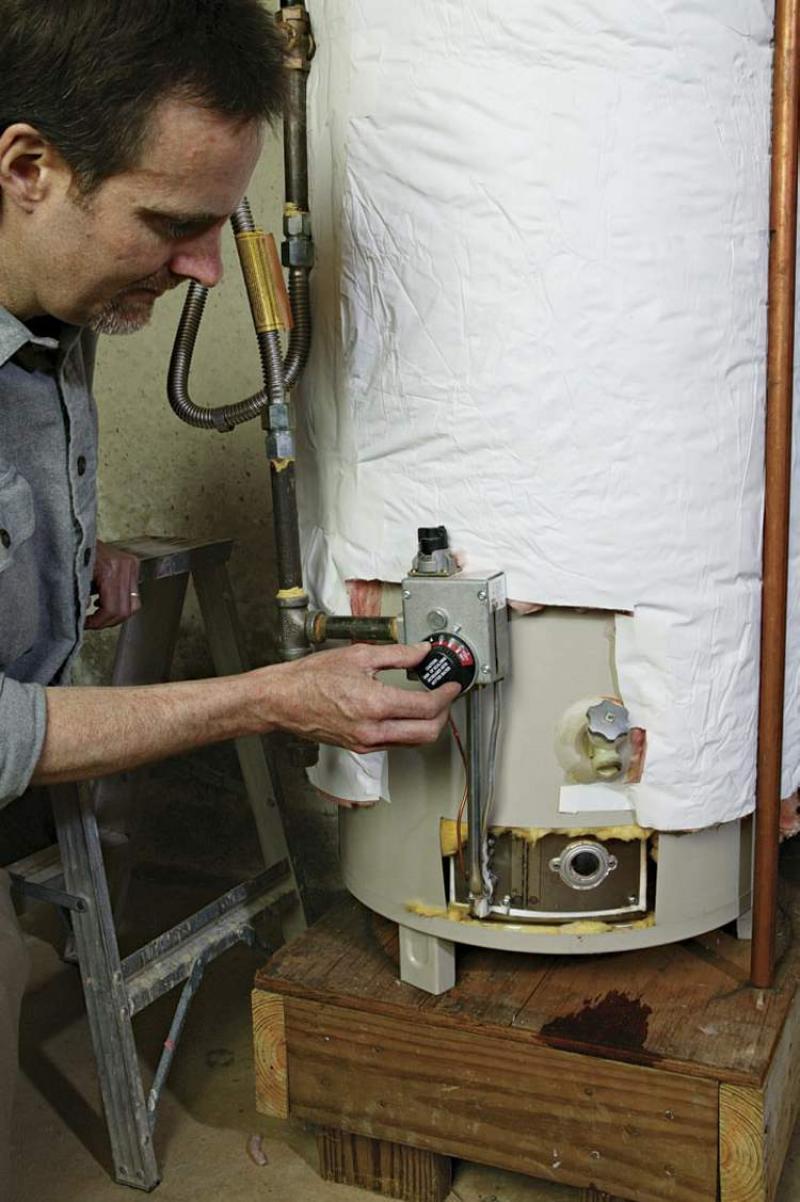
QUESTION: My question is about the chimney connection to gas water heater. I am about to replace the old gas furnace with a new high-efficiency furnace, which comes with the new narrow exhaust pipe.
At present the water heater chimney is connected to the furnace chimney. When the new furnace is installed, the old chimney will be left, with the connection to the furnace closed off, to vent the water heater only.
The furnace salesman indicated this can cause future problems like downdraft of exhaust gases from the water heater or ice formation at the top opening of the chimney. He suggested to replace the gas water heater also with an electric water heater or with a gas water heater with power vent. My original plan was to keep the old water heater. The furnace and water heater are located at the centre of the basement and only the portion of the chimney in the attic and above the roof is exposed to cold air.
My question is about keeping the old water heater, as mentioned above. Is there any chance of exhaust gases from the water heater going down into the basement? Thanks in advance.
Eapen Cherian, Winnipeg.
ANSWER: It appears to me that the furnace salesman was giving you reasonable advice about a potential safety issue related to replacing your furnace, but may have had more than your health in mind. While back-venting can become a problem after your old furnace flue is closed, it's not very likely. To replace your old water heater as a preventative measure is overreacting and is likely being suggested so additional revenue can be brought in with the furnace job.
It's quite common -- and I have written several times on this issue -- for new problems to occur in a home after an old natural draft furnace is replaced with a sealed-combustion high-efficiency one. Most of these issues are related to increased moisture and higher relative humidity within the living space, not potential back-venting of other appliances, which is a less likely consequence.
This is not likely to occur because the old flue of the furnace is closed, but due to overall tightening of the building envelope. To explain this, we must first understand the causes of this phenomenon and the natural law that air will always move from an area of high pressure to one of lower pressure.
Back-venting of gas-fired appliances or fireplaces can occur due to problems with depressurization, most commonly in the basement of a home. In easier-to-understand terms, we must first know that there are different forces that cause air to either be sucked into a building or exhausted from it. This migration of air can be due to mechanical or thermal properties inside the home, or wind and other exterior conditions outside. In a typical situation, a home should have a fairly balanced pressure gradient between inside and outside.
During the heating season, we don't want too much air being drawn in through the walls, windows, doors or fresh air ducts, but some will almost always be drawn in at various times. While this is not good for energy efficiency, it helps equalize the pressure when normal items in the home are in use.
When your old furnace fired up, it would draw a considerable amount of air from the basement, which would be drawn up the flue with the exhaust from burning the natural gas. If this was happening while your dryer was on and an exhaust fan in a bathroom or kitchen, it could cause a drop in the pressure in the home, particularly in the basement. If there wasn't sufficient air being drawn in through the building envelope to replenish this, you would have a depressurization.
In the event this extreme condition was present, air in the higher-pressure environment outside your home would be forced into the lower-pressure space any way possible. One of these ways could be through the furnace and water-heater vent/chimney. If this occurred, exhaust products from both those devices could spill back into your basement through the vent hoods designed to draw air into the flue. This is the concern posed by your furnace salesman.
Just by closing your furnace flue, you are not necessarily going to have a higher chance of depressurization, unless you're also tightening up other major areas in your building envelope. If you are replacing older windows, increasing attic or basement insulation, or upgrading the siding on the outside walls at the same time, then there may be a legitimate concern. But if you're only closing a small portion of the building envelope by partially blocking the old furnace vent, there's little additional chance of a problem.
It was more common for depressurization to occur when older furnaces were replaced with mid-efficient furnaces due to the inclusion of an exhaust fan in these types of furnaces. In that case, exhaust from the furnace was forced out through the old flue, while there may not have been any additional measures taken to bring additional fresh air into the basement or furnace to replace the exhausted air.
In almost all new high-E furnaces the combustion chamber is sealed and a fresh-air intake pipe is integrated along with the exhaust piping. When the new furnace fires, exhaust air will be mechanically removed from the unit by a fan, but a corresponding amount of fresh air will be automatically brought in to replace it through this other sealed pipe.
While this may seem a little confusing, it's a fairly straightforward concept. If your new high-E furnace has an integral fresh-air intake pipe, there's little chance of too much air being sucked out of your home to cause a major drop in pressure. Closing a portion of the old vent should not significantly change the pressure differential inside your home relative to outside, so there's little to worry about.
The best thing to do is to install a new carbon monoxide detector, rather than a water heater, which will alert you to any possible back-venting if it goes off. If the water heater is still in good condition and less than a decade old, there should be no need to replace it just because you're upgrading your furnace.
Ari Marantz is the owner of Trained Eye Home Inspection Ltd. and the president of the Canadian Association of Home & Property Inspectors -- Manitoba (www.cahpi.mb.ca). Questions can be emailed to the address below. Ari can be reached at (204) 291-5358 or check out his website at www.trainedeye.ca.
trainedeye@iname.com