QUESTION: When our house was built 38 years ago, a fairly large carport was attached to it. Throughout the years, rodents have made their home underneath the slab, creating many air pockets. I worry the slab might just cave in someday.
Is it possible to pour some material throughout that area to fill in those air pockets? I am hoping that filling these holes would at the same time either smother the rodents or chase them out. Could you please advise me as to what I should do.
Thanks, Ari, for your assistance. Raynald Lavack
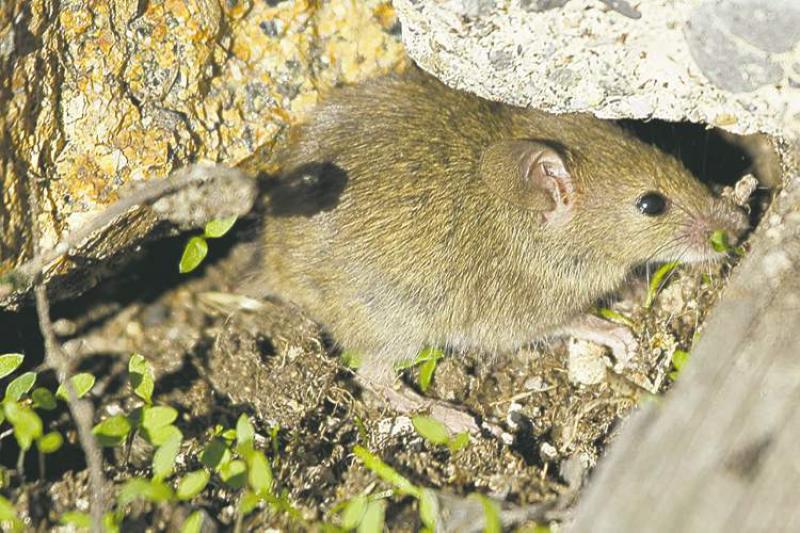
ANSWER: When I first received your email, I was amused at the thought of dangerous mice or ground squirrels creating havoc for the structural integrity of your carport. While this is not a likely scenario, filling in the voids to keep the pesky critters away is a good idea to help prevent them from becoming a constant nuisance.
Concrete slabs poured for garage floors, driveways and carports are normally a minimum of four inches thick and should be installed over a good base of compacted stone. Because of the thickness of the slab and the packed stone beneath, there is little chance small holes or voids underneath will cause any serious movement. If that were to happen, it would normally be noticeable in the first decade after the concrete was poured and would not be attributable to animal burrows.
Excessive heaving or sinking in the slab is almost always attributable to our expansive clay soil underneath. This soil can expand and contract considerably with changes in moisture content and temperature. That's why a well-packed, relatively thick layer of crushed stone is critical for prevention of major movement. This may not have been done when the carport was built, so any moderate to major cracks or settlement you see may be attributed to this. While a good base is essential before the slab is poured, maintenance of the surrounding soil can be equally important in later years.
Since the soil beneath it is the overriding support for the entire structure, preventing excessive erosion is important in maintaining a long-lasting carport. If the soil adjacent to the concrete is noticeably sinking, adding new topsoil and grass seed every few years will prevent deterioration.
I am guessing this is the reason the ground squirrels have been able to gain access so readily under the slab. If the soil and grass beside the concrete is kept in good condition, and at the same relative height as the slab, there is little chance there will be any room for the rodents. Well-watered grass will also hold the soil together to prevent damage and further pest intrusions.
For filling the current voids, anything you can pack in will work, but using granular fill will help prevent future tunnelling. Especially if you used small, crushed stone, it will be much more difficult for the squirrels to scrape away than topsoil or sand.
Using quarter-down, which contains various sizes of small stones and sand, may be your best bet. Because of the small size of this granular fill it may be easier to pack it into the small openings under your concrete slab. Also, this material may further compact if you slowly add water with a garden hose while stuffing it in the holes. As with the original material under the concrete, packing this in as tight as possible will help prevent a reoccurrence.
Following this process should always include the addition of more topsoil to bring the surrounding soil at least flush with the top of the carport. If needed, a lawn roller could be rented that would further smooth out the job after seeding.
To address your concern of structural damage caused by small squirrel holes -- I would not be overly worried. The size of those burrows would not be large enough to cause any undue damage to the slab. The only place that could possibly happen is near the edges of the concrete. If you park your vehicles right at the edge of the pad, the additional weight from the concentrated load on the tires may cause some cracking.
If the burrows are very close to the wheels of your vehicle, more haste in filling them in is warranted. This would also apply if the roof of your carport is supported directly on the corners of the concrete slab, and not on concrete piers or a grade beam. If that is the design of your structure, ensuring good soil management at the corners is essential to prevent sagging of the columns and roof.
While ground squirrels, rabbits, mice and other burrowing animals may be quite a nuisance for many homeowners, they rarely cause any serious structural damage. But filling in the small tunnels is good practice, especially if large amounts of rain or snow runoff can flow into the underground voids. While there is little chance of the small depressions creating any major shifting, they can exacerbate soil erosion that may cause deterioration to your carport slab.
As with most home-related issues, good maintenance can prevent many, many headaches later on.
Ari Marantz is the owner of Trained Eye Home Inspection Ltd. and the President of the Canadian Association of Home & Property Inspectors - Manitoba (www.cahpi.mb.ca). Questions can be emailed to the address below. Ari can be reached at (204) 291-5358 or check out his website at www.trainedeye.ca.
trainedeye@iname.com