QUESTION: On both the side and on top of the ceiling, I have frost and dripping along the wall around an area of about three to four feet. This area has one side in the living room and the other side in the kitchen. I went in the attic and there was frost on the insulation. I am not sure what the cause would be. What do you suggest about this problem? There are three little potlights on the other little wall in the angle corner, but that area is fine.
Roger Ayotte, Winnipeg
MY problem is about moisture entering my attic space and forming frost. It occurs in only one area and all my efforts to stop it are futile.
I have an 18-year-old, three-level split home. The home has a large cathedral ceiling. On the north side are the stairs to the top floor. The stairs are about two feet from the wall and there is a shelf level that runs along the stairs. The last 10 feet of the cathedral ceiling form the top attic-level space. The frost occurs at the point where the cathedral ceiling becomes the attic and just above the stairs.
Every year I get heavy frost here, and obviously I have a leaking problem with warm, moist air getting into the attic. Just above the ledge, along the stairs that form part of the ceiling, is a boxed-in section. This was done as a section on the front of the house where two bedrooms tie into the cathedral ceiling, and at the end of the ledge along the stairs is the entrance into the attic above these two rooms.
The attic space above the two bedrooms is perfectly dry.
Any suggestions would be greatly appreciated.
Troy Hoebee, Winnipeg
ANSWER: Attic frost has been exceptionally bad in our area this winter due to the warm autumn.
While both roof systems mentioned are different, they are similar in that the frost appears to be occurring only in an isolated area.
As stated in the second enquiry, the frost in your attic is due to air leakage into the attic at this location. This warm air can carry a significant amount of water vapour. When this warm air hits a much colder surface, like the cold roof sheathing or air in the attic, the moisture will condense and then freeze, forming the frost.
The solution to both problems is to stop the leakage of air into the attic or ceiling spaces above these troublesome areas, thus preventing the condensation and moisture issues.
The unusual thing about air leakage in both cases is there appears to be only one real troublesome area and the rest of the attic may be fine. This may not be the entire story, but other areas of the attics may be adequately ventilated or better sealed with air/vapour barriers or multiple coats of paint on ceiling coverings. The problem in both homes appears to be a transition area, which deviates from the remainder ceilings.
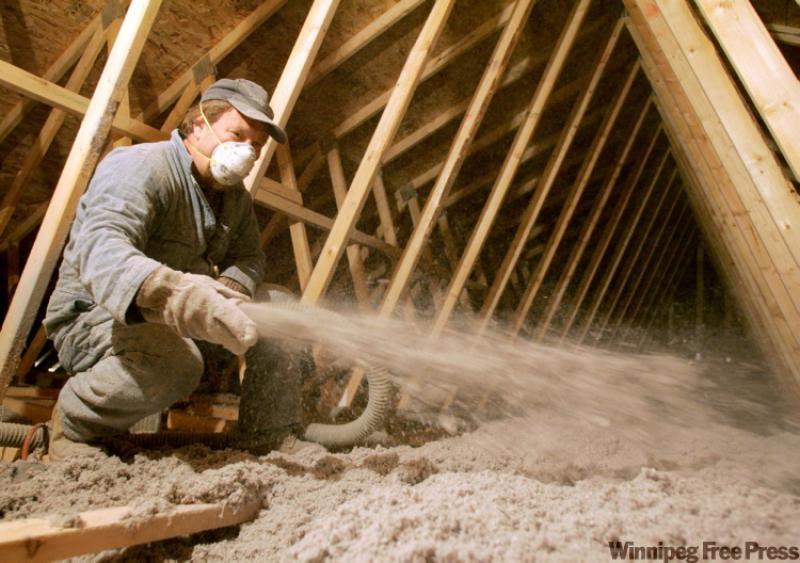
Both the space around the bulkhead or wall between the kitchen and living room in the first home and the area between the vaulted ceiling and main attic in the second home must have gaps that are allowing excessive amounts of air to leak into the attic. The polyethylene air vapour barriers may be partially missing or poorly installed in these areas, which is why there are isolated problems. The solution in both homes is to locate the specific areas of air leakage and properly seal them with blown-in polyurethane or extruded polystyrene insulation.
The first home has a simpler roof design, but may be just as difficult to repair, depending on the slope of the roof above the problem area. If this area in the attic is large enough for a person to crawl into, then the existing insulation can be pulled away and the repair done from the attic side. If the area is not accessible, the wall and ceiling coverings on the wall section between these two rooms, or the roofing and sheathing, will have to be removed to access the ceiling. This may be difficult if the ceilings are textured or there is wallpaper.
For the more complicated roof structure in the second home, the partition wall between the upper and lower sections of the home must be sealed at the top and bottom to prevent air leakage. This wall is particularly troublesome due to the design of the home and the "stack effect." This convection-related phenomenon can cause this tall wall to act like a chimney or stack and force large amounts of warm air out the top of the wall.
This area is likely located adjacent to the attic on the upper part of the house. The small space between the top of this wall and the roof sheathing is an ideal area for condensation, especially with the cold attic air right beside it.
Contacting an air-sealing contractor or building-envelope specialist for repairs should end the troublesome frost and moisture problems in both of your homes.
Ari Marantz is the owner of Trained Eye Home Inspection Ltd. and the president of the Canadian Association of Home & Property Inspectors-Manitoba (www.cahpi.mb.ca). Questions can be emailed to the address below. Ari can be reached at (204) 291-5358 or check out his website at www.trainedeye.ca.
trainedeye@iname.com