Bethany Booy photo
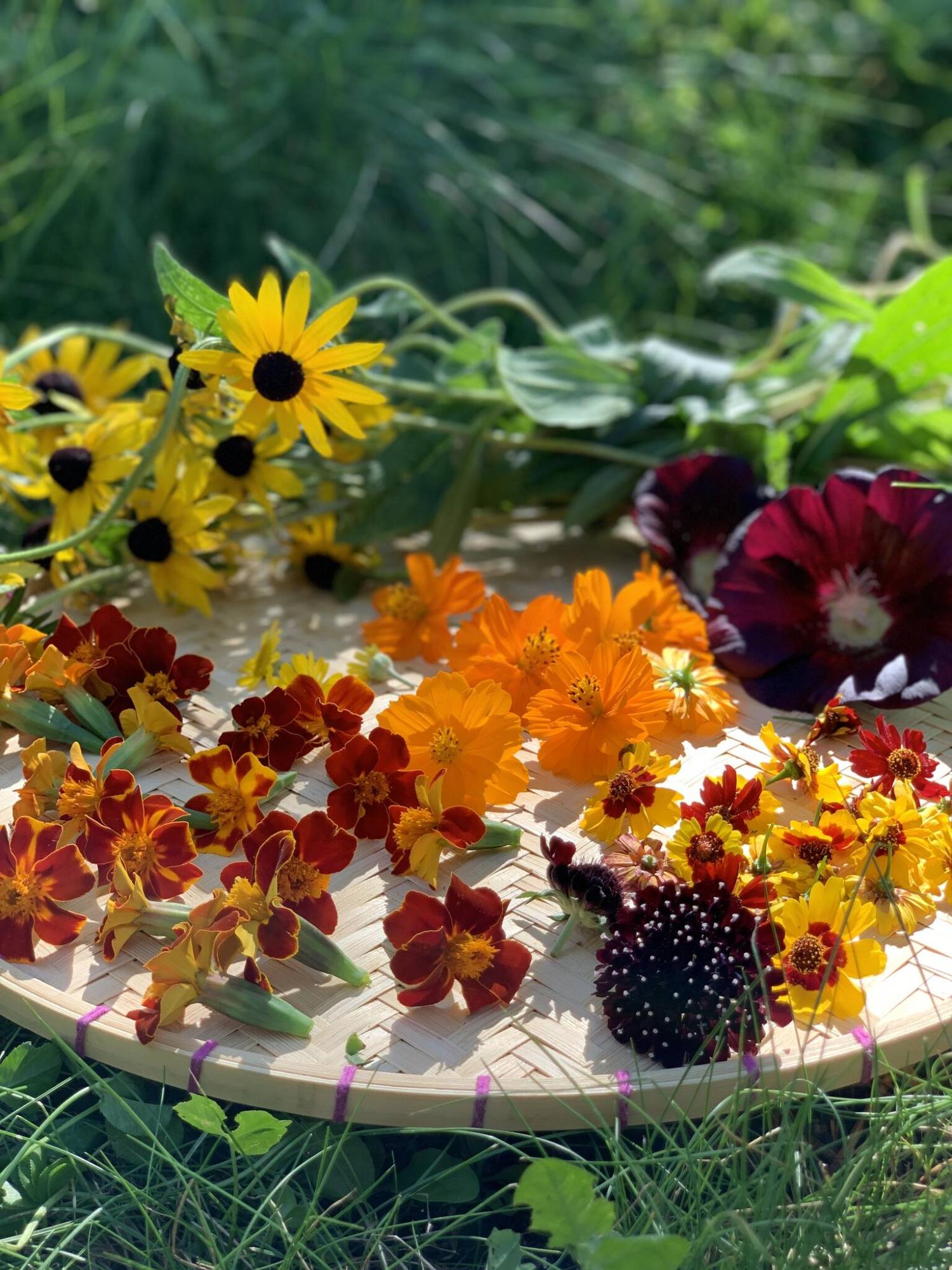
Homegrown flowers for making natural dyes include black-eyed Susan, black hollyhock, coreopsis Black Knight scabiosa, marigold and sulphur cosmos.
Bethany Booy photos
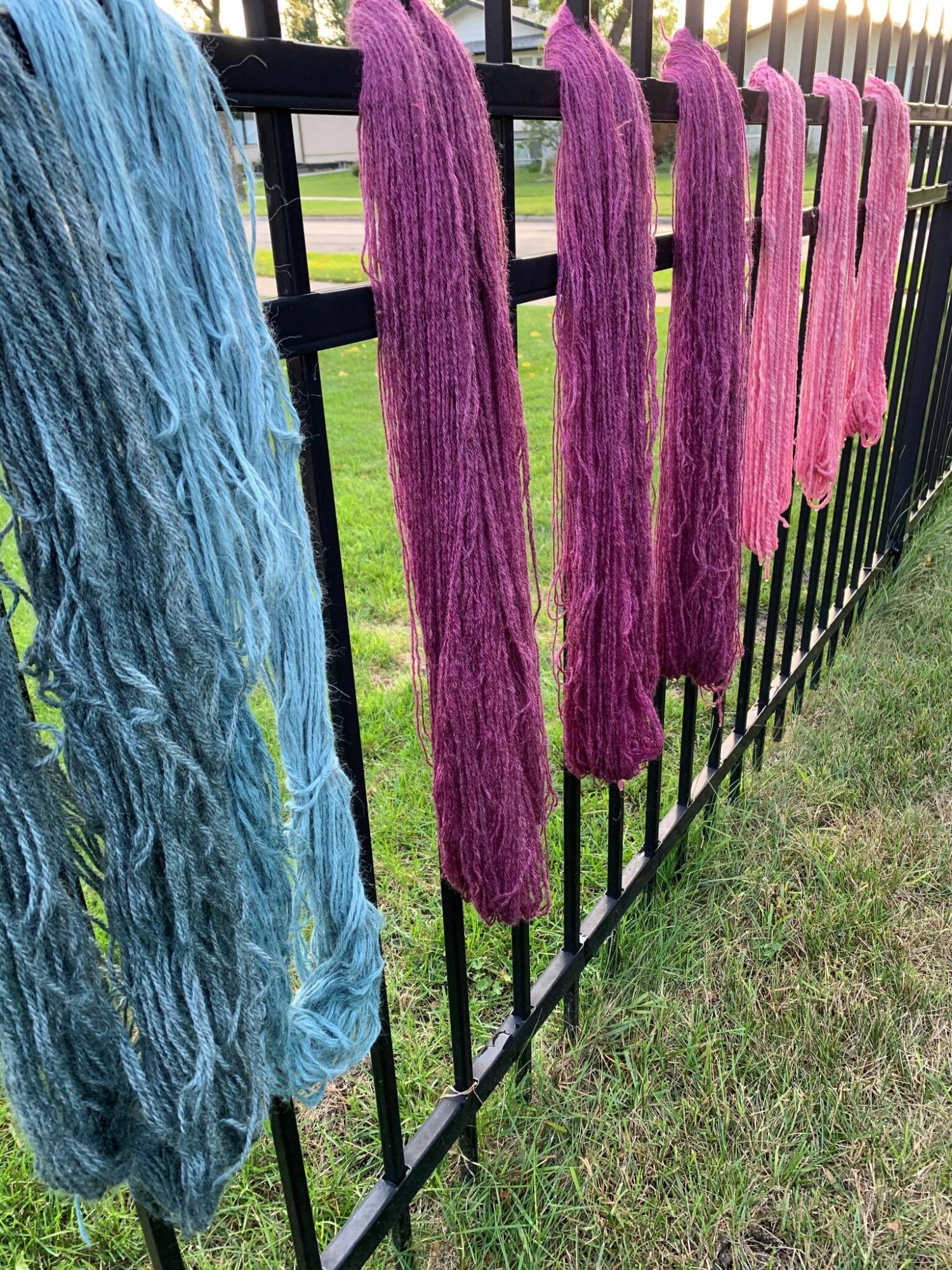
Skeins of yarn dyed from indigo, onion skin, coreopsis, dock, sumac and other natural materials hang to dry.
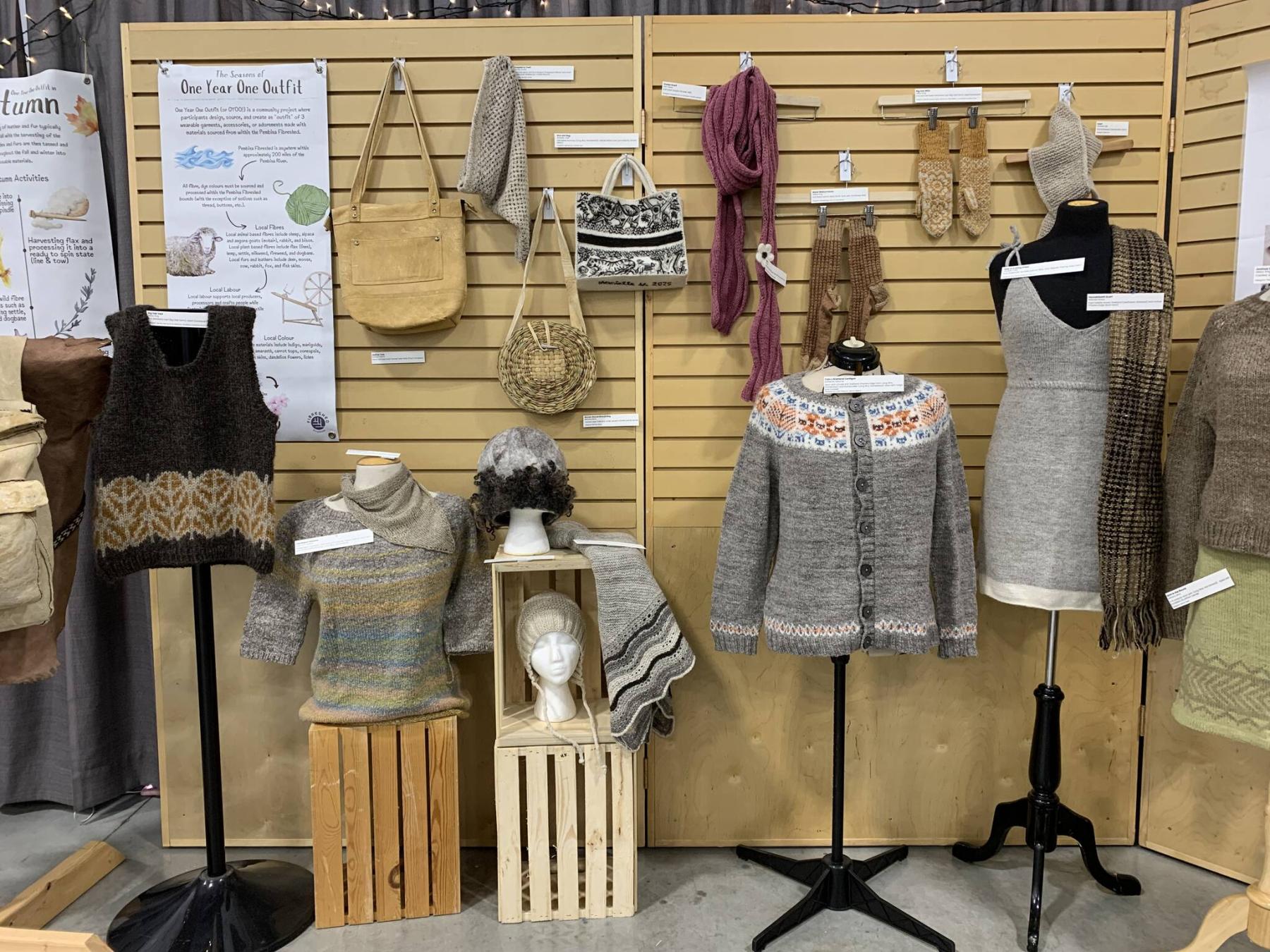
A one-of-a-kind display of clothing and other items made using local plant material
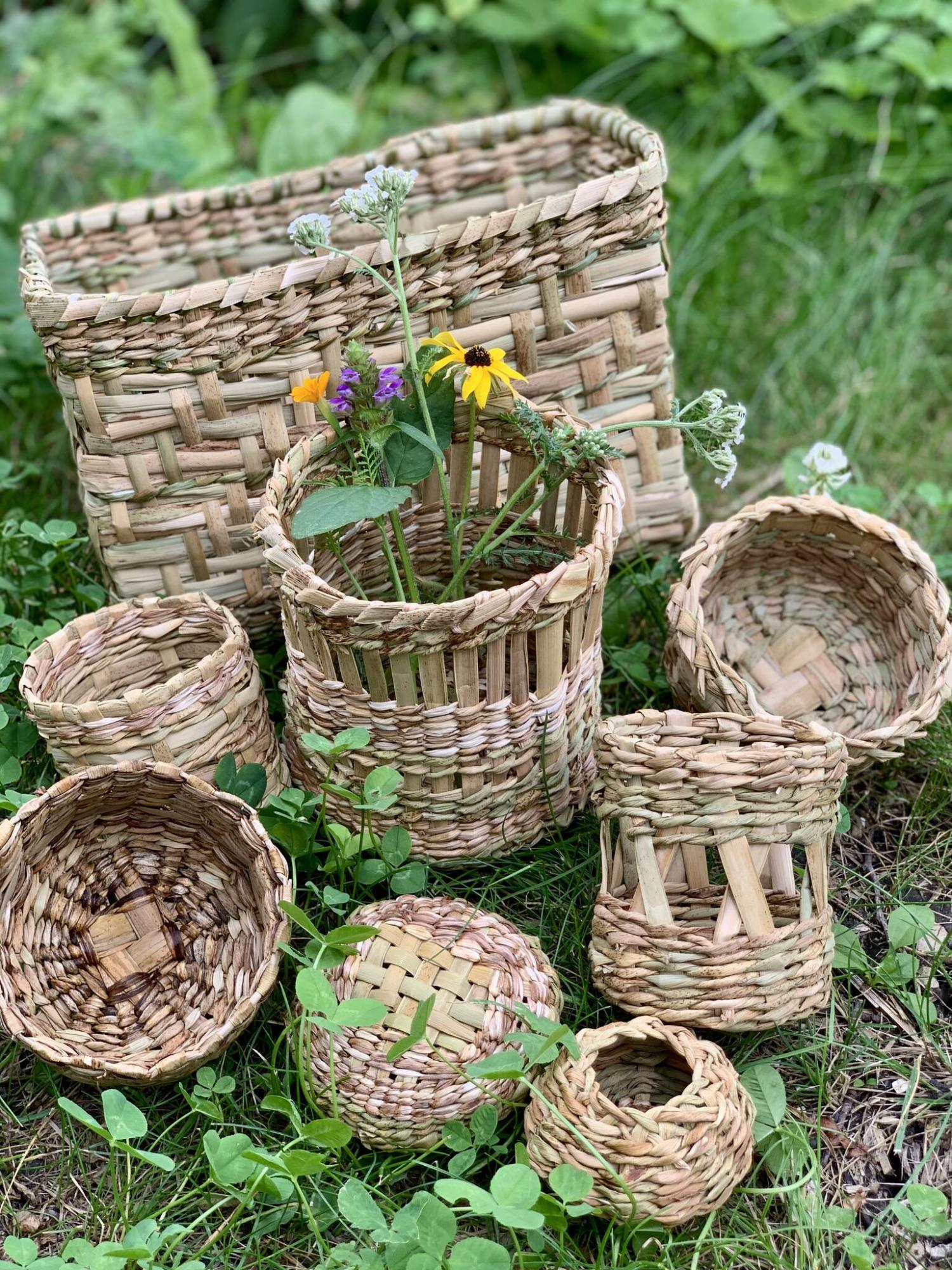
Weave your own baskets using easy-to-source plant material such as willow branches, cattail leaves — even daylily foliage.

Bethany Booy models a cropped sweater she made with natural plant-dyed yarn.
“I like to grow plants with purpose,” Bethany Booy said as we sat in her backyard in St. Vital on a warm day in August.
Booy is a fibre artist who gardens and forages locally grown plants for projects that she makes such as clothing items and baskets. She made a vest, for example, out of yarn she dyed using the indigo plant (Persicaria tinctoria) which she grows in her garden. She has also made her own natural dyes for yarn using onion skin, coreopsis (tick seed), and dock, a common perennial weed, as well as sumac and the bark and leaves from apple trees.
She grows a range of flowers such as Hopi Red Dye Amaranth, Rudbeckia black-eyed Susan, black hollyhock (Alcea rosea Nigra), Scabiosa Black Knight, marigolds and Cosmos sulphureus (sulphur cosmos) which she harvests and dries, and then uses for natural dyeing.
Booy also grows a dainty flower called Dyer’s chamomile. “It’s not used for making tea. It dyes a beautiful bright yellow,” she says.
Coreopsis produces a beautiful coral peach dye.
Booy grows indigo, Scabiosa Black Knight and the black hollyhock to dye fabric naturally with different shades of blue. “Indigo is my go-to plant. It’s a very easy plant to start with if you want to try your hand at natural dyeing.”
Booy is part of a growing community of local artists who will be displaying their fibre art creations at the upcoming Manitoba Fibre Festival which will be held in Winnipeg Saturday and Sunday. It’s an opportunity to meet local makers and farmers who grow dye plants and to learn about natural dyeing. Vendors sell natural plant-based dyes, pre-made dye extracts and naturally dyed yarn.
Workshops sell out quickly, but there will be demonstrations as well.
“Children and adults love seeing the sheep shearing by professional sheep shearers, the natural dye demonstrations and demonstrations showing how flax plants are transformed into linen,” says Booy.
Knowing when to harvest a plant for dyeing and which parts of a plant to use – flower petals, leaves, stems, roots, bark, or seeds — is key to extracting specific colours. Natural dye colours vary, too, in terms of brightness.
“I harvest Hopi Red Dye Amaranth, for example, before the seeds ripen,” says Booy. “It is a traditional dye plant that was cultivated by the American Hopi Nation who used it for their bread making. When the natural dye is used for clothing, though, it is not very colourfast — that is, it will fade in the sunlight.”
There are also One Year One Outfit displays and handspun yarn competitions.
Booy is one of the co-ordinators of the One Year, One Outfit Challenge, a project that was initiated by Anna Hunter and Margaret Brook. Hunter owns Longway Homestead, a sheep and fibre farm and wool mill. Brook is the founder of the Manitoba Fibre Festival. Together, Hunter and Brook started Pembina Fibreshed which supports the local textile community including farmers, dyers, spinners, knitters, sewers and weavers.
“Participants in the One Year One Outfit Challenge use locally sourced fibre and natural dye and local processing of natural materials to create an outfit,” says Booy. “The idea is to learn what it takes to make clothing from what’s around you. Participants have a year to make the pieces — they don’t have to live in it! Last year, I made a knitted skirt from European buckthorn.”
European buckthorn is an invasive plant that is a threat to the natural forests along the Seine River.
“By harvesting it, I hope I am helping to control its spread,” says Booy.
She lives within walking distance of the Seine and harvests European buckthorn berries from shrubs near the river.
“European buckthorn berries produce a really nice natural dye that is olive green. It’s not always easy to get green. A lot of native plant dyes are yellow.”
The harvested berries are used to dye Polypay yarn which she sources from Long Way Homestead. The yarn is made from the fleece of Polypay sheep whose wool is renowned for its softness, strength and elasticity.
Booy also forages stinging nettles, dock and grapevines, using the latter to make her own Christmas wreaths. She makes yarn from the plant fibres in nettle and milkweed. On my visit she was wearing earrings made from dandelion stems which she had woven into a circular pattern.
Booy’s handmade baskets are a work of art. They range from large, functional baskets to miniature creations which she displays in groupings.
“With most plants for basketry, you harvest and dry the plants. Because fresh, the stems usually snap,” she explains.
Along with dandelion stems, Booy uses willow and Red Osier dogwood branches and cattail leaves for weaving baskets. But what was most fascinating to me is that she uses daylily leaves for her basket weaving. After harvesting the leaves, she stores them in her garage to dry. “They’re very strong for weaving.”
Booy grows milkweed for pollinators but has also learned how to make cordage from milkweed fibres.
“You dry the individual stems, crack and open them up and extract the inner bast fibres which then need to be cleaned and spun.”
Booy, like many others in the textile community, is embracing the hands-on skills of traditional crafts.
“Many of the old skills are being lost,” she says.
Booy acknowledges how much time it takes to make her own yarn from cellulose fibres she extracts from plants, then to naturally dye the yarn, spin, card and knit a piece of clothing.
“But, at the same time, it’s not fast fashion. It’s not from China and it’s going to last a long time.”
In the early 1900s, Winnipeg was home to more than 200 garment and textile companies.
“They employed a lot of people,” says Booy. “We have so many wonderful resources here that are not being used to their full potential. We could make so much more of our own fabric here if we had the facilities today.”
Members of the fibre arts community readily exchange knowledge and resources with one another.
“We learn so much from each other and inspire one another to keep on trying new things,” Booy says.
She points out that not everyone grows all their own dye plants. Often, plant materials are sourced from one another’s gardens.
“Natural dyers are always looking for more plant material because it takes a lot – typically an equal weight or more to the fabric you are dyeing,” says Booy.
She likes to experiment with the different parts of plants for making her own natural dyes or using plants for fibres.
“It’s low risk. If I fail, I throw it in the compost. It’s not harmful to the planet and it’s not expensive to try. It’s fun and interesting.”
Interested in exploring natural dye, natural fibres and fibre art? Plan to attend the 2026 Manitoba Fibre Festival, Sept. 11 and 12 at Red River Exhibition Place, 3977 Portage Ave. Admission is $10.
colleenizacharias@gmail.com