NANCY MACKAY PHOTO
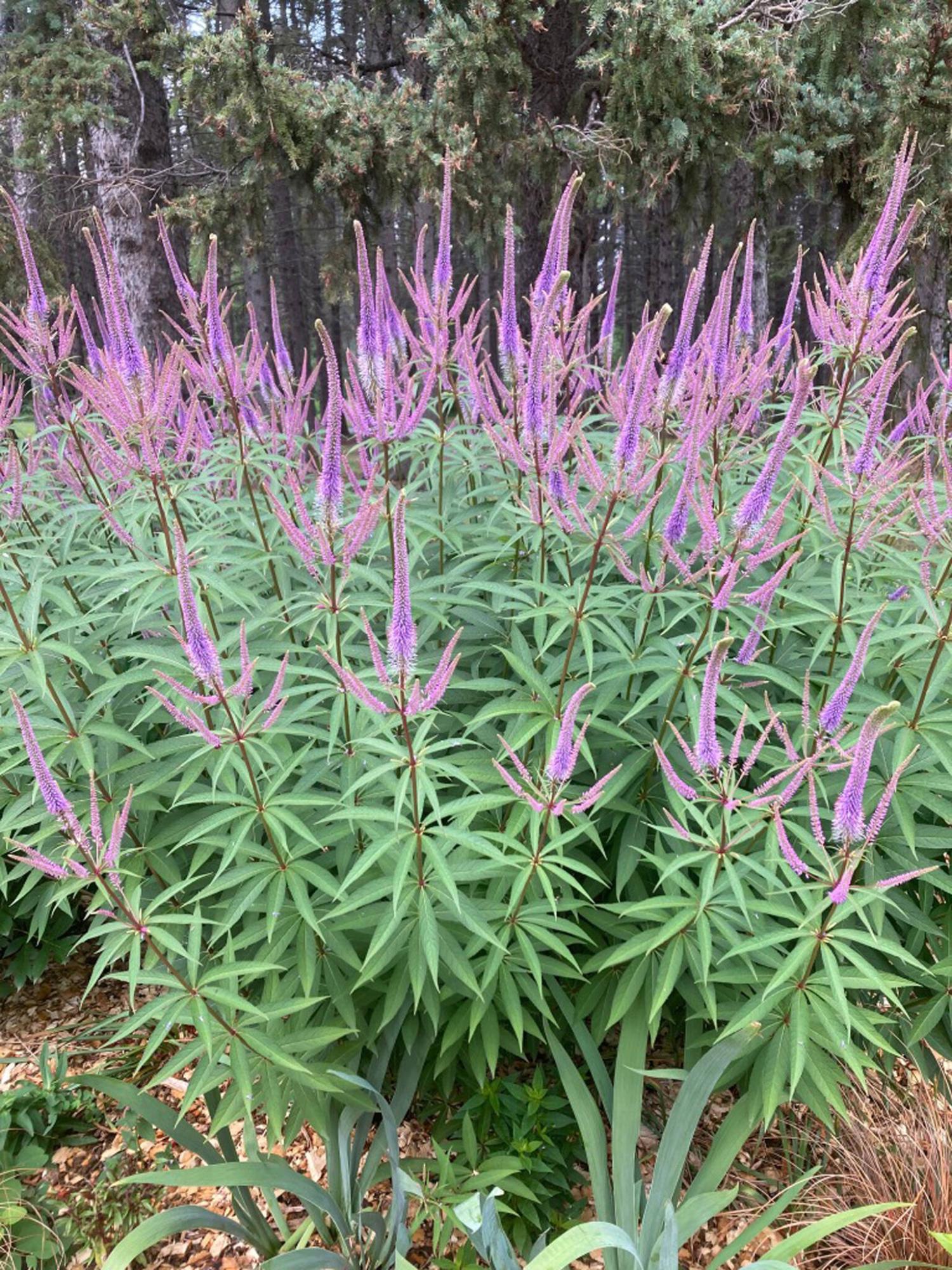
Veronicastrum Culver’s root stands up to the strong winds at Riding Mountain National Park and is a long-lived perennial.

COLLEEN ZACHARIAS PHOTO
Verbena bonariensis is a wind-tolerant, see-through annual plant. It floats gracefully above a garden border.

SUSAN SOUTHERN PHOTO
This sturdy demi-shade side table from Veradek Outdoor fits most umbrella poles and has an internal chamber for added weight and stability.
WALTERS GARDENS PHOTO
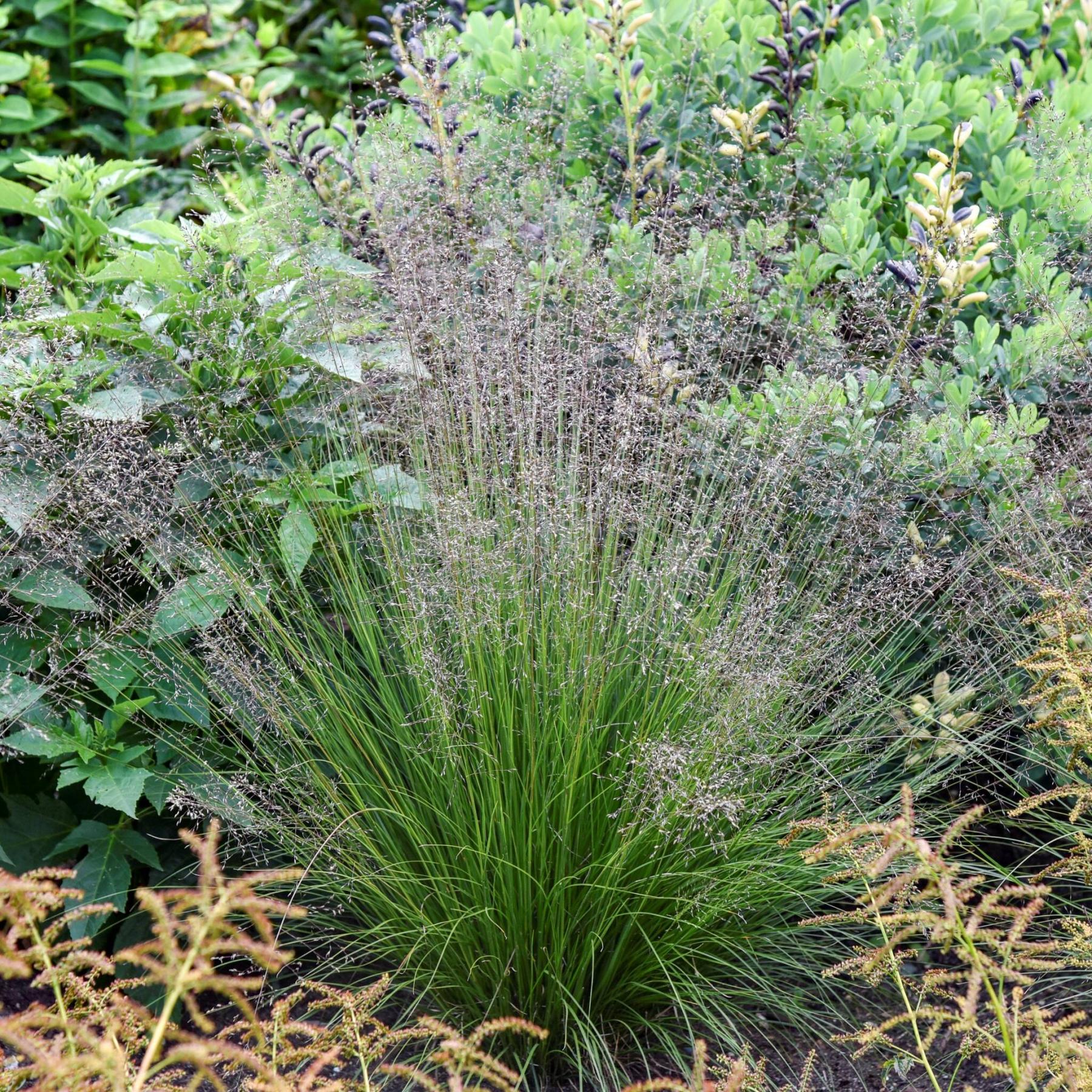
Windy location? Native or ornamental grasses are ideal. Shown is Gone With the Wind grass.
COLLEEN ZACHARIAS PHOTO
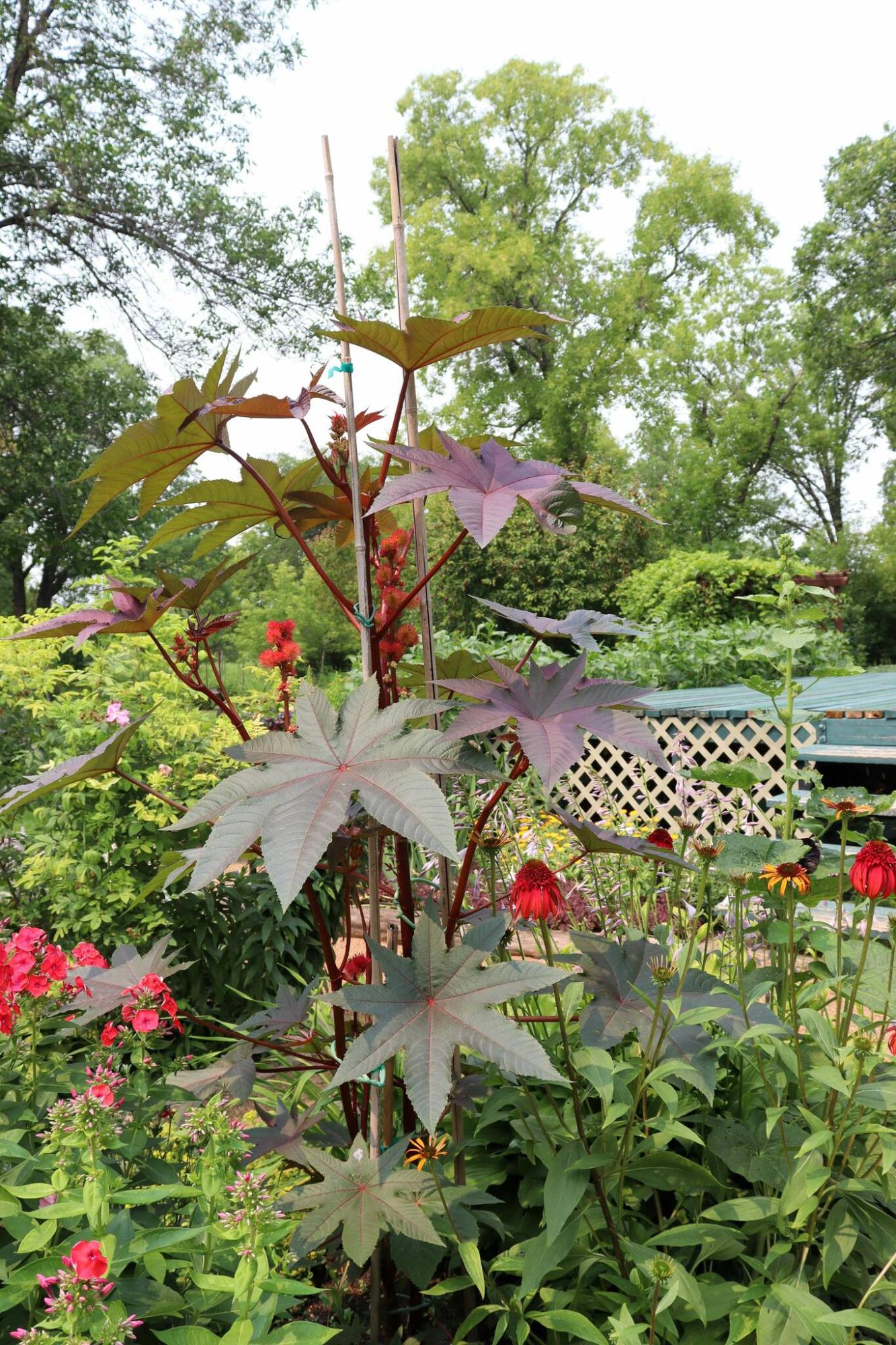
Protect plants with large leaves, such as the castor bean plant, from wind damage by growing them in a sheltered area.
What do gardeners talk about more than plants? The weather.
“When is it going to rain? When is it going to stop raining? When is it going to warm up? How long is the heat wave going to last?”
A huge topic of conversation this spring, though, has been about the persistent strong winds that have blown across the Prairies in the months of March, April and May — especially the extreme winds experienced in mid-May. The forecast earlier this week for severe thunderstorms and potentially strong wind gusts moving across southern Manitoba prompted many gardeners to take immediate steps to protect their gardens.
Spring is historically the windiest season on the Prairies.
But despite a prevalence of windy days this spring, does statistical data show a significant upward trend in daily average wind speed this spring in Winnipeg or southern Manitoba?
As it turns out, wind is complicated, says Dave Phillips, senior climatologist for Environment Canada.
“I just grimace when anybody asks me about wind, and I get asked about it a lot,” he says. Indeed, Phillips is a highly sought-after guest speaker at horticultural events. Farmers and gardeners, he says, are especially interested in the weather.
“We do such a good job looking at temperature and precipitation but wind — it’s such conflicting information,” says Phillips. “Average wind speed and extremes of wind can be two very different things.”
Phillips did a study many years ago that looked at 100 cities in Canada and ranked them from the highest to the lowest in 75 different categories, including highest temperature, the most snowfall, the most fog days and wind.
“Winnipeg came up to be No. 10, so it is a windy location,” says Phillips. “You see stronger wind gusts on the Prairies.”
The bottom line, though, aside from anecdotal information that this spring feels windier than usual, is that Phillips says, “I can’t go to the data to prove you right or prove you wrong.
“On the one hand, climate-change warming could cause the average temperatures to go down but yet the localized individual episodes of strong winds could, in fact, be accelerated because of the atmospheric conditions. There are also local effects that we call microclimates. In urban areas, you can do things around the home to modify and change the local climate. In rural areas, shelter belts can affect the wind regime in a particular field and prevent erosion and loss of topsoil.”
Lyndon Penner is head gardener at Riding Mountain National Park, which has a high elevation relative to the rest of Manitoba.
“It’s normal for it to be windy here, but it has been exceptionally windy this spring,” Penner says. “On any given day you could spit in your own eye.”
When I talked to Penner earlier this week, he also said the lack of rainfall, combined with windy conditions, created a need for heavily mulched beds. “Our soil would be powder and dust if it was not protected with mulch.”
Penner, who is the author of several books including The Prairie Short Season Yard (Brush Education, 2014), relies on native plants for windy conditions.
“Plants that evolved here generally have better wind resistance,” he says. “One of our favourite grasses to use at Riding Mountain National Park is Big Bluestem, which is also Manitoba’s provincial grass.”
Big Bluestem (Andropogon gerardii) is adaptable to almost any soil, from wet clay to dry sand. It grows to a height of 100 to 175 cm and has seedheads that resemble a turkey foot. The blue-green summer foliage turns a beautiful rusty colour in fall.
“We also use Culver’s root (Veronicastrum virginicum), a tall perennial which is native to the tall grass prairies of Manitoba,” says Penner.
Culver’s root is a striking plant with candelabra-like flower spikes and lanceolate leaves arranged in whorls along the sturdy stems. In the garden, it is a stunning focal point. Its mature height is 90 to 120 cm tall. In the wild, the flower spikes are commonly white but can range in colour from pale lavender to a tinge of pink or mauve. In addition to being extremely hardy, Culver’s root is a long-lived herbaceous perennial.
Penner and his team of gardeners create beautiful, wind-resistant displays of native plants as well as non-native plants such as Verbena bonariensis.
“We love Verbena bonariensis because the stems don’t snap in the wind,” he says. “It grows to a height of about 120 cm and will bend to the ground in a windstorm and then it just stands right back up. The flowers bloom over a long period, even through a frost. It has no pest or disease issues.”
From a garden-design perspective, Penner likes Verbena bonariensis because it adds height to a border without obscuring the view behind it. “It adds a sort of luxuriousness to the garden.”
For windy areas, Penner recommends plants that are fine-textured or have thread-like or grass-like leaves.
“The exception would be zinnias and geraniums, which have fairly big leaves and do fine in a windy location,” he says. “But plants with really big, wide leaves, like canna lilies or castor bean plants, are not a great choice for a windy location.”
Strong wind gusts can make short work of their handsome foliage by easily tearing the leaves, leaving them tattered for the rest of the season.
Penner has found that single- flowered peonies are more weather- resistant than double-flowered peonies. “We have two species (of) peonies that are single form (Paeonia mlokosewitschii and Paeonia veitchii) as well as Sword Dance, Snow Swan and Mikado. We put these in more exposed sites and the double-flowered peonies in more sheltered places.”
Cheryl Geske is a Gimli gardener whose property overlooks Lake Winnipeg. “My plants have to be able to handle decent winds off the lake — lots of gusts, too,” she says.
Plants in Geske’s garden that stand up to the wind include grasses such as Big Bluestem, Little Bluestem, Karl Foerster feather reed grass, along with yarrow, sea holly (Eryngium), garlic chives, daylilies, gas plant (Dictamnus alba) and fleece flower (Persicaria).
Geske loves peonies. She uses a wavy, half-circle support that is 69.85 cm tall to support herbaceous peonies. “Itoh peonies are much stronger, I find, than herbaceous peonies.”
The Itoh peony is a hybrid cross between a tree peony (woody peony) and an herbaceous peony.
Safety matters in the garden. If the forecast calls for strong wind gusts, it’s important to secure lightweight items from flying around. If possible, move patio containers and hanging baskets to a protected location. Trees that have structural problems, such as weak branches or main branches in a V-shaped union, for example, can cause damage to property in high winds because of sudden breakage.
Seating areas are more enjoyable and relaxing when they offer protection from the wind.
When Susan Southern, a St. Vital gardener, discovered that her patio-umbrella base could not withstand strong wind gusts, she purchased a demi-shade side table from Veradek Outdoor, a Canadian-based brand. Manufactured in Canada, the round table has a convenient tabletop and fits a variety of umbrella pole sizes. It includes an internal chamber which can be filled with water, sand or gravel for added weight and stability. Visit Veradek.ca for more details.