Everyone loves cut flowers and would love to fill their homes with fresh bouquets but so many people still feel intimidated by the design process.
Modern flower arranging is so much simpler than it used to be. The complex and rigid rules that go back to the time of England's Constance Spry (only work with odd number of stems, the height of a bouquet must be three times the width) are now considered to be dated and old-fashioned. Flower arranging is no longer the closed domain of the "professional" florist.
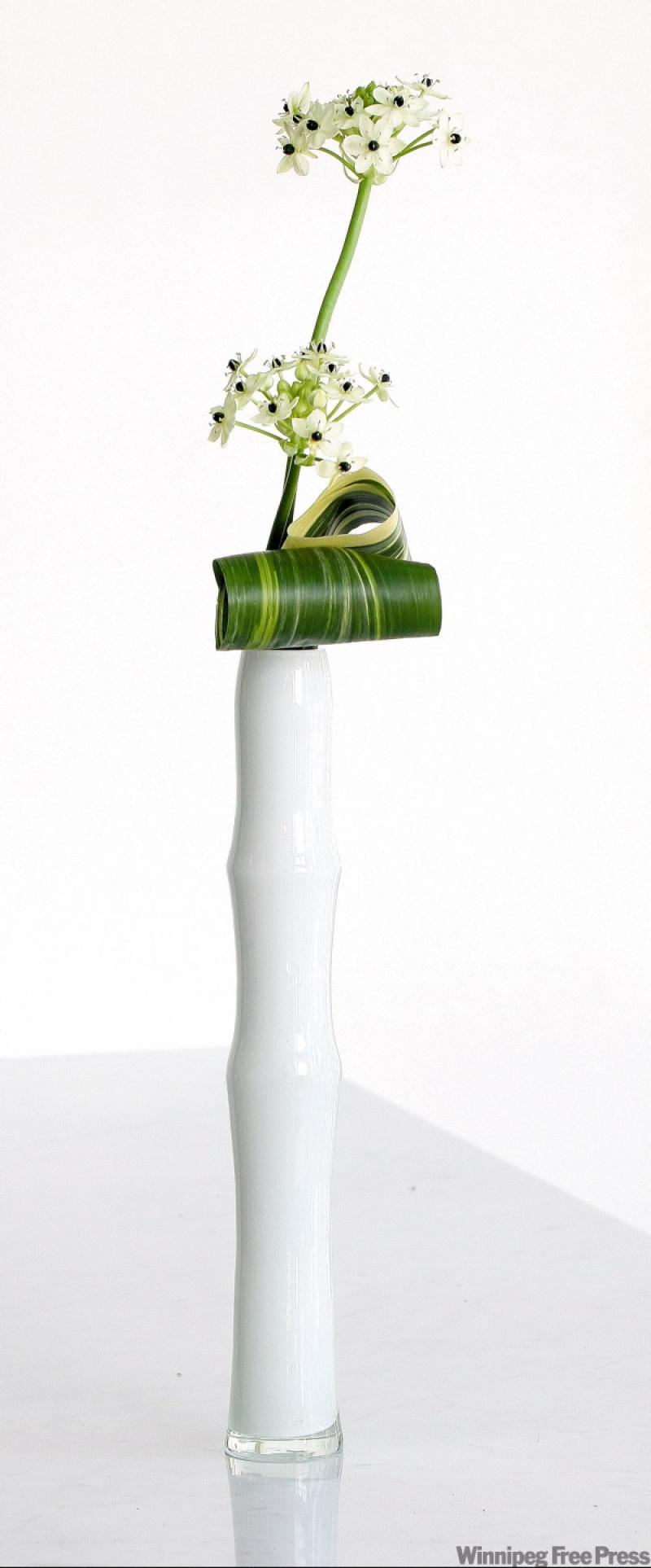
Modern arrangements are far more natural, never contrived. Inspiration comes from nature. A single stem can make an entire bouquet. A handful of the same variety of flower is an easy arrangement for any setting, be it traditional or ultra contemporary. Containers come in any size, colour, shape and even price range now. Easy. Well, easier.
There are some pretty simple guidelines that will allow even the most inexperienced arranger to be successful.
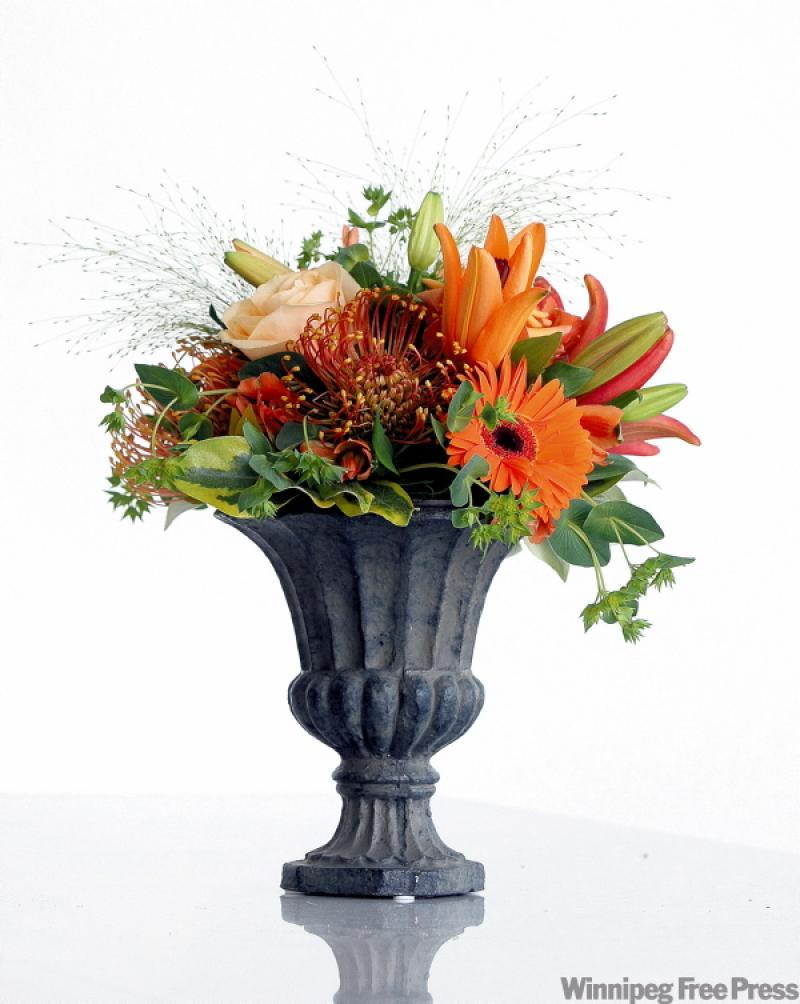
DO choose fabulous vases. A vase is not only the frame for your arrangement, but it should be the jumping off point for the arrangement itself. Plastic bowls and lumpen, shapeless glass vases are not even worth considering. Like one great dress, one great vase can go miles. A great vase does not necessarily have to be extravagantly expensive. A vintage piece, a flea market find, a hollowed-out pumpkin often have more to say than a piece of Waterford glass. The vase cannot be so outlandish as to overpower any flowers that might be used in it but it must have some personality.
DO match the personality of the container to the personality of the flower. Pairing flowers with containers that support the character of each flower will bring out the best in both. Pretty flowers such as peonies, sweet peas and roses look wonderful in pretty vases such as cut glass or delicate ceramics. Round flowers such as gerberas look best in round rather than square vases. A rustic French vase would be much more successful as a container for sunflowers than for tropical flowers.
DO be prepared to cut the stems of tall flowers. This is the most common mistake made by novice arrangers. Very few flowers look their best towering above a vase. Large blooms standing up in the air seem to defy gravity. Each flower has a visual weight. The larger the flower, the lower it should be in the arrangement. For instance, an open lily bloom should sit lower in the arrangement than a closed bud. Grasses, tendrils and small blooms need to rise above the body of the arrangement and be free to move, just like in nature.
DON'T try to mix a myriad colours. The easiest colour scheme to work with is a monochromatic colour scheme -- tints and shades of one colour. For instance reds, pinks and burgundies all work together well in a mixed arrangement. All-white arrangements always work. All green arrangements are hip.
DON'T add "greenery" just because you think you should use it as filler. Greens and leaves should have a reason to be in an arrangement. A single important leaf can add much more to an arrangement than a whole bundle of salal or boxwood. Explore different leaves. Feel free to cut leaves from tropical plants -- more will grow back.
DO use flowers that are in season. Not only are in-season flowers less expensive, but also they most often have a longer vase life because there has been such a short shipping time. There is something very incongruent about seeing sunflowers in December or tulips in July. The natural light and surroundings of each season supports the colours of the flowers of that particular season. Early summer abounds with all the blue and purple flowers; fall offers rich jewel tones. Whites during winter suit any occasion.
DO buy some reference books. You can't expect to know all the technical information about flowers -- such as how much water specific flowers need or how to condition flowers -- without doing some research. Good design books will inspire you and open you up to unexpected ideas. Interior design magazines are not always the best sources of inspiration. Many arrangements are not well done.
DO have fun. Plan an evening with friends to share tricks and inspiration, similar to a group baking evening. Vases can be swapped and flowers and leaves can be brought in from your gardens. Practise.
Susan Ramsey is a Victoria-based floral designer and self-taught gardener.
-- Canwest News Service