BORIS MINKEVICH / WINNIPEG FREE PRESS Files
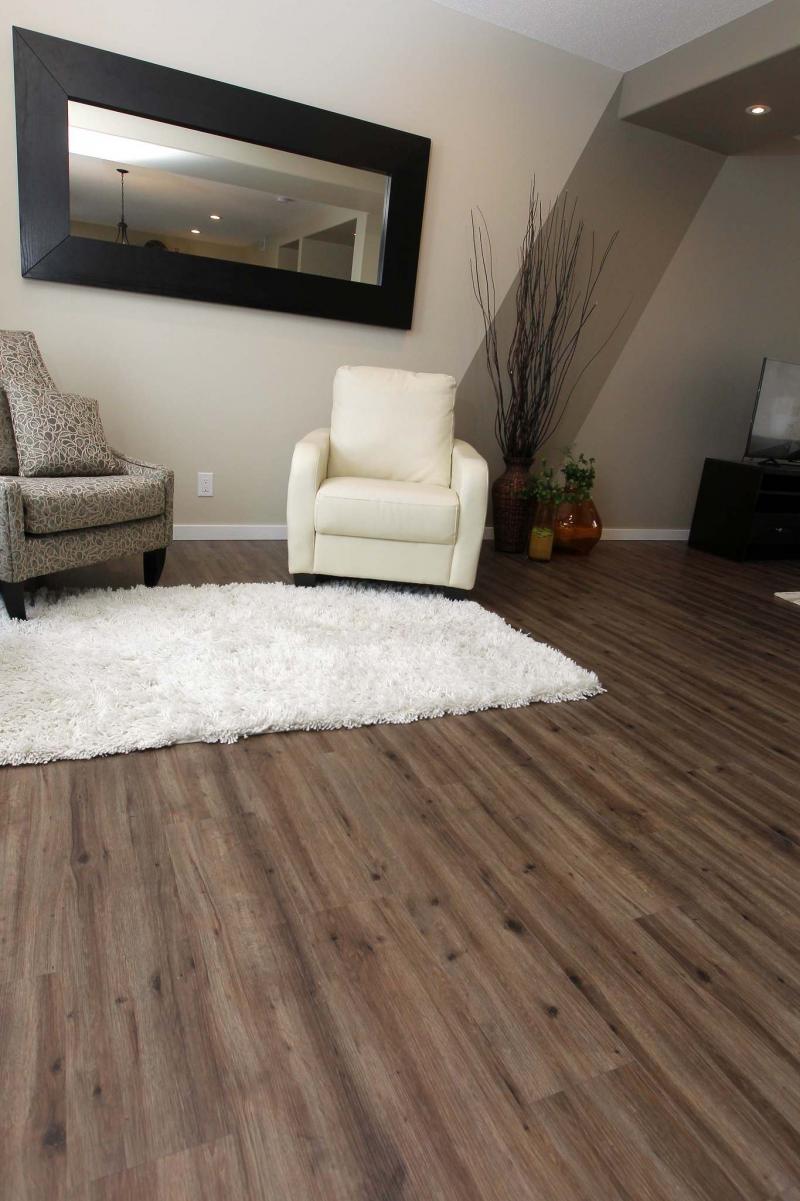
A squeaky hardwood floor could be the result of absorbed moisture caused by mistakes made installing a deck.
QUESTION: My question is about noisy hardwood floors. Our home was built in 2013. Throughout the winter we noticed the hardwood flooring by the patio door begin to squeak and make crackly noises.
We asked the builder to come and take a look at it but when he did he looked at the deck, which is built outside the patio door and blamed the noisy floor on it. By the way, he did not build the deck. The house came with a deck built by the builder but we wanted to make changes and decided to get someone else to build it for us. The builder never came into the house to investigate, just simply stood on the deck and blamed the problems on it. He also mentioned that since they did not build the deck it was not covered under the warranty.
We have an unfinished basement, so we can look at the subflooring underneath the hardwood floor. What I noticed was that a lot of the screws or nails missed the joist or caught the top of the joist at an angle and the bottoms were sticking out. Could this be the cause of the problem?
— Patricia Demidas, Ontario
Answer: Often with house construction, things that appear to be the cause of certain issues may be red herrings. Having experience in both construction and investigation of construction defects will be required to determine the exact cause of your noisy floor. Hiring an experienced registered home inspector to determine the cause may be your next course of action.
Homeowners, and others not well-trained in house construction or defect recognition, may mistake an apparent minor flaw for one causing a potentially serious problem.
Too many times we may jump to conclusions about some issue within our homes and try to solve it, with ineffective results.
Having a cavalier builder for your new home only muddies the waters, but he may have enough experience to have effectively found the root of the problem. While he definitely should have gone inside the home to see what the flooring looked like, as well as underneath in the unfinished basement, his conclusion may have been correct based on the location of the deck.
It is very common to see subfloor fasteners, especially flooring screws, which have missed their mark in new homes. Because modern sub-floors are quickly screwed down with screw guns, often with long extensions to prevent excessive bending by the installer, hitting the centre of every floor joist is not likely. If the joists are not marked carefully with a chalk line or other writing instrument, misses may be quite common. A good carpenter may take the time to reverse the screw gun and back out missed fasteners, but most will leave these in place to expedite sheathing installation. These will rarely cause much of an issue, unless they are raised excessively due to an improper angle. This should not be the cause of your noisy flooring.
When floors squeak, there are normally one — or both — of two culprits. The first is separation between the subfloor sheathing and the floor joists, and the second is a gap between the sheathing and the flooring. This gap can certainly occur due to sloppy installation of the sheathing, where excessive sawdust, dirt, mud or other debris is not cleaned off the top of the joist prior to fastening the sheathing. Once this debris dries out or dislodges, the resulting gap can cause the sheathing to squeak when stepped upon.
This defect can also occur due to warped or bowed joists or sheathing, often due to rain or poor storage of materials during construction. If the sheathing is not firmly pushed down onto the joist during installation or subfloor adhesive is missing, small gaps can also appear over time. Either of these could cause your problem, but it could also be due to separation above the sheathing, as well.
Hardwood flooring, and other types of smooth surface flooring, may be subject to expansion or contraction with changes in moisture levels. Excessive wetting of these materials, in any manner, will normally cause damage. If the hardwood floor is absorbing moisture in one particular area, as may be happening in front of your patio door, it may expand and shrink, pulling away from the subfloor. The boards themselves may also separate at the tongue and groove joints. Either of these will surely cause the noises you are now hearing. The real question is what is the cause of this moisture and how do you stop it?
Most patio doors are installed directly on top of the floor sheathing at the exterior wall of the home. The junction between the door sill and the sheathing should be well sealed with caulking or some form of gasket, but this is not always done well.
This can expose the outside edge of the sheathing to exterior elements, making moisture absorption more likely.
If this edge is not well-sealed or covered with a good flashing, wicking moisture from the exterior is possible. If this sheathing gets wet, it can swell or wet the underside of your hardwood flooring, causing the issues mentioned above. This will not normally occur if the bottom of the patio door is well above grade, but installation of a deck can complicate matters.
My own experience in constructing many decks, previously as a contractor for almost two decades, has led me to understand that the top of a deck must be installed at least a couple of inches below the sill of any exterior door, especially patio doors, to prevent excessive wicking of moisture under the door.
Your builder may also know this, based on his experience, and by looking at the deck constructed by another firm may have come to this conclusion without even entering the home.
Examining a problem in your home, such as your squeaky flooring, and determining the true cause will not be within the skill set of most homeowners and may lead to improper conclusions. An experienced registered home inspector, with construction experience, should be able to look at the inside flooring, deck installation, and floor sheathing underneath to determine the true culprit and provide recommendations for repairs.
Ari Marantz is the owner of Trained Eye Home Inspection Ltd. and the past president of the Canadian Association of Home & Property Inspectors — Manitoba (cahpi.mb.ca). Questions can be emailed to the address below. Ari can be reached at 204-291-5358 or check out his website at trainedeye.ca.
trainedeye@iname.com