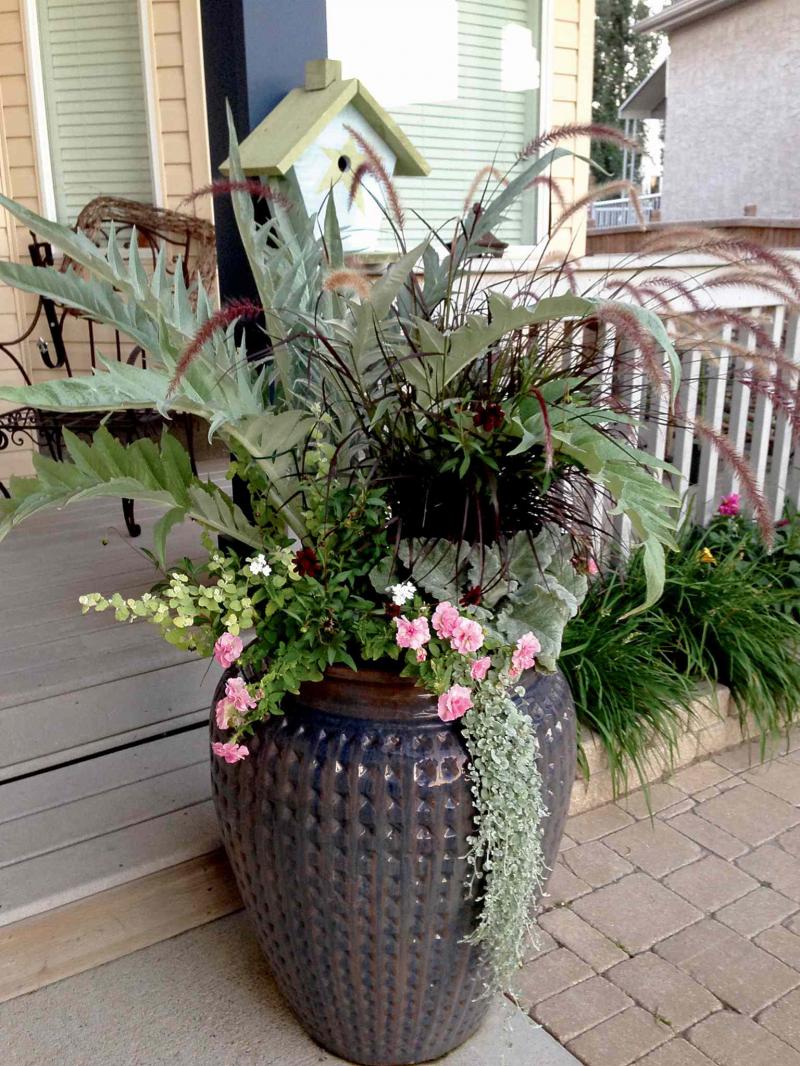
If the sight and scent of all the fresh greens, boughs, birch poles, magnolia leaves and stems of red berries at your local garden centre is enough to inspire you to create a seasonal container display at your front entry, take time to consider the type of container you will use.
With the explosion of interest in container gardening, homeowners today are able to choose from a range of container styles ranging from traditional to contemporary.
After all, the pot you choose makes a statement all on its own, enhancing the exterior of your home while welcoming your guests in style. Apart from the overall attractiveness or architectural style of your pot, there are other practical considerations. Too short and it could be buried after just one heavy snowfall. Too large, and the sheer weight could make it difficult to move if you are staging a display in another area in your landscape.
Worse, the freeze-thaw cycle that causes water to expand and contract in damp soil left inside containers or water that has seeped into the cracks of containers such as glazed ceramics can result in damage or breakage.
Why risk your investment? Raising the base of your container and sliding two strips of wood underneath so that it is not in direct contact with the ground or a hardscaping surface will help to extend the life of your container.
If a container is too heavy to move, such as a thick-walled ceramic container or a concrete planter, and you are not planning to create a holiday arrangement, remove any soil, ensuring that the drainage hole is clear of debris and that no water can remain in the planter. As an added measure, you can cover the container with a layer of greenhouse poly or a black garbage bag, securing it with duct tape. Smaller containers can be emptied and turned upside down onto a piece of wood or Styrofoam.
Apart from manufacturers' recommendations for caring for a specific type of container in a cold climate, many gardeners decide on what works best for their containers based on trial and error.
On an overseas garden tour some years ago, Marilyn Dudek, an East Kildonan gardener, visited a terra cotta factory in Impruneta, Italy and purchased a pallet of oversized, hand-moulded Tuscan clay planters. Each year Dudek stores the containers, filled with soil, in her unheated garage for the winter. So far they have survived beautifully, says Dudek.
Methods vary, too, when it comes to prepping outdoor containers for holiday arrangements. While some recommend replacing the moist soil left over from a summertime container display with fresh, dry soil, others such as Sharlene Nielsen, Front Door Stories, who creates countless outdoor container designs for her clients, simply removes the top layer of soil (30 to 35 cm).
Nielsen roughs up the remaining soil, a method she has found helps to avoid the freezing and thawing pressure caused by compacted soil.
Ideally arrangements should be created outdoors before temperatures drop so boughs and other decorative elements can freeze into place. Container classes abound, though, at this time of year and it's easy enough to create your own clever DIY container design in the warmth and comfort of your nearest garden centre. Start with a plastic insert filled with soil, arrange stems, evergreens and other accents, then add to your waiting pot.
Carla Hrycyna, co-owner of St. Mary's Nursery, says that birch poles continue to be the hottest item for lending both height and a chunky look to holiday containers. Also trending for this season's container, says Hrycyna, are red dogwood twigs and red berries. Hrycyna expects the twiggy look to carry over into summer container designs with an emphasis on the use of grapevine orbs.
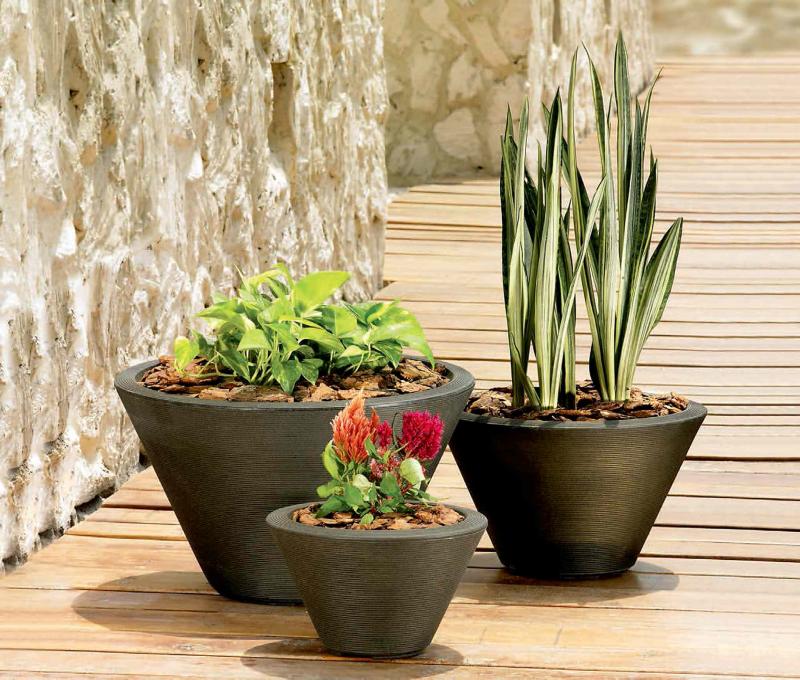
If you have any concerns about the winter durability of your favourite ceramic or older-generation container, the simplest strategy might be to switch to a lightweight, weather-resistant material that is indistinguishable from the more traditional materials that you are familiar with. The sleek styling of Capi Euro containers, on display at Lacoste Garden Centre, gives every impression of heavy granite but is much lighter and unbreakable. Jordan Hiebert, co-owner of Lacoste, says that this best-selling line made from fibreglass, magnesium or a combination of the two products, provides the large size and modern look that customers want in a lightweight, low maintenance container and works well in a residential setting or on a condo balcony.
While neutral colours dominate, Capi Euro surprises with a new retro line that features a bright orange interior. Hiebert describes the colour as royal Holland orange. Wrapped in neutral tones on the exterior, one can't help but compare the effect of the colourful interior to that of the instantly identifiable red-lacquered sole that so distinctively adorns the footwear by designer Christian Louboutin.
Not all fibreglass is created equal and some fibreglass containers should avoid the winter altogether. A product material that is especially durable though in freezing temperatures is fibreglass reinforced with a ceramic blend, says Hrycyna. Barkman sells a series of light, strong, weather-resistant containers called Contempra which is made from glass fiber reinforced concrete (GFRC). I saw a gorgeous example in a St. Vital garden that is a low bowl no less than 2.4 metres in width.
Erna Wiebe, owner of Oakridge Garden Centre in Steinbach, says she continues to sell more ceramic containers than fibrelite products (poly resin), even though the latter is weather resistant and won't crack in winter or fade in summer. Some of the fibre products contain concrete and some are a synthetic wicker blend with a plastic insert. They can be top heavy, though, says Wiebe, who suggests putting a weight at the bottom beneath the insert or filling with soil all the way down to the bottom of the container.
Light enough to be easily moved around the garden, fibrelite products are available in fewer colours than ceramics, mainly different shades of grey or neutral tones such as ivory, black or tan -- all colours that are complimentary to most home exteriors. Wiebe says, among her customers, the most popular container shape remains tall and narrow.
Double walled plastic containers from Crescent Garden come with a 10-year warranty. Jordan Hiebert has 6 scattered throughout his garden and describes them as a year-round workhorse. They don't come cheap, though. In contemporary styles that are tall, square or tapered, they are durable enough for our harsh winters, resist fading from UV rays and even breakage if a strong gale-force Prairie wind knocks them over.
Hiebert also carries the elegant Lechuza self-watering containers for indoor use in the winter. Lechuza is Spanish for owl. Previously available for commercial use exclusively, the back story to Lechuza is one that you might not expect.
Elliott Bennett, vice president of Winnipeg-based Air Strength which specializes in commercial interior landscaping, shares that Lechuza originated in Germany. Its parent company is Playmobil, the toy company. When current owner Horst Brandstatter couldn't find a suitable planter, he decided to develop his own. Introduced in 2000, Lechuza is now sold worldwide and is one of the top selling planters for indoor commercial use.
The high quality coating of the planters is similar to an automotive paint finish with a clear coat. The Cubico 40 model can only be described as stunning, its high gloss black colour and streamlined shape reminiscent of a black lacquer baby grand piano. More importantly, it performs, delivering just the right amount of water and nutrients to the plant's roots when needed. A granulated drainage material regulates the amount of water that plants receive.
Bennett says it takes roughly 90 days for a plant's roots to grow into the sub-irrigation system. After that, up to a month between watering is all that is needed depending on the type of plant and where the planter is positioned. Both Bennett and Hiebert utilize the Lechuza self-watering container in their homes. Hiebert adds that it can be used outdoors, too, in the summer time. Simply remove the drainage plug at the base of the container in case of excess rainwater.
While the Cubico 40 model in the larger size can start at $450, Lechuza has made the crossover to a more affordable line for residential use.
No matter your style, new-generation containers promise a reinvention of your gardening space, indoors or outdoors.
colleenizacharias@gmail.com