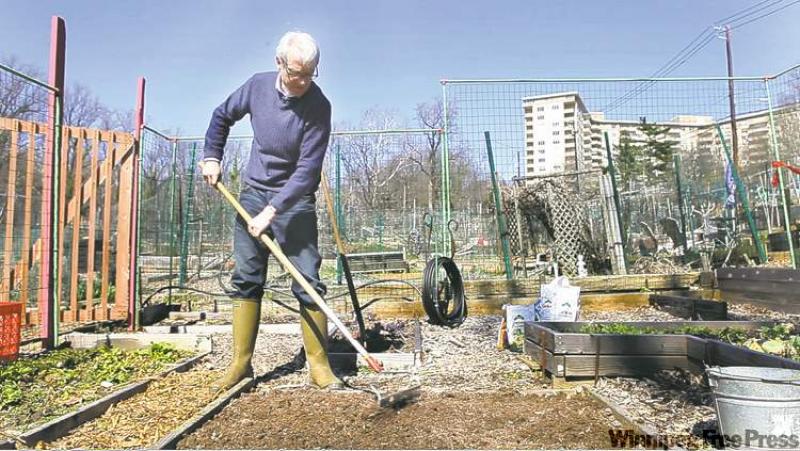
If you want to concoct your own garden fertilizer, you can figure what works best by trying combinations of nutrients, most of which are cheap to buy.
I use mostly organic stuff to make my fertilizer and I buy each ingredient separately so it is easy to customize. I bought most of what I need the other day at a farm supply shop -- canola seed meal, bone meal, kelp meal and lime, plus one cubic yard of steer manure.
These items, along with my home compost should provide all the nutrition my vegetables need. If you use the formula provided, everything will grow just fine with about one gallon of the mix on a bed three metres by three metres.
But don't you want to try to grow the most amazing (fill in favourite vegetable here) ever?
This is where you can do a little research to customize your fertilizer blend. Fertilizers contain nitrogen, phosphorus and potassium, or NPK, which are expressed numerically on labels, such as 5-15-1. Each number represents the percentage of the total mix by weight.
My fertilizer components break down as follows:
-- Canola meal -- Slow-release nitrogen and phosphorus with a trace of potassium, roughly 6-2-1.
-- Bone meal -- Moderately slow-release nitrogen and phosphorus for root development with the bonus of calcium, roughly 3-15-0.
-- Kelp meal: Relatively quick to release nitrogen but higher in potassium than seed meals and contains lots of trace minerals, about 1-1-2.
-- Compost: Improves aeration and moisture retention, about 1-1-1.
-- Blood meal: I don't put it in my general purpose mix, but it can provide a quick hit of nitrogen when slow-release isn't doing the job, 14-0-0.
If you keep the components of your fertilizer separate, you can mix on the fly for each bed of vegetables you plant.
Potatoes hate lime, so leave it out of your custom potato fertilizer. Tomatoes like phosphorus for fruit growth but prefer slow-release nitrogen.
Try one mix in a couple of pots, or on a different mix next door.
How any fertilizer works depends on your soil and not the necessarily the recommendations of experts and manufacturers. Trust no one.
-- Postmedia News
Basic garden fertilizer*
10 parts canola seed meal
1 part lime
1 part bone meal
1 part kelp meal
*Adapted from Growing Vegetables West of the Cascades, by Steve Solomon