Dear Debbie:
I am just back from a long planned trip to France and spent a week in the breathtaking countryside of Provence. I'm back home and painting my bedroom to look like the ancient walls in the villa we stayed in. Do you have a favourite paint finish that's not too difficult? I am missing the aura. Thank you. -- Brandon
Dear Brandon:
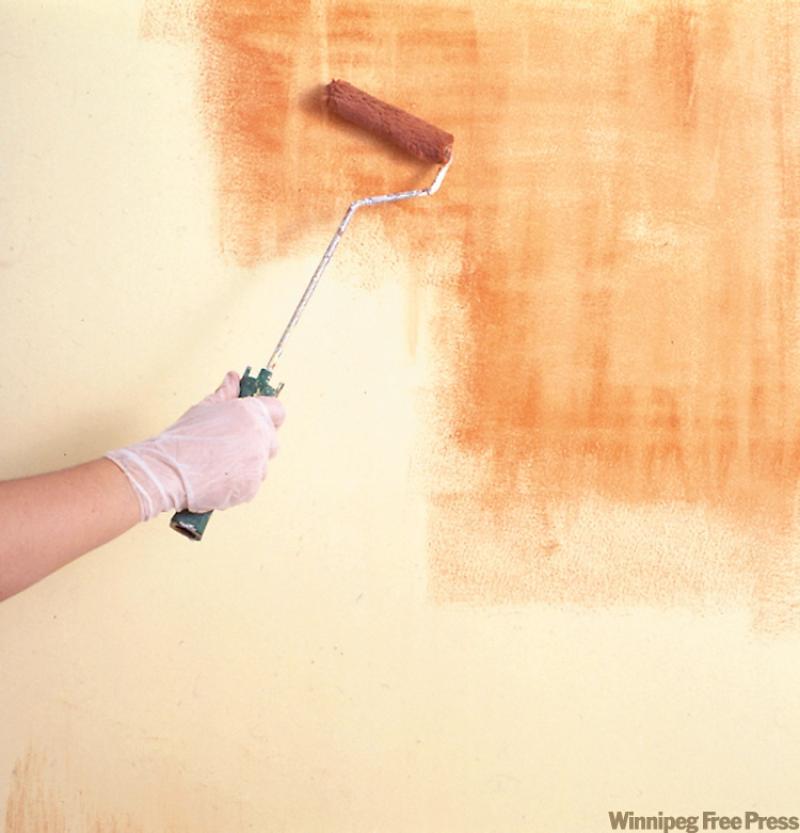
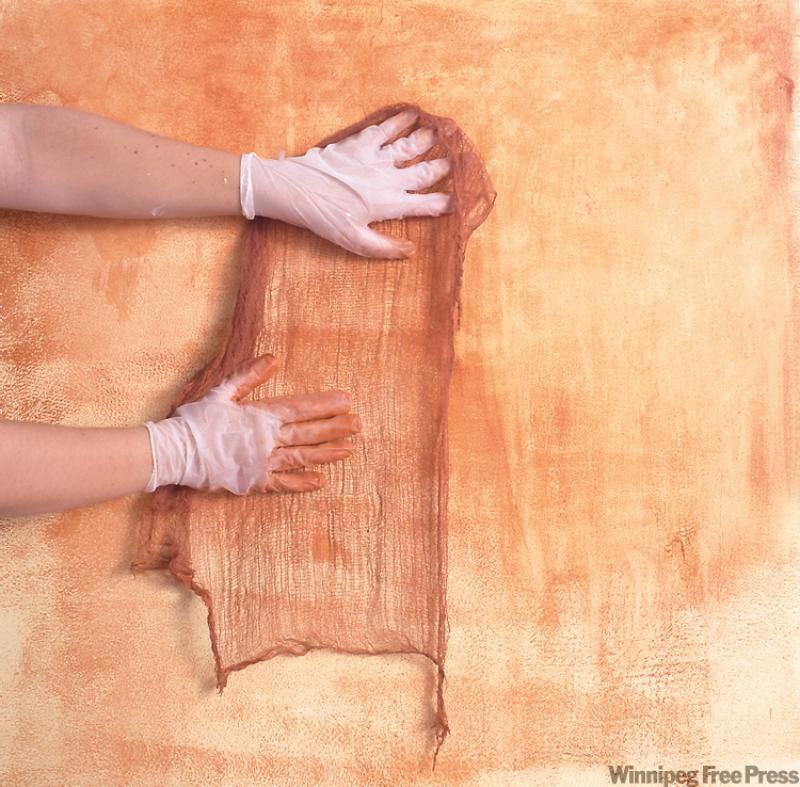
The warmth and vibrancy of antiqued walls is easiest to reproduce using the pure colours of artist's acrylics mixed with water-based glaze. The object of the paint effect is to add layers of coloured glaze over a light base coat and then remove some of the glaze leaving behind a pattern of weathered colours and peeling paint. The glaze recipe is 1 tablespoon burnt sienna artist's acrylic, 1/2 tablespoon ocher artist's acrylic, 1 teaspoon raw umber artist's acrylic, 3 cups water based glazing liquid, 11/2 cups water. Mix the coloured glaze well. Apply two base coats of cream or off-white paint. Working in four-foot sections, roll on the glaze in vertical and horizontal strokes. Make some patches of colour heavier than others. Soak a rag or cheesecloth in water, squeeze it out and then soak it in the glaze. Wearing gloves, squeeze it so it is not dripping, then unfold it and lay it on the wall. Press it down lightly with your gloved hand. Continue this technique randomly over the glazed wall. With a rag, dab to blend any roller marks or fingerprints, but do not blend away the overall weave pattern. Move to the next section and repeat, keeping a wet edge.
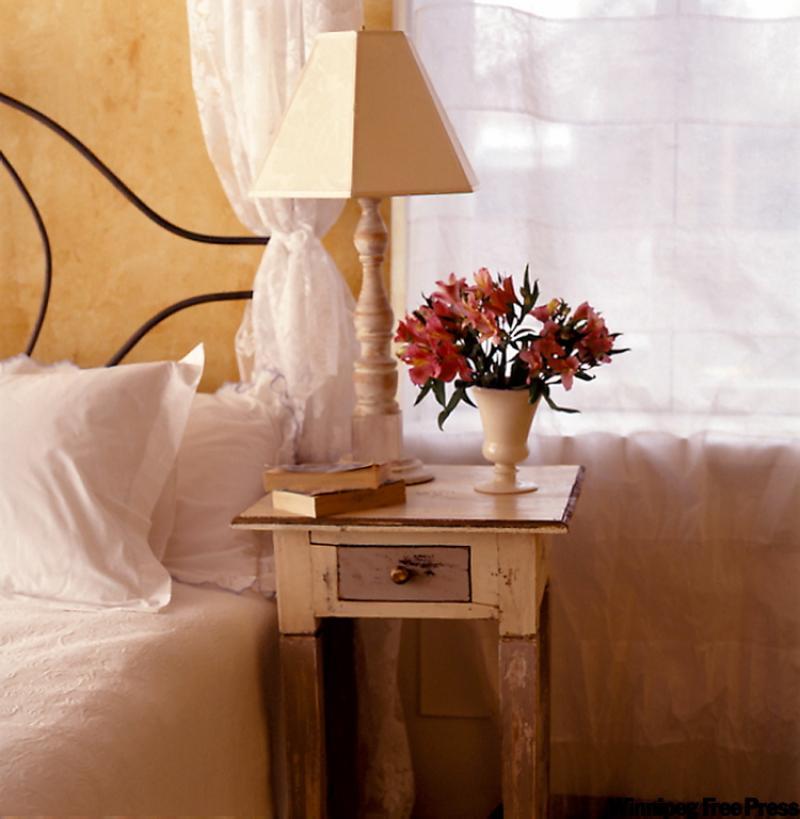
The "old" bedside table is in fact a new piece of raw furniture I aged with paint. I painted the top black and the legs white. Once dry, I painted white over the black top and gray over the legs and drawer. With medium-grade sandpaper, I rubbed away paint in random patches to reveal the white and black base coats.
The freshness of white sheers and soft antique bed linens lifts the spirit of the room and brings out the shadings and subtle colour contrasts. I know you will love the result.
Dear Debbie:
Years ago, I worked a paint technique using a light and dark coloured glaze and removing some of the paint with sheets of plastic. It made a wonderful wallpaper effect and I received many compliments. I'd like to do it again, but can't remember what proportion of glaze to paint I used. I've looked it up on the Internet, but recipes all vary. -- Ursul
Dear Ursule:
The more glaze you add to the paint, the more translucent the mix, which means you will see more of the base coat shining through the coloured glaze. For the paint effect you describe, the best ratio would be about one part glaze to two parts paint.
Please check out my new website www.debbietravis.com where you will find dozens of recipes for paint finishes along with my tried and true, easy step-by-step instructions.
Debbie Travis' House to Home column is produced by Debbie Travis and Barbara Dingle. Please email your questions to house2home@debbietravis.com. You can follow Debbie on Twitter at www.twitter.com/debbie_travis.