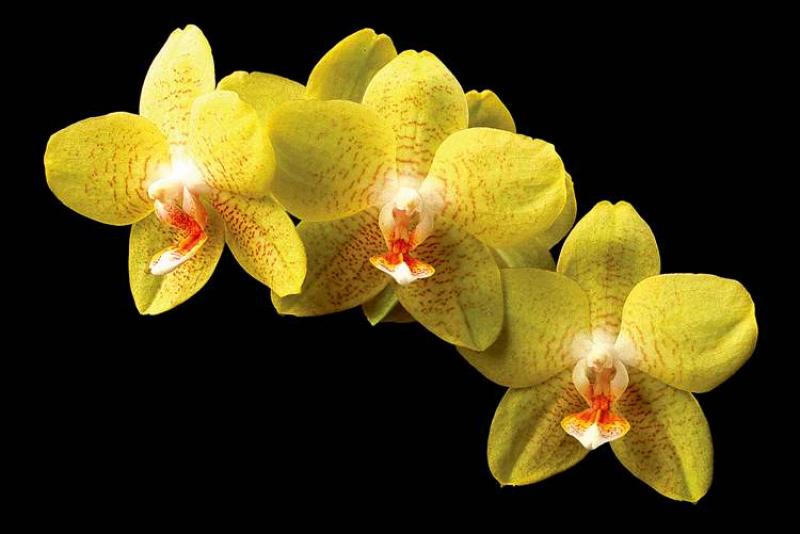
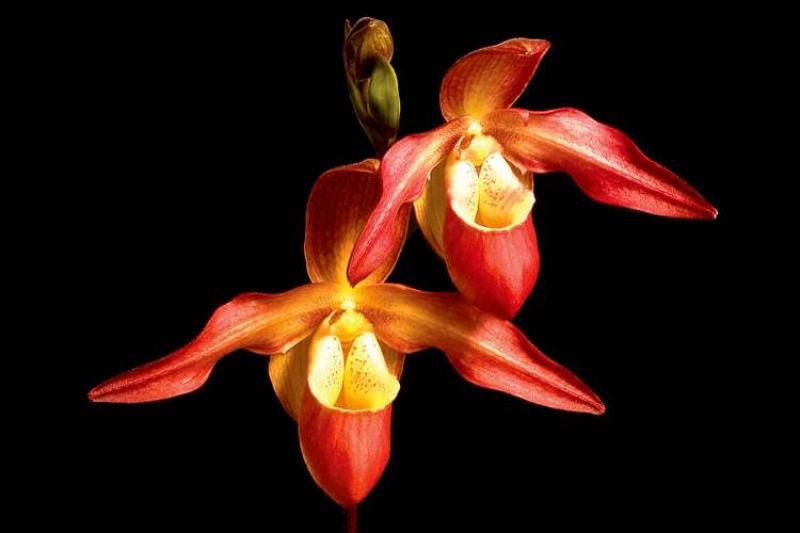
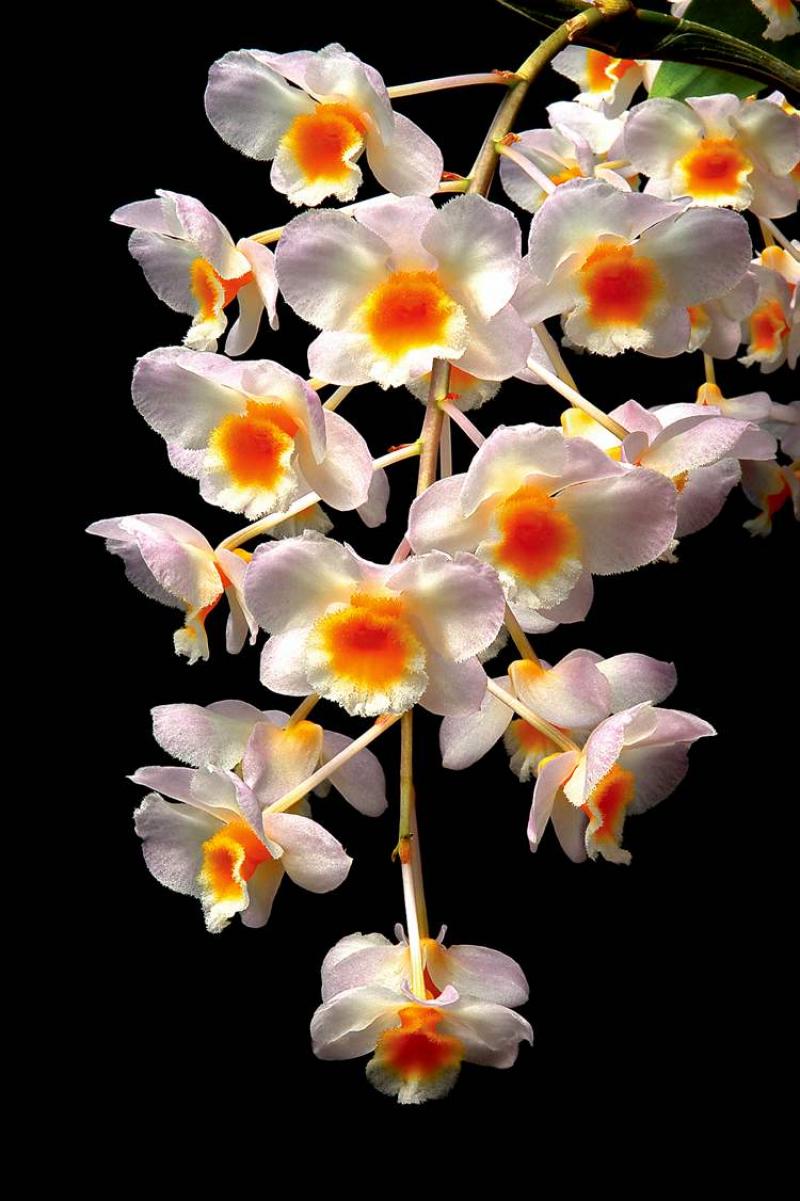
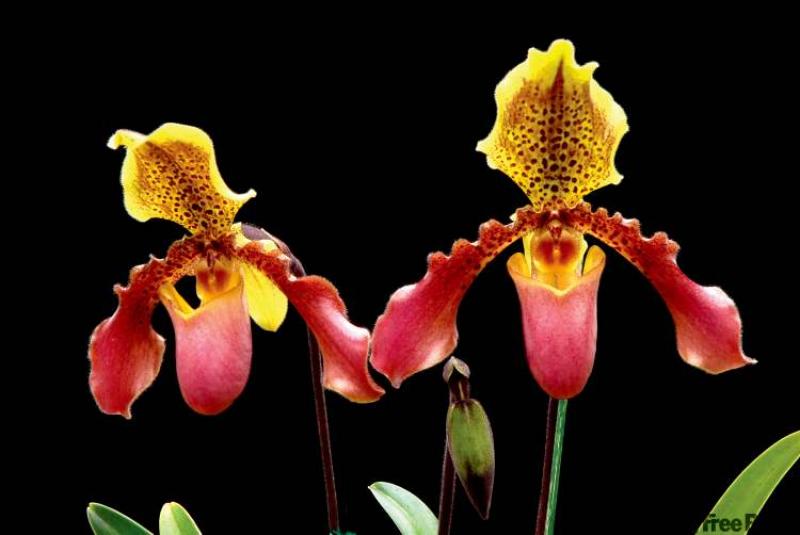
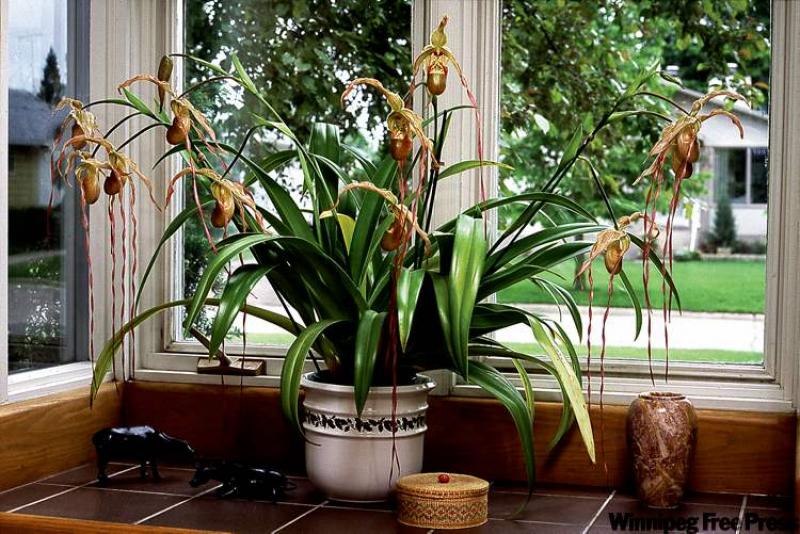
Tropical orchids are a beautiful addition to your home and can be successfully grown if basic requirements are provided. The secret is to mimic the natural growing conditions of the specific orchid you wish to grow.
The most popular orchid with novice growers is the attractive and long-blooming Phalaenopsis, commonly known as the "moth orchid". Within its natural habitat of the southwest Pacific, this orchid attaches itself to trees so its is shaded from direct sunlight. Gentle air movement, medium to high humidity and temperatures in the 16C-to-30C range provide optimum growing conditions. A weak solution of nutrient is provided on a constant basis by organic matter and bird droppings washed down by rain from the canopy of branches above.
Obviously, we can't provide these exact conditions in our homes. We can, however, approximate them in many ways by providing the proper environment.
The two most popular growing mediums for orchids in the home are "a bark and sponge rock mix" or "New Zealand sphagnum".
Both of these provide good drainage, air space around the roots and good moisture retention. Orchids should be transplanted into new media at least every two years.
Winnipe's water quality is excellent, and water should be tempered overnight prior to watering.
As the media used for growing orchids does not contain nutrients, it's necessary to use a fertilizer that contains micro-nutrients in addition to nitrogen, phosphorous and potassium.
Use º the recommended dosage and fertilize with every watering. Water thoroughly using generous amounts of water (at least twice the amount of water the pot would hold). Don't allow the roots to remain in constant moisture-laden media, as the roots must approach dryness before re-watering.
Once a month, instead of fertilizing, use a clear water flush. This rids the media of any salt accumulations resulting from the use of fertilizers.
Placing your orchid in an east-facing window is ideal, with cool morning light and adequate light into the afternoon. A south-or west-facing window must be shaded by a sheer or lace curtain, especially during the summer months. A north-facing window will produce healthy vegetation, but no blossoms. A plant stand equipped with fluorescent lights provides enough light for Phalaenopsis and other orchids that require medium to low light levels.
Most orchids prefer the same temperatures that we do. A number of orchids require a temperature fluctuation between a daytime high and a nighttime low to initiate the blooming process.
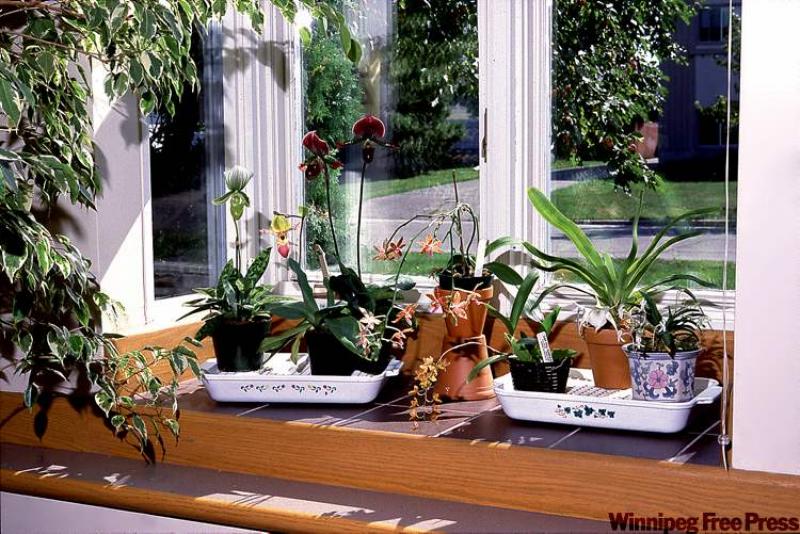
Orchids also require a humid environment. If you grow a number of orchids in an enclosed area, humidity may not be a serious problem. However, if you only have a few plants, you will want to provide additional humidity. A simple way to accomplish this is to place a layer of small pebbles in a tray (a pyrex lasagna pan works well), add water to the pebbles and place your orchids on top of the pebbles. Make sure the bottom of the pot is not sitting in water.
Stale air is conducive to fungal and other plant disease. Gentle air movement around the orchid plants prevents high leaf temperatures and is essential to good plant health. A small fan running continually at a low speed will assist in preventing plant problems.
One of the primary insect problems with orchids grown in the home is scale. During favourable weather, take your plants outside and spray them well using an appropriate insecticide. After two weeks, spray again to ensure that the egg-to-adult cycle is broken. For localized infestations, rubbing alcohol on a Q-tip works well. Occasionally, a black soft spot will appear on a leaf. This is most often caused by a fungus. A sprinkling of cinnamon is normally sufficient to control this. If the spot is large, cut it out with a knife or razor blade and sprinkle cinnamon on the cut edges. Disinfect the cutting tool with alcohol after use.
Should you wish to grow orchids other than Phalaenopsis, determine their specific requirements and adjust your conditions accordingly. The internet and library are a good source of information but, if you prefer personal interaction, join the Manitoba Orchid Society (MOS). Meetings are at held every third Sunday of the month at 2:00 p.m. (novice class at 1 p.m.) in the Conference Room of the Canadian Mennonite University, 500 Shaftesbury Blvd.
The 2011 MOS Orchid Show will be held March 25-27 at the Assiniboine Park Conservatory. Come and join us!
Lorne is Past President of the Manitoba Orchid Society and Past President of the East Kildonan Horticultural Society (now known as the East Kildonan Garden Club).