
PHOTOS BY Marc LaBossiere / Free Press
Sports trading cards from the 1960s were concealed within a wall cavity in a home until demolition work disentombed them.
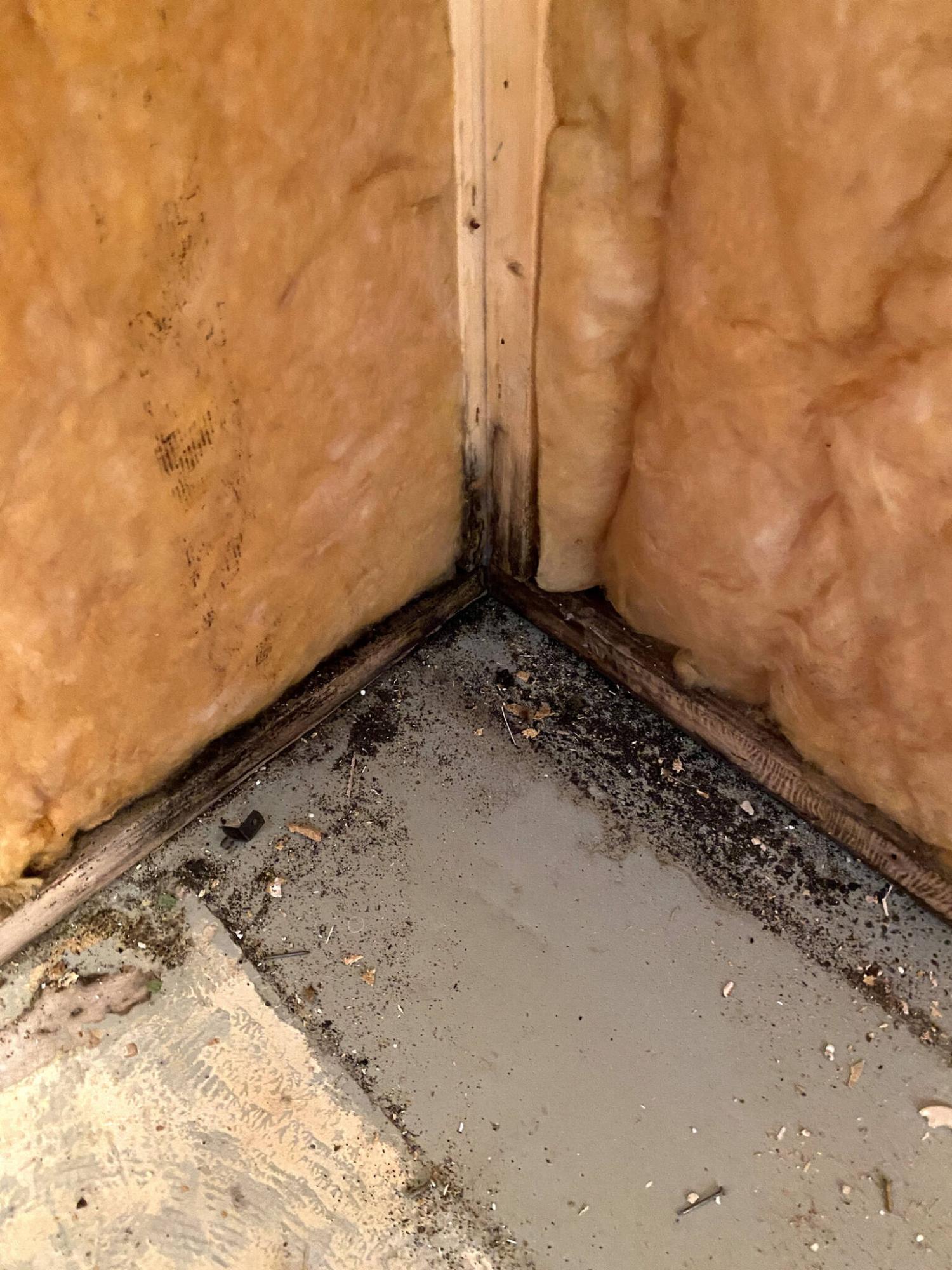
It is not uncommon to find areas of mould due to unwanted moisture along basement walls.
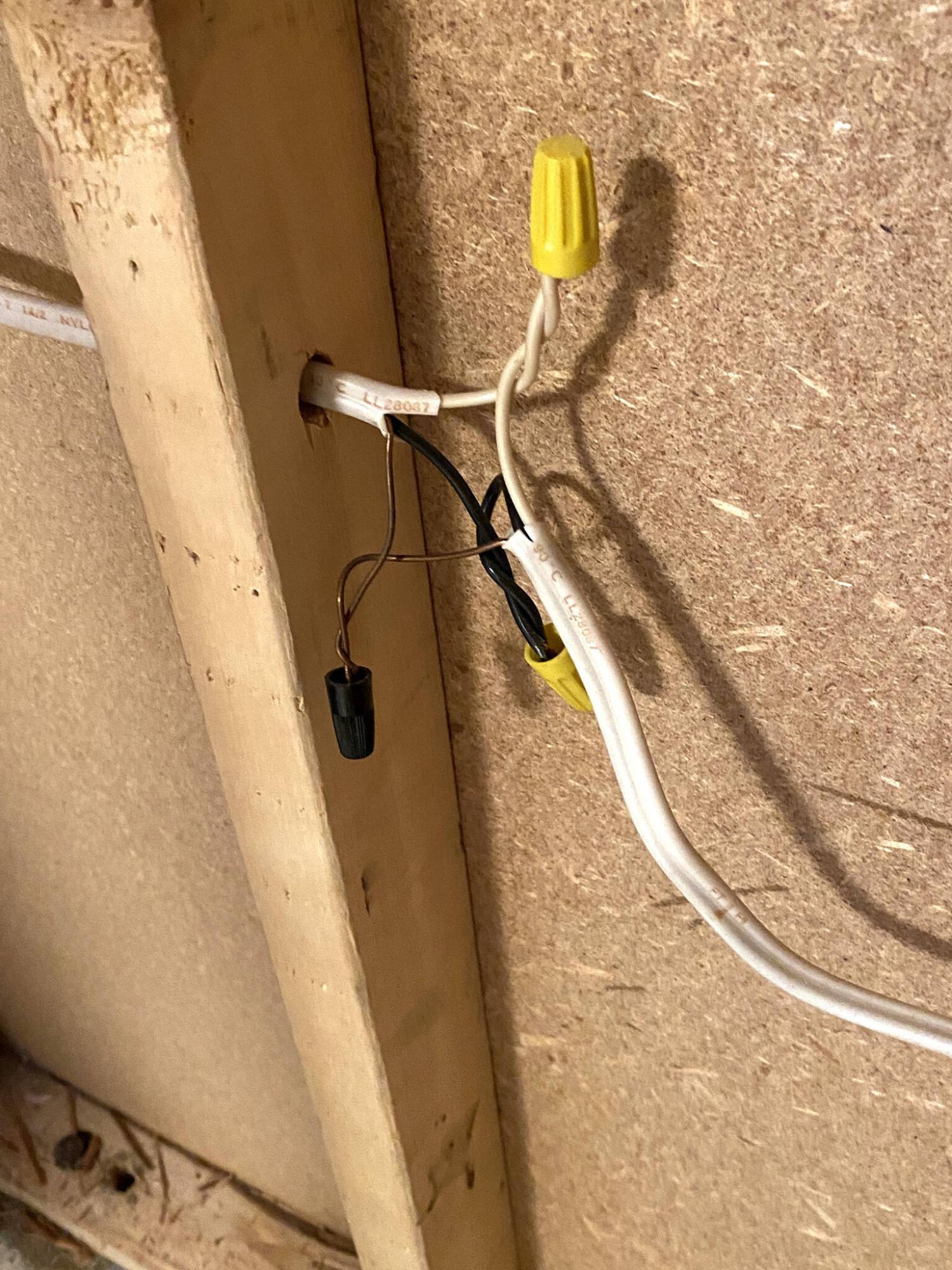
Wiring linked with twist-on connectors (left) in a finished wall cavity is not acceptable. It’s not uncommon to uncover areas of mould (right) due to moisture along basement walls.
The first few weeks of any major lower-level renovation and remodel will likely entail a whole lot of demolition, due to the reorganization room configurations as well as removal of old esthetic sheathing on walls and ceilings. As such, it is always intriguing to unveil what may have been concealed within wall cavities and between ceiling joists for many years, if not decades.
I began a large basement remodelling project last week. The entirety of the lower space boasts of a rec-room which will retain a laundry area that will be expanded to include more storage and house large aquariums that will be serviceable from within the laundry space while showcasing the various fish and turtles through openings into the rec-room.
An existing bathroom will decrease in size slightly to allow for more space in the adjacent office for an upright freezer, a fair-sized bedroom and an expanded utility room which is unfortunately located in the centre of the basement footprint.
As the old wall panelling was removed from the interior walls, the impending new wall layout quickly began to reveal itself, heralding improvements in both look and functionality.
As a contractor, I always seem to fall into the same trap: I expect the existing was built the way I would have built it. You would think after so many years, I would now know better. Rarely are any existing structures and room features built in a consistent manner. However, the unexpected finds behind walls and above ceilings never cease to amaze me.
It reminds me of a rather large renovation undertaken about eight years ago. It was a second-floor bathroom expansion that absorbed an adjacent bedroom to create a six-piece bathroom, introducing a corner tub, double-sink vanity and clothing washer dryer to the space, adding to the toilet, and walk-in shower (that replaced the old claw-foot tub) in the existing bathroom space.
As I was removing old flooring, I got zapped by a wire feed within the wall, at the base near the sub-floor. Upon further inspection, a previous renovation had left this cut electrical feed live within an exterior wall, which was “insulated” with old newspapers from the 1960s and a few pages from an ancient Sears catalogue.
Scary find
This live feed was one of three I discovered during the reno. The old electrical feeds were addressed by abandoning the lines altogether, or installing an outlet near where the live cut wire terminated. It was a scary find, one that could have caused serious damage to the house.
At my current project, a few electrical circuits were also improperly connected. Within closed walls, wires had been joined together using twist-on connectors, outside of an electrical box. Not only must wires be connected solely within an accessible junction box, feeds within a closed wall must be continuous to their termination point, at either an outlet, switch box, light fixture or exhaust fan.
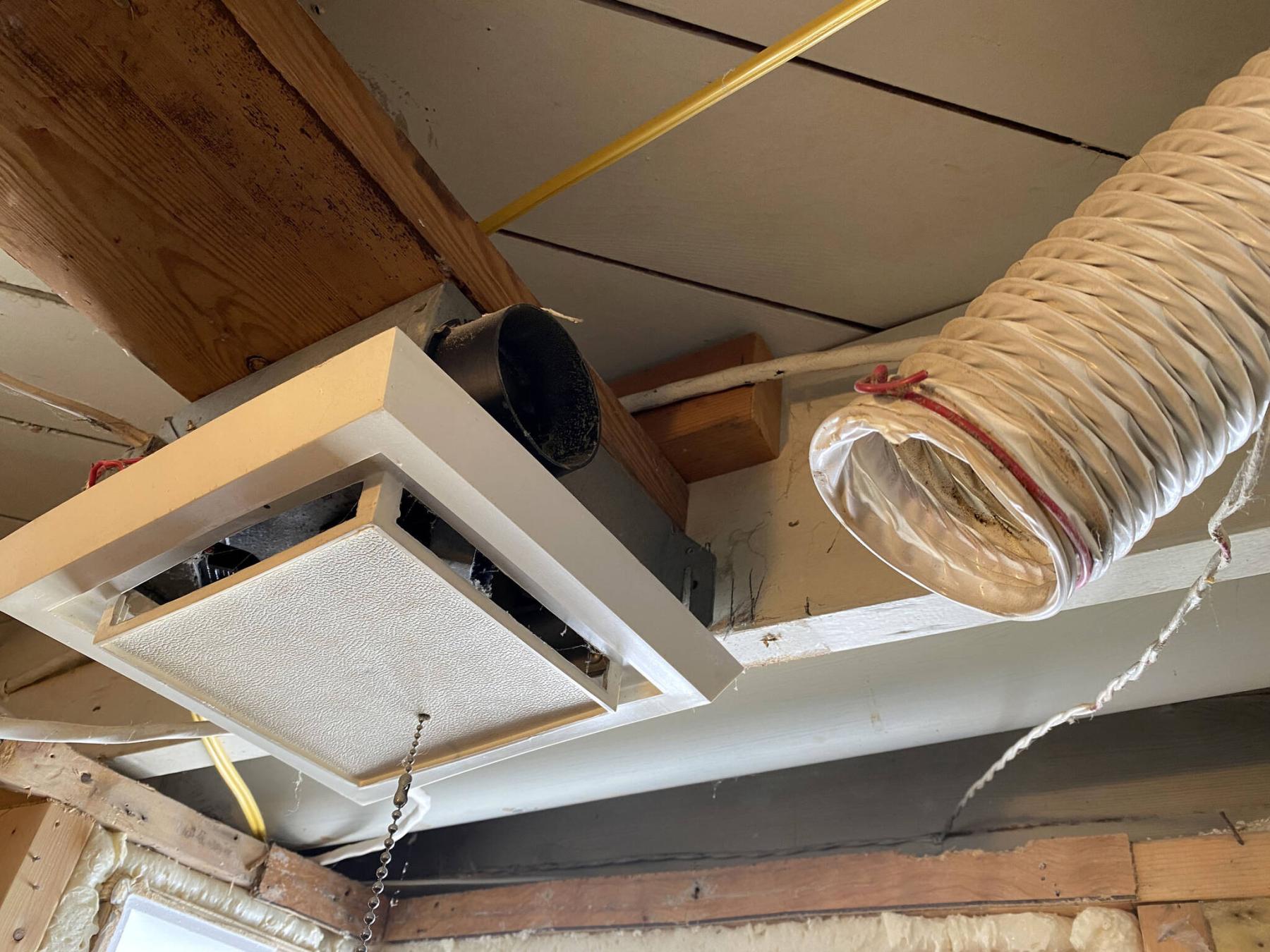
Another find that explained the improper ventilation was a detached vent hose to the bathroom exhaust fan. Because existing ceiling tiles had been fastened to the ceiling joist, there was no way of knowing the hose had come loose from the vent housing, thereby circulating humid air into the ceiling-joist cavities above, instead of outside.
Another predictable demolition reveal is finding moisture where it doesn’t belong, causing mould to form in various spots. This typically occurs along exterior basement walls near windows and along foundation cracks that may have allowed water to seep in over the years. Although these issues may not have been evident when the wall remained closed, it’s best to inspect all walls for water breaches and to address issues before any finishing begins.
The most surprising finds are unexpected items that were likely misplaced or forgotten at the time existing walls and ceiling were sheathed. Often, small tools are left sitting atop a wall base or cross beam, such as an old Lufkin tape measure I found last year, likely from the early 1970s. It appeared to have been brand-new when it was entombed and still works perfectly.
The most memorable discovery was a small collection of sports trading cards from the 1960s — baseball and hockey cards in various states.
The homeowner wasn’t really interested in the find and suggested I take them with me upon completion of the renovation. After a bit of research, each would have had some sale value had it not been for their faded and deteriorating condition. No matter, it still makes for a very cool find and story.
I suppose the moral of this column is simple: expect the unexpected when performing the tasks of demolition. I have purposefully “left something behind” within a wall cavity or ceiling joist space simply because it’ll be someone else’s surprise during a future renovation, a memorable story for whoever comes across it.
However, I have yet to place a plastic skeleton partially buried beneath an enclosed area of a new deck build — something I’ve always wanted to do! I can just imagine the look on someone’s face upon discovering it, and realizing it was a practical joke. An unforgettable tale for someone to tell. I’ll have to look into that.
RenoBoss.Inc@outlook.com