Michael Allen / Winnipeg Free Press
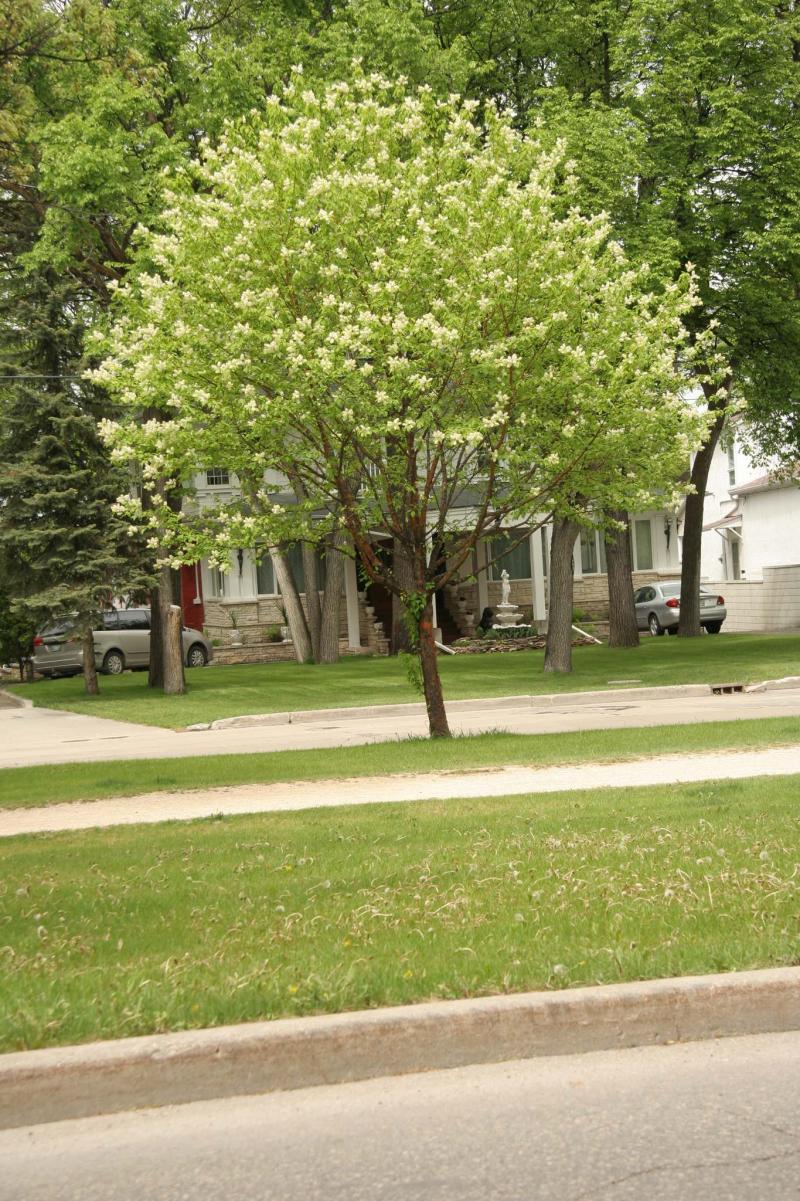
Amur choke cherry in flower.
Michael Allen / Winnipeg Free Press
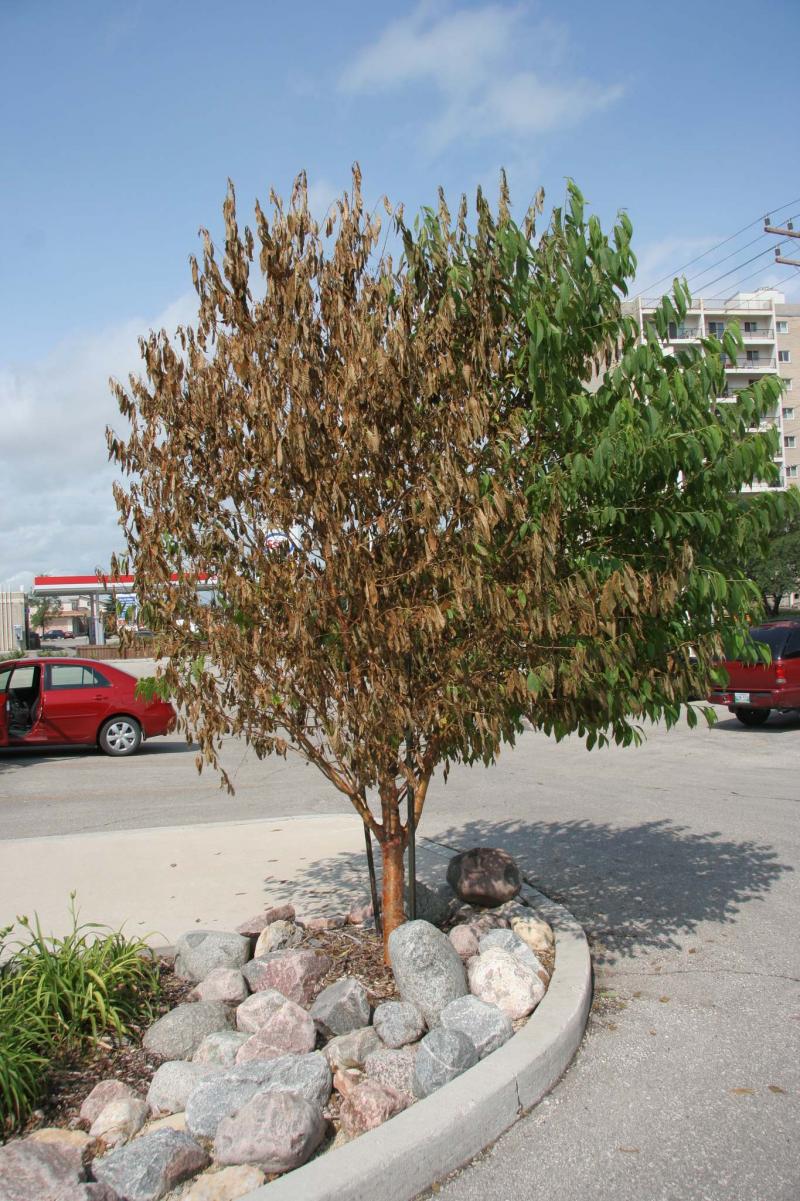
Amur Cherry with Fusarium oxysporum disease.
A few years ago I had the roots of a dying Amur chokecherry tested at the Manitoba Agriculture Crop diagnostic lab.
These trees were dying in many diverse locations in southern Manitoba. Tests performed on the leaves, twigs, branches and exposed bark did not yield any confirmative results for a target pathogen (i.e. a disease).
I discovered a client’s dying Amur chokecherry tree had exposed roots. About one-sixth of the tree’s crown was barely alive, so I decided to collect some of the stressed twigs as well as take samples of both the exposed and nearby buried roots. The diagnostic lab results revealed that there was a disease in the root samples, namely a very common fungus called Fusarium oxysporum.
This disease is well known for its toxic effect on plant roots. I have written about this disease in my book with respect to its effect on Amur chokecherry.
Reviewing some of the very exhaustive literature on this disease provides a very surprising history and information about the nature of this worldwide disease. There is much speculation about the wide range of alternate hosts (both plants and animals) that either become infected or harbour the spores of this disease.
These remarkably diverse and adaptable Fusarium fungi have been found in soils ranging from the Sonoran Desert in the southern U.S. and Mexico to tropical and temperate forests and grasslands, and even in the soils of the tundra. This disease must surely be one of the most complex anywhere on Earth. There are numerous forms of Fusarium in just about every place one can look around the world.
The question I have been asking myself is, why has Fusarium only appeared — so far — on Amur chokecherry? From my own observations I suspect other trees in the cherry family — called Prunus — may also have problems with Fusarium blights.
Looking at the research literature on this very complex subject, I am beginning to wonder about the relationships in fire blight (Erwinia amylovora) susceptible fruit trees, including all the cherry trees with the Fusarium blight.
It is well known that all fruit trees can be infected with fire blights. Do the two diseases somehow work together? One form of Fusarium blight known as Colletrotrichum is known to affect apple and pear fruits.
It is called blossom-end rot of apple. This sub-disease is part of the very complex black rot disease (Botryosphaeria obtusa) which I have written about before. I will continue to examine the relationships among the tree diseases, especially with respect to fruit trees. The scientific papers on the internet certainly help in this respect.
There is a common Fusarium disease that affects the lawn grass of many house properties in and outside the city. Fusarium blight summer patch shows up in some years, but mostly does not. Typically this patch shows up in a more or less circular pattern and can be up to a metre or so in diameter. The centre of this area often has thriving green grass. This gives it an appearance of a bull’s eye. It is best treated by professional lawn-care experts.
From my years of involvement with tree diseases, there is no question the problems get more complex and the subsequent losses of mature fruit trees worsens with time. If you have problems with fruit trees, contact me for possible assistance.
Michael Allen M.Sc.F., RPF (ret’d) is a consulting urban forester, tree diagnostician and certified arborist. He owns Viburnum Tree Experts. His website is www.treeexperts.mb.ca, he can be reached at 204-831-6503 or 204-223-7709.
viburnumtrees@shaw.ca