Photos by Michael Allen / Winnipeg Free Press
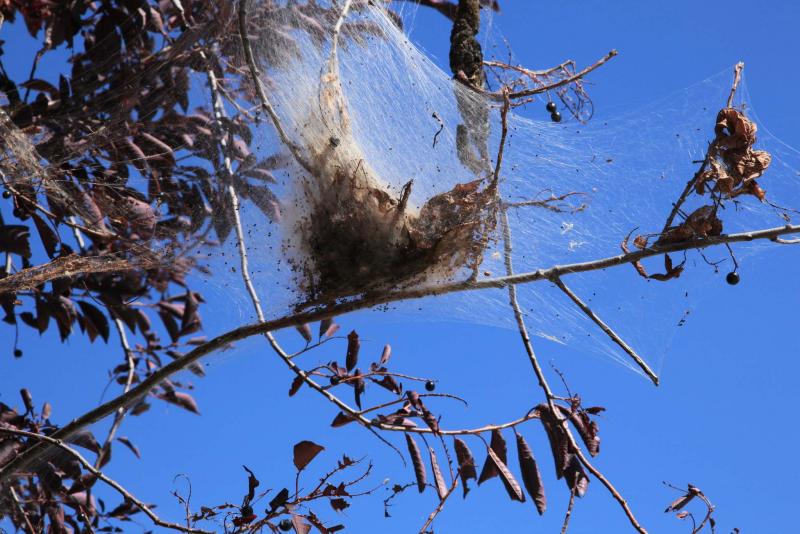
Fall web worms in web mass.
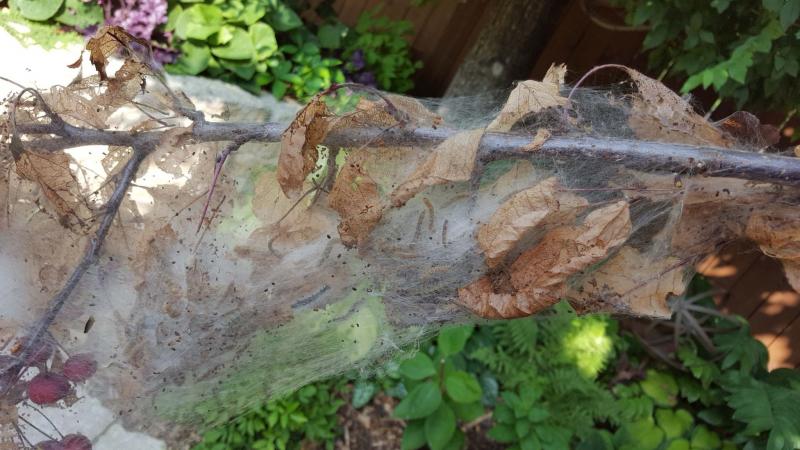
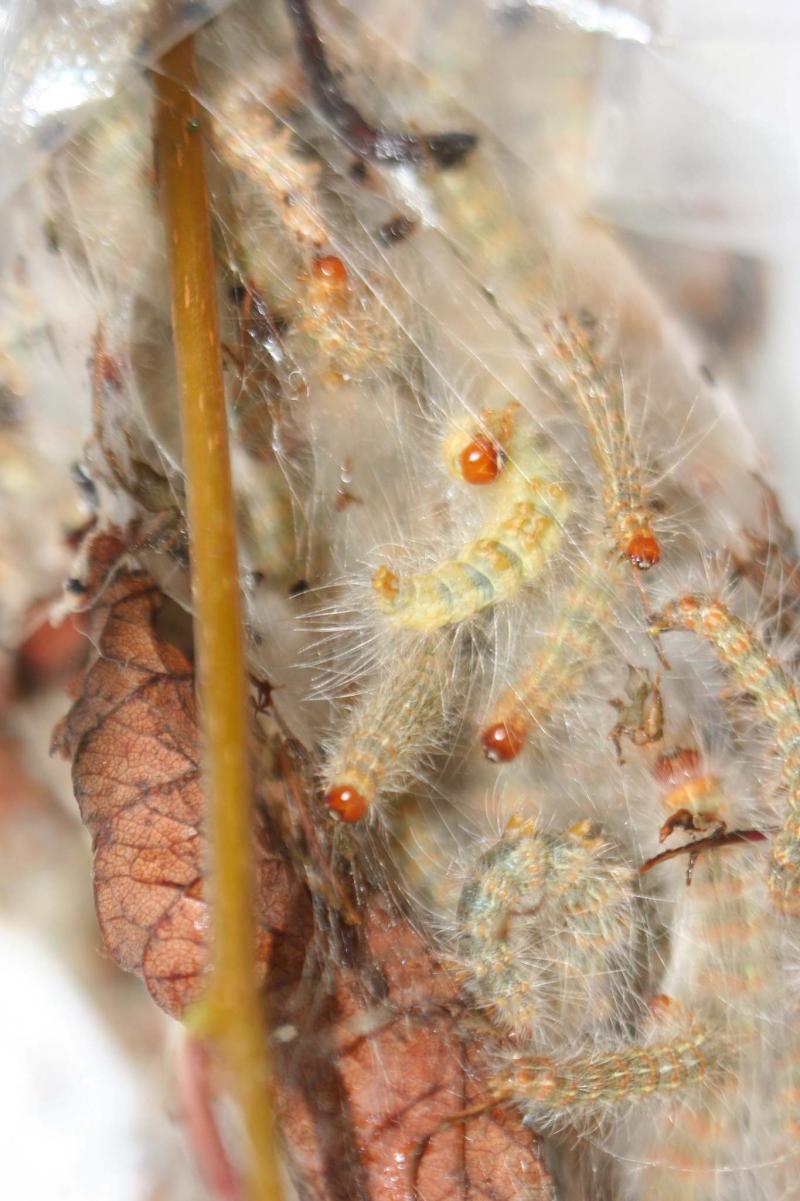
Forest tent caterpillars in their silk larvae sac.
This past summer and the summer of 2016 saw the outbreak of forest tent caterpillars — referred to as larvae — on Winnipeg’s trees and likely on trees outside the city. This year and in the last few years, we have also seen the invasion of tree webworm larvae (also a caterpillar), especially in the southwest parts of the city. I have not received any information from readers who have seen these large webs from outside the city, but I am certain they occur there as well.
I have written about forest tent caterpillars in this column this year already, as well as in previous years. There is a significant difference between the two web-producing larvae. For one thing, they are two distinct insect species: the webworm is scientifically referred to as Hyphantria cunea, and the forest tent caterpillar is scientifically referred to as Malacosoma disstria. The web-like tents produced by these insects are quite different.
Barberry shrubs have recently been reported to me to have been infested with the webworms producing silk-like tents around the entire plant. The larvae are distinctly black with tiny spike-like hairs.
Within these tents is a large amount of leaf and often flower parts debris strewn randomly, but usually attached to the silk threads. I have seen this silky mess often over the years. This typically shows up in the middle of summer, but extends right into the fall.
There are many kinds of webworms. In southern Manitoba, the adult webworm is a white moth which is indigenous to our part of the world.
As soon as the larvae are produced from the moth’s eggs, they start spinning silk-like threads throughout the tent. Once done, the larvae, which we call webworms, start skeletonizing single leaves inside the tent. The young webworm larvae are typically black and soon exhibit spines on their backs as they age.
In Winnipeg, I have seen webworm larvae with distinct orange colours blended with the black bands as the larvae get much larger. I have not yet seen this colour phenomenon described on the internet. Like many insects, their colours can change as they age, and this variation can change in different regions of North America.
Forest tent caterpillars are an entirely different type of larvae. Southern Manitoba is now in its second consecutive year of an infestation of these nuisance caterpillars well known to most of us.
The eggs are deposited by a moth in mid-summer, and are then over-wintered in a protective case that is attached to twigs. I have removed many hundreds of these cases in my area, especially this year. All eggs hatch if they have not been parasitized by wasps in the spring.
The emerging caterpillar larvae spin a protective silk tent in one or more crotches in a favourite tree. I find the most prolific caterpillars are found in crabapple, aspen and green ash trees, but it often depends on availability of desirable food. They feed during the day, and virtually strip the leaves off a tree. The tents initially keep the young larvae warm during cool nights. Most people have seen them group together in a large, black mass on a tree trunk during the evening. The tents are used for shelter at nights to discourage predation, mostly by birds. They are also useful for keeping the larvae dry during heavy rainstorms. Heavy attacks by these larvae are rarely fatal to the tree. As the larvae get more mature, they often go wandering up walls and any other place where they sense they can go through their transitional moulting process. Without question, these insects are one of our worst urban nuisances other than wasps. There are specifically designed moth traps available that use strong pheromones to lure the moth into an inescapable trap. These traps also aid insect researchers in determining area-specific locations where the larvae occur.
Fortunately, the invasions of pest larvae do not last year after year. Investigate the various control products in your area and learn to control them in the best manner you can.
Michael Allen M.Sc.F., RPF (ret’d) is a consulting urban forester, tree diagnostician and certified arborist. He owns Viburnum Tree Experts. He can be reached at 204-831-6503 or 204-223-7709. His website is treeexperts.mb.ca.
viburnumtrees@shaw.ca