Coniferous trees are very popular trees because they do not lose their needles so easily and provide colour to the land all year round. In southern Manitoba communities, spruces dominate the evergreen trees. For most areas of the northern Interlake and boreal regions, Jack pine is the native pine that dominates sandy landscapes.
Older stands of these pines are going through natural decay processes waiting for a fire to open up their tightly closed cones to release the seeds that will become the next generation of Jack pines. Jack pine, however, does not grow successfully in southern Manitoba clay-loam soils. There are a number of diseases of all pines that all pines experience in Manitoba. Red pine and white pine, which occur naturally in the Whiteshell and Lake of the Woods areas are subject to infection by other diseases I will not go into here. Scots pine trees originated from northern Europe, but have been planted in the southern areas of the province because they are highly tolerant of the clay-loam soils. It is the most commonly planted pine tree in urban areas. These pines also add another element of winter colour to the urban landscape, especially Scots pine. Mugo pine is both a common shrub and small tree and it is affected by the same urban diseases as Scots pines.
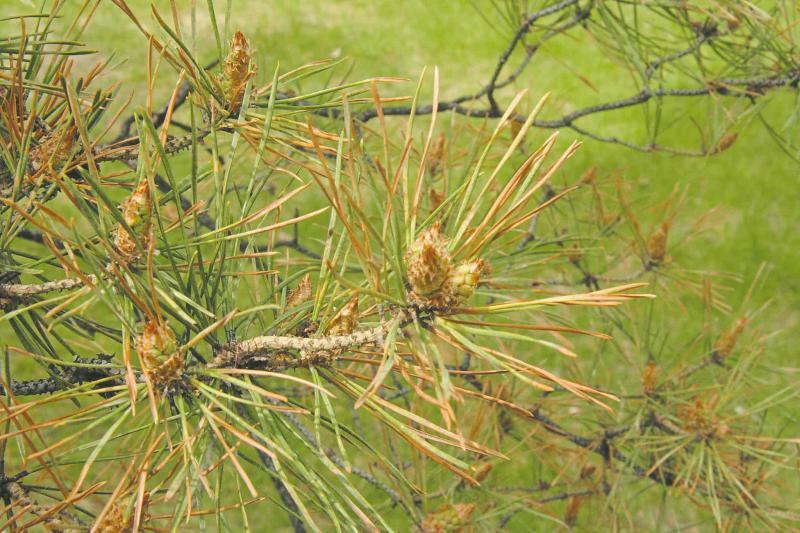
The upper bark of the mature trunks of Scots pines have flaky orange-grey bark giving them a distinct, unique appearance for a pine tree. The needles are slightly twisted and blue-green in colour. As the tree ages, it starts to slowly lose the needles mostly in the lower canopy. Needle loss is almost entirely due to a fungal disease commonly called pine shoot blight (also known as Sirococcus conigenus). In a large tree, it is a difficult disease to control requiring multiple sprays of copper sulfate fungicide over at least two or three years. Spraying for this disease in large trees in high-density urban areas may not be practical or desirable.
These pines are affected by diseases and insect pests. Pine gall rust (also known as Endocronartium harknessii) is a common Jack pine disease of the boreal forest. The disease also affects both Scots pines and Mugo pines, especially in the suburban regions surrounding cities and large towns. The disease gall looks roughly like a wooden ball with a branch growing through it.) If you find yellow areas in the gall, these are disease-producing locations ready to send out spores. This is a very difficult to impossible disease to control except at an early stage where pruning off the gall can help. You must disinfect your pruners or saw after every cut or else you will spread the disease. Noticeably infected pine trees need to be removed and ideally burned where permitted.
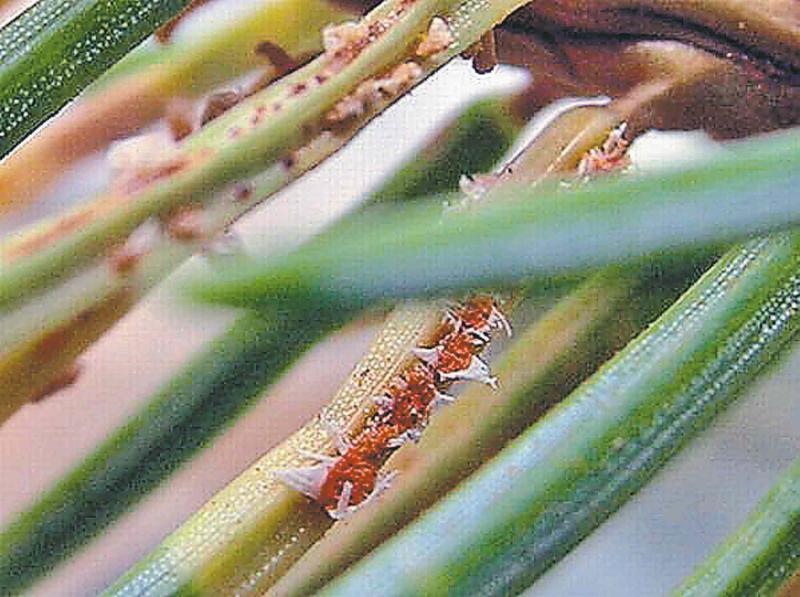
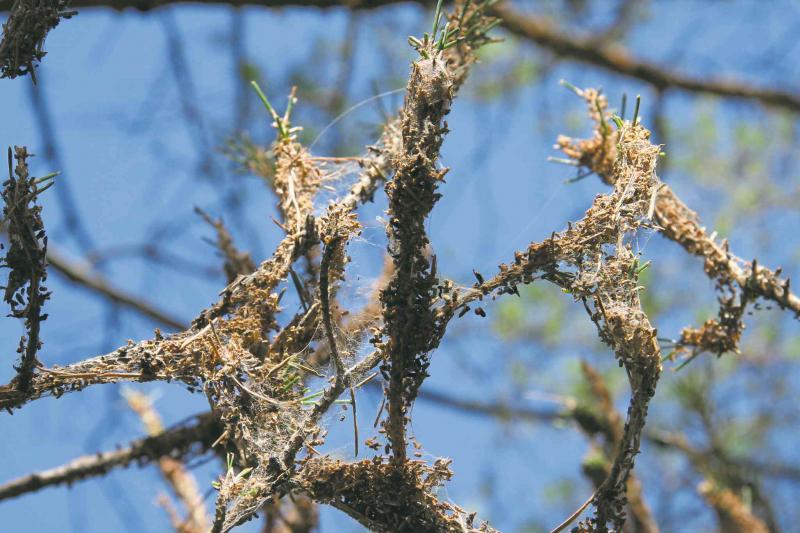
There are a few insects that damage Scots pines in urban areas. Pine web worms (actually caterpillars) are relatively uncommon but can obtain high concentrations in different parts of the southern province from year to year. They do go after Scots and Mugo pines very aggressively. They will completely denude all needles from every twig and branch of the tree. They can be controlled with Btk or with insecticidal soap. Scale insects are noticeably one of the worst urban pests especially on Mugo pines, and to a lesser extent on Scots pines. These scales are especially problematic for all coniferous trees. These pest infestations can be controlled with horticultural dormant oil in April only before the opening of the buds. The oil smothers the eggs and therefore they die before they start feeding.
I receive many emails and calls from readers who are frustrated with diseases and pests on their pines. Look for early signs on the tree or shrub of what appears to you as unnatural damage. Start a control program immediately. Get in touch with me through my website if you need assistance (www.treeexperts.mb.ca) or give me a call.
Michael Allen M.Sc.F., RPF (ret'd) is a consulting urban forester, tree diagnostician and certified arborist. He owns Viburnum Tree Experts. He can be reached at 204-831-6503 or 204-223-7709. His latest book, Dr. Tree's Guide to the Common Diseases of Urban Prairie Trees, provides detailed information about prairie tree problems.