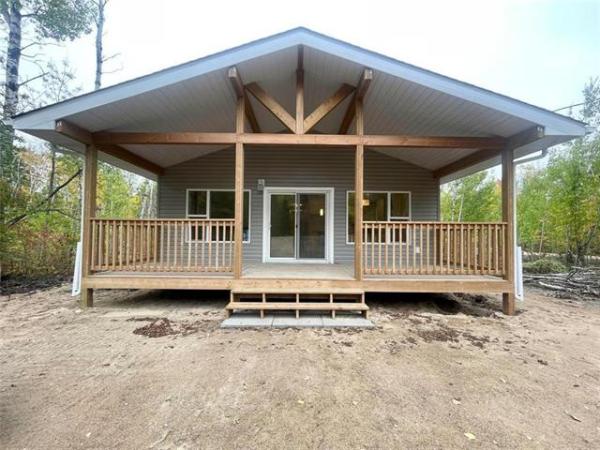
Question: I read your Sept. 27, 2014 article, Must I heat the cottage over winter? We have a cottage at the lake, which we close in October for the winter and open up in May. There is no heat on during the winter months. We had vinyl flooring put in by professionals about five years ago. About three years later we noticed that it was lifting at certain places. Some at the baseboards, in the kitchen under the fridge and by the kitchen cabinets. Also, in some areas in the bedrooms.
We spoke to the people who put down the flooring and they are saying the problem may be because the cottage is not heated in the winter, or because there is moisture under the cottage. We were wondering if maybe you have a solution for our problem.
Thank you, Diane Belcher.
ANSWER: Various types of flooring materials react to changes in humidity and temperature differently, and vinyl flooring may be as susceptible as any type to these variables. Because vinyl is quite flexible, it may expand and contract more than most flooring materials, which makes it more difficult to secure. We will explore the possible reasons for the problem and a couple of practical solutions.
Vinyl flooring is one of the most durable types of floor covering, which has been used for many years in all types of homes. It may be an ideal choice for a cottage, as it will not absorb moisture through the surface, nor will it collect excessive dirt and sand common to lake environments. It is easy to sweep or vacuum up sand from the smooth surface and it will not be adversely affected by wet feet or shoes. The main concern with it in a seasonal dwelling is excessive expansion and contraction.
Because vinyl has a greater tendency to expand and contract than many other building materials with changes in temperature, extra actions may be required to keep it in good condition. It is quite common to see slight lifting or buckling, especially in high traffic areas or near the perimeter of the flooring. Anywhere there is a seam or edge is the most likely place for movement of the sheet flooring to be observed. As the material contracts due to the cold winter temperatures it may pull away slightly from the walls, cabinets, baseboards or other items at its perimeter. When this happens the adhesive securing it to the subfloor may begin to deteriorate due to dry air and dirt that gets under the flooring. When the weather warms up in the summer, the flooring may expand back to the original position, further loosening its grip to the subfloor.
Problems with poor quality adhesives may also be to blame for what you are seeing. Re-gluing the flooring where it has lifted should be your initial course of action. Ensure you inquire at the home centre or flooring supplier about the best type of adhesive for your situation. Some typical latex adhesives may not withstand the cold weather as well as more expensive types will. Spending a little more money on superior mastics may help prevent a quick reoccurrence. Regardless, the same thing may return even after a proper repair job, due to the changes in ambient room temperature.
As previously stated, your vinyl flooring lifting may worsen as more dry air and dirt accumulates under poorly secured areas. Foot traffic will only contribute further to this decline, as it will cause the loose material to move up and down when walked on. The best thing to do in this case is to mechanically fasten the flooring along the edges, to help prevent more movement.
While it may seem simple to just nail, staple or screw down the flooring around the edges to prevent lifting, that is a poor solution. Punching holes in the surface of vinyl flooring will compromise its strength and will also make it more vulnerable to moisture penetration and damage. It will also look very unsightly to have the fasteners exposed, even if only at the perimeter. Furthermore, firmly fastening flooring that is known for shrinking and expanding may cause it to tear at the fasteners, ruining it completely. So what is a better solution?
In my experience, the best solution to solving the movement and lifting problem with vinyl flooring is to put something on top of the edges which will hold it in place vertically, but will allow some lateral movement due to expansion and contraction. This can be simply done with common baseboards, quarter round or cove materials. Depending on the location, these could be made from wood, vinyl, MDF or other less popular materials. The variation in choices will help match these to the surrounding walls or cabinets. Depending on composition, the baseboards or other components could be stained, painted, or varnished to match the adjacent surface materials. The beauty of this system is that the fasteners will be used to hold these perimeter components in place, which will then put downward pressure on the vinyl flooring at the edges. This should ensure the fasteners do not damage the flooring, while allowing some lateral movement, but not enough to expose the edges. Keeping the edges covered and vertically secured will prevent lifting, and debris getting underneath, but should allow enough slack for the flooring to move slightly with the seasons.
Problems with vinyl flooring movement due to seasonal changes in temperature and humidity at your cottage may be inevitable, but a slightly different approach may prevent a quick reoccurrence. The key is securing it around the perimeter, and using high quality adhesives, as both of these may allow for expansion and contraction while keeping the flooring clean, dry and secure at the edges.
Ari Marantz is the owner of Trained Eye Home Inspection Ltd. and the past president of the Canadian Association of Home & Property Inspectors -- Manitoba (cahpi.mb.ca). Questions can be emailed to the address below. Ari can be reached at 204-291-5358 or check out his website at trainedeye.ca.
trainedeye@iname.com