There's that unmistakable nip in the air, along with a faint bouquet of decay from the remains of crops rotting in the fields. The wasps are getting in everyone's face, not to mention into any beverage you may be trying to enjoy outside.
Was it extra windy this summer? It certainly felt so on my balcony. One silver lining: there were no clouds of mosquitoes to contend with out there -- just breezes that bent the plants sideways and blew blooms right off the stems. Next year my plant choices will be sturdier selections.
Not having a big garden to clean up means my to-do list is mercifully short. In the next few weeks, the tropical plants will have to come indoors. Each one will be inspected and treated for insect pests and given a good bath to wash off the dust that settled on the foliage. The furniture will stay -- there's no where else to put it, anyway -- but I'll stash the cushions in a closet until next year.
Those with a big yard and a garden are not so lucky. I hate to even bring it up, but there's plenty to do before the snow flies.
There are two schools of thought on how much you should clean up the garden in the fall. There are those who like to leave it be until next spring and those that want to tidy up thoroughly now. I'll let you look at the list and decide. As for me, unless the sun is shining brightly, I'll be firmly ensconced inside on the couch with a good gardening book for the next six months or so:
-- Gather seeds from annuals and perennials for saving when pods are ripe, before they split and are dispersed by the wind and birds. To prevent unwanted seedlings, remove and discard seed pods from prolific self-seeders.-- Continued digging out perennial weeds and hoe annual weeds.
-- Transfer container-grown perennials into a holding spot in the ground to over-winter.
-- Dig up and clean off tender tubers after a hard frost, to store indoors in a cool, dry place.
-- Wash and de-bug plants coming indoors as houseplants.
-- Plant spring-flowering bulbs such as tulips, narcissus, alliums, crocus, etc. according to package directions so they can put out some root growth before winter. Add a little bone meal to the soil when settling the bulbs in and water well.
-- Cut back finished perennials to about 15 centimetres. Those with attractive foliage and those that are still flowering can be left alone.
-- Harvest all remaining fruits and vegetables.
-- Clean and sharpen tools, including the lawn mower.
-- Clean out and stow ceramic pots in a sheltered location.
-- Pull up and compost spent annuals. Dispose of any diseased plant material.
-- Fall is a good time to improve the soil. Turn over the bare areas of the garden and add organic amendments such as mushroom manure, compost or leaf mould.
-- Continued watering of trees and shrubs might be necessary during dry weather.
-- Apply mulch to plants after a hard frost.
-- Bring garden chemicals indoors before freezing.
-- To prevent attracting animal pests such as mice and squirrels to the potting shed or garage, store grass seed and bird seed in secure containers indoors over the winter.
Name that plant
Hi Linda,
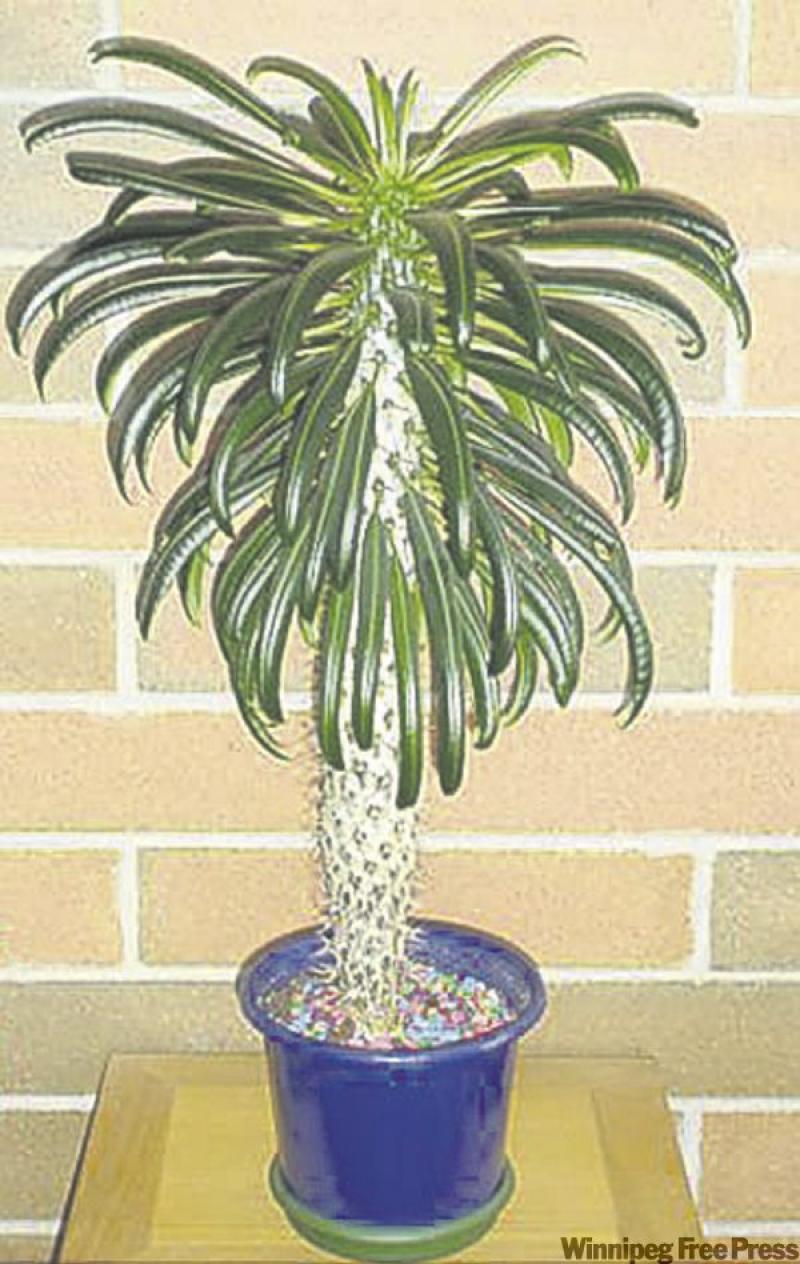
A friend has asked me what this plant (pictured above) could be, but I can't find it in my books. He wants to know if he should transfer it to a larger pot now that it's getting so tall. Any help you could give us would be greatly appreciated. Thank you. I always enjoy your pictures and articles in the Free Press.
Yours truly,
Jerry Baltesson
Dear Jerry,
What your friend has is commonly called a Madagascar palm, though it isn't a palm but a succulent related to the plumeria. Pachypodium lamerei is a popular houseplant grown for its thick, silvery trunk covered with thorns and its palm-like mop-top of shiny green leaves. Like most succulents, Pachypodium lamerei are easy to grow, requiring very little water or special care. However, they do require bright light to thrive. Mature plants grown outdoors in the southern climates will sometimes flower, but here up north we can grow them near a sunny window where they might increase in size about 10 centimetres a year under optimum conditions.
Pachypodium requires a quick-draining potting mix (suitable for cactus) and regular watering when the plant is actively growing during the summer months. Indoors and during the winter rest period, soil should be kept on the dry side as these plants are prone to root rot if over-watered. In some habitats they are deciduous, losing their leaves in the winter.
Typically, they need repotting every three years, into a slightly larger container. To protect yourself during the process, wrap several layers of newspaper around the trunk to prevent getting skewered by the sharp spines. I would choose a heavy clay pot to counterbalance the top-heavy nature of this plant.
Stumped
The following query has me stumped. If any reader out there can help out with Nydia's sick phlox, let me know and I'll pass the information along.
Dear Ms Stilkowski,
This summer, a white phlox of mine grew beautifully with at least a dozen tall stalks with buds and flowers to follow. However, one by one the stalks wilted and the stems turned brown and looked dead. I removed the sick ones and tossed them in the garbage, but I see that one by one the other stalks are going the same way. I don't see any mould or bugs, so could the problem be coming from underneath, and is this a solvable problem ? I would hate to lose it but wouldn't want whatever is ailing it to spread to my other phlox. If I have to dig it out, would it be possible to put something else in that spot or would the malady attack any other plant?
I follow your advice regularly (no blossom rot on my tomatoes, thanks to the egg shells you advised) and would appreciate whatever advice you could give me. Thank you.
Sincerely,
Nydia Peterson