Colleen Zacharias / WINNIPEG FREE PRESS
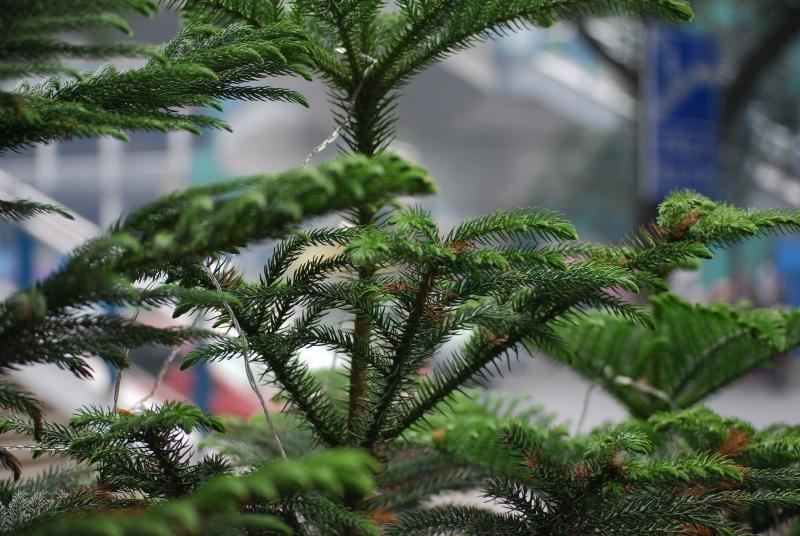
The perfect stand-in for a Christmas tree, Norfolk Pine should be misted once a week to avoid browning of needles.
Angelina Elv
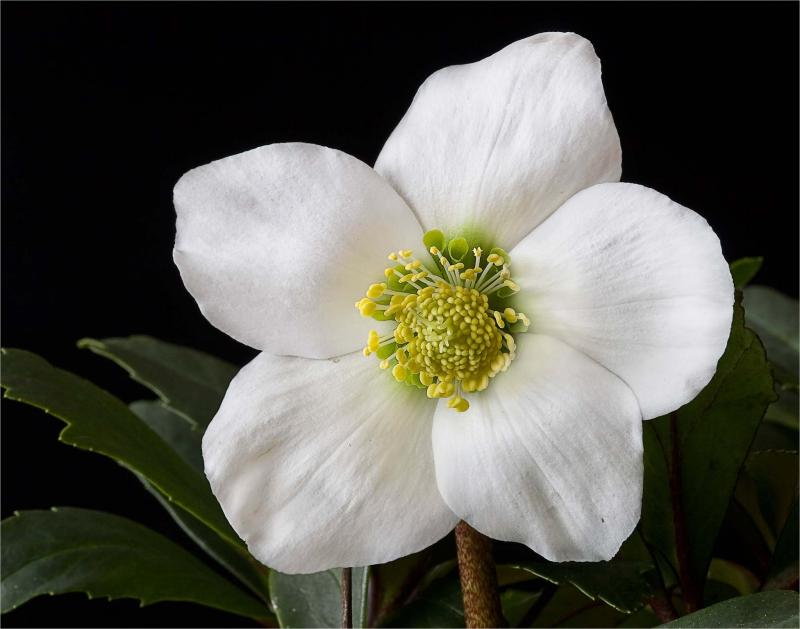
New this season is the Helleborus as an indoor plant for the holidays. It is, after all, known as the Christmas Rose.
Jesse Waldman / Pistils Nursery
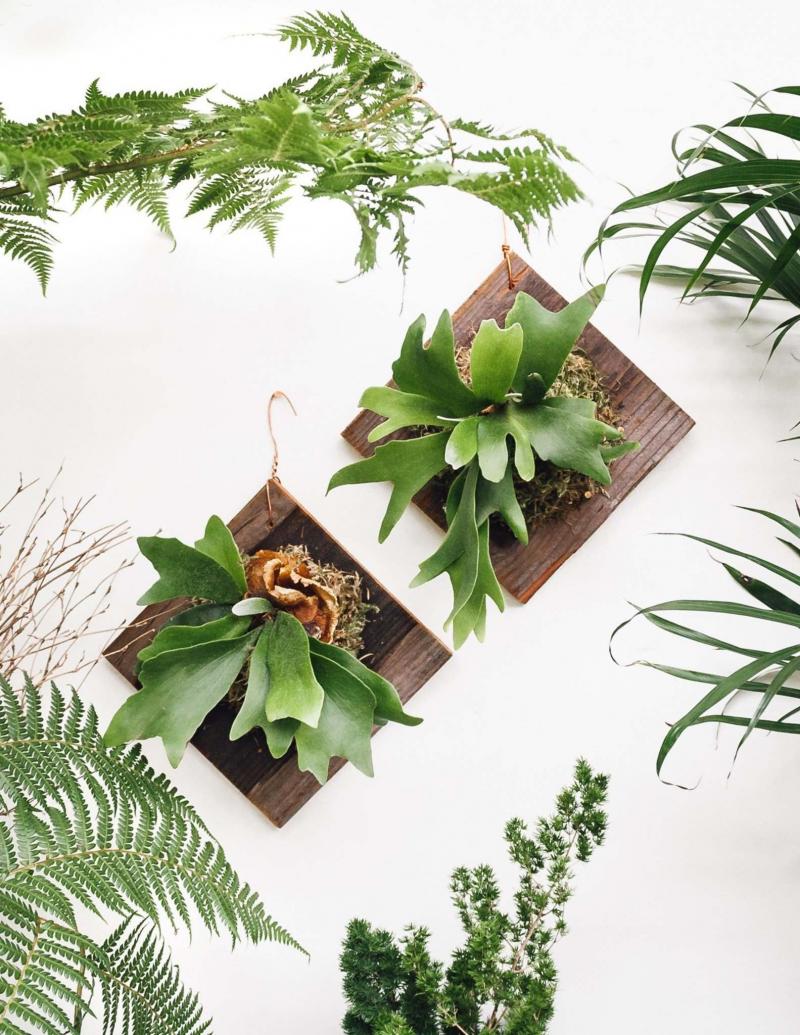
Could the Staghorn fern, potted or mounted, become an iconic plant for the holidays?
Colleen Zacharias / WINNIPEG FREE PRESS
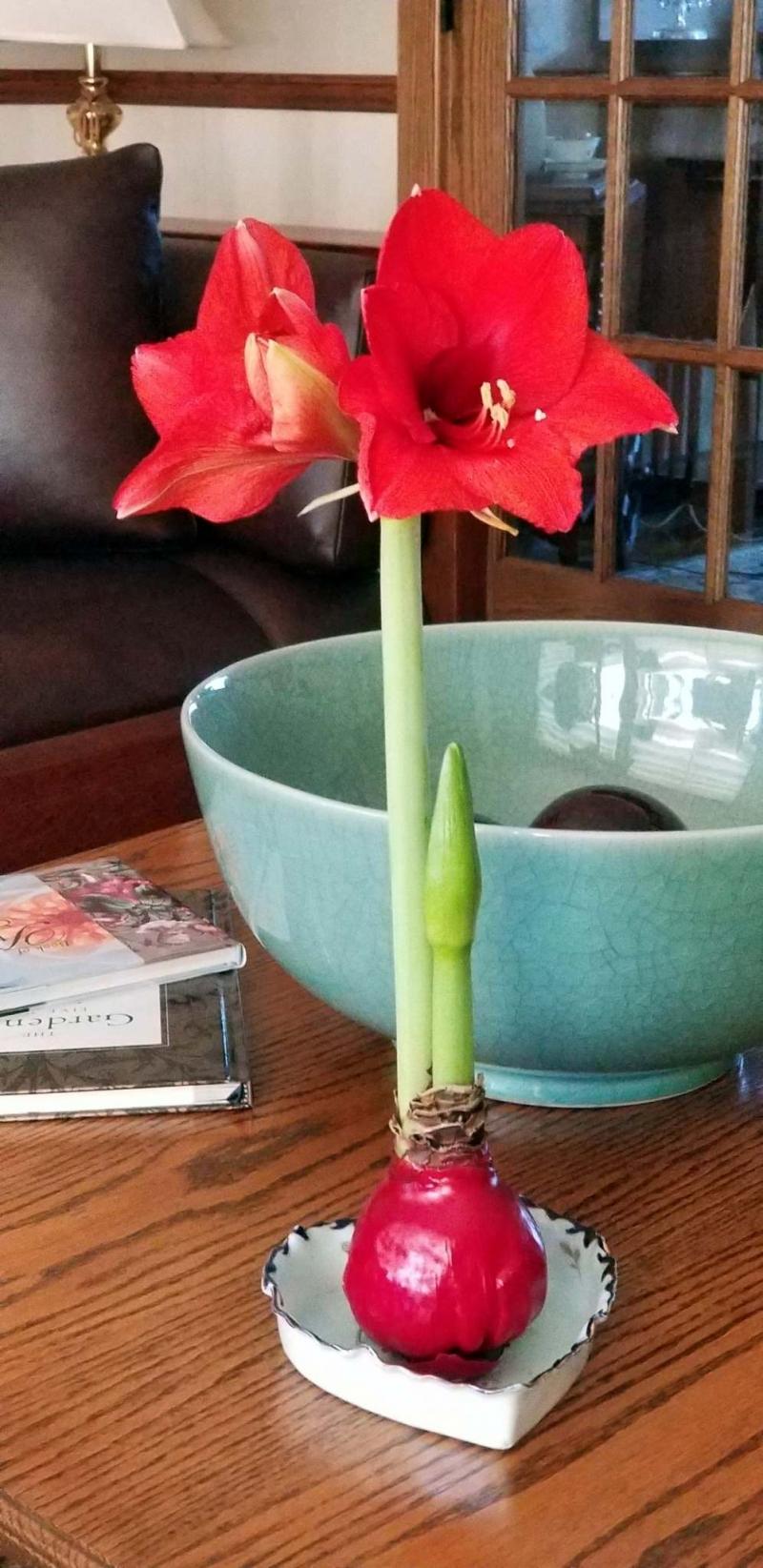
The ultimate no-maintenance holiday plant, waxed amaryllis bulbs are self-sufficient: no water required!
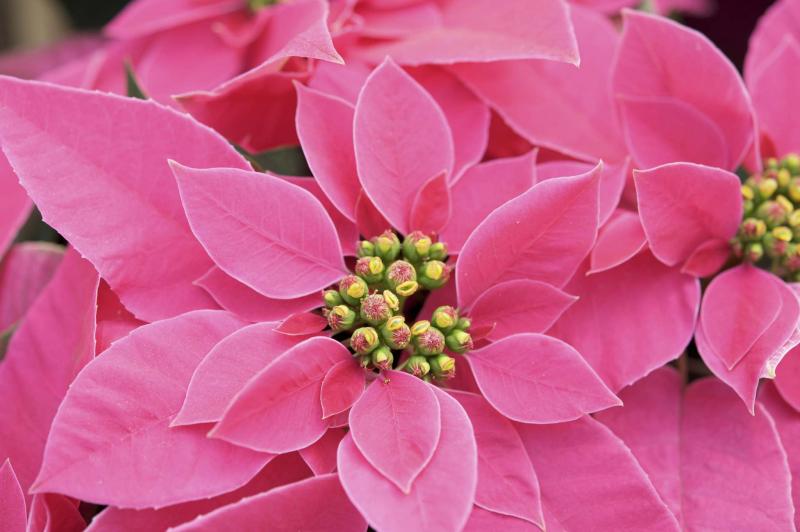
The poinsettia rules as the traditional plant for the holidays, wouldn’t you agree? Robert McLean, the new grower manager for Shelmerdine Garden Center, has been growing poinsettias for 41 years. This year, Shelmerdine grew more than 12,000 poinsettia plants in 10 different colours, McLean says.
Cinnamon Star poinsettia is an unusual burnt apricot colour and looks stunning in a dish garden with fresh greens. Ice Punch, which has pink-red bracts with a feathery white centre, and Christmas Beauty Marble, with handsome, dark foliage, are standouts as well.
Traditional red-coloured poinsettia varieties remain the most popular, McLean says. However, consumers have many new and exciting options. This holiday season, Shelmerdine carried two varieties of Princettia: Pink and Hot Pink. An exciting new series from Suntory, Princettia is a compact poinsettia with excellent branching and an abundance of large, vibrant flowers in a completely unexpected colour. No wonder it flew off the shelves at Shelmerdine.
Delilah Onofrey, marketing director at Suntory, says Princettia really shines alone or with upscale combinations such as a dish garden with a mix of festive plants, including tropicals. Princettia also blends nicely into a centrepiece with fresh greens. Another advantage is that Princettia requires less labour from greenhouse growers. "Normally, the grower needs to pinch or prune to create the branching, but Princettia is naturally compact and mounding," Onofrey says.
McLean says white poinsettias are also in demand. Princettia Pure White has true white-coloured bracts. To me, the Polar Bear poinsettia appears more creamy white, almost light yellow.
For greenhouse growers, poinsettia is a challenging plant to grow, especially in cold climates with low light levels. McLean, who was the head grower for Kurt Weiss Greenhouses, the fourth largest greenhouse in the United States, and owns a 360-acre farm in Saskatchewan, says poinsettia is also a rewarding plant to grow.
Locate your poinsettia in a brightly lit room, but away from direct sunlight. To extend bloom time, maintain daytime temperatures no higher than 23 C and nighttime temperatures no warmer than 18 C. Avoid overwatering.
At Shelmerdine, I was intrigued to discover flowering Helleborus niger among the holiday plants display. Shelmerdine has brought in a limited selection of Helleborus in bloom, their gorgeous nodding flowers on thick stems above a skirt of evergreen foliage a tempting sight indeed. Dana Mistafa, greenhouse manager, says that Helleborus, after all, is known as the Christmas Rose.
But Helleborus as a houseplant? Typically, Helleborus is a perennial that is grown outdoors and blooms in early spring. Mistafa says that if you can provide a brightly lit location (no direct sun), cool indoor temperatures bordering on the chilly and a strict regimen of watering just enough so that the plant does not wilt, the blooms should last about six weeks. Allow the soil to dry between watering.
If your Helleborus is able to survive the indoor environment, gradually move it outdoors in the spring and plant in a part shade location.
The Staghorn fern (Platycerium bifurcatum), with its leathery, dark green forked fronds shaped like deer-antlers, strikes me as the perfect plant for the holidays. The elongated fronds grow outwardly and are flat with a smooth surface. This is a plant that exudes personality.
Earlier this month, a quick search at local greenhouses produced not a single Staghorn fern. After visiting Verde Plant Design, a specialty plant shop located at 419 Graham Ave., I was able to purchase their last remaining potted specimen.
Verde Plant Design sources its supply of Staghorn ferns from a wholesale nursery in British Columbia. They say it is a popular plant and recommend placing it in a very bright location, but to avoid direct sunlight. Staghorn ferns prefer a humid environment such as a bathroom with a window. Water is absorbed through the fronds and roots. Water thoroughly, allowing the soil to dry out before watering again. Regularly mist the leaves. Less water is required during the winter months.
Is it really a fern? Native to Australia and southeast Asia, Staghorn fern is an epiphyte found growing on tree trunks and branches. South of the border at plant shops such as Pistils Nursery in Oregon, workshops on mounted Staghorn fern workshops are increasingly popular and sell out quickly. There are also how-to videos online that demonstrate step-by-step instructions on how to mount a gallery of Staghorn ferns indoors or outdoors (once temperatures permit) and are sure to quicken your pulse.
Ever the gardener, I am always thinking ahead to spring. This makes it easier to convince me that an indulgent purchase of a Staghorn fern (mine cost $25) is actually practical because, after all, it has a dual purpose, right? Not if I kill it, of course, before it ever sees the garden. Therefore, proper care and maintenance will be essential if my goal is to mount my Staghorn fern and display it outdoors in the garden.
Since winter is all about the anticipation for spring, I visualize my Staghorn fern mounted outdoors on a square of rustic cedar preserved by the ancient Japanese technique called Shou Sugi Ban (essentially charring the surface of the cedar). This treatment using a propane torch works very well to protect the wood from the elements. Embellishing the wood with a bit of weathering steel that will rust over time will complete the picture.
Once outdoor temperatures are consistently above 10 C, the Staghorn fern will be happiest in a shady location where it is protected from direct sunlight.
Customers at Verde also snapped up Norfolk Island Pine. The perfect stand-in for a Christmas tree, Norfolk Pine is ideal for small spaces, as well as apartments and condos that don’t allow real trees. Long-lived, Norfolk Pine prefers bright, indirect light and high humidity. Water when the top 2 cm of soil feels dry. If the needles start turning brown, mist your Norfolk Pine about once a week.
This season, a supply of around 80 red wax-coated Amaryllis bulbs quickly sold out at Grace and Company, 556 Academy Rd. Wax-dipped bulbs were hot items, too, at November’s Crafted Show and Sale, an annual event hosted by the Winnipeg Art Gallery. Hennie Corrin, co-chairwoman of Art in Bloom 2019, says the 110 wax Amaryllis bulbs sold out.
Dawn Ormiston at Petals West, a Winnipeg-based wholesale supplier of fresh flowers that are shipped across North America, says the colourful layer of red wax assists the bulb in retaining moisture and nutrients that are naturally stored within the bulb. No soil, watering or maintenance is required. A coiled wire embedded in the base makes it free-standing or create a grouping and add sheet moss, pine cones and other favourite items.
Ormiston says bright, indirect light and cool temperatures are optimal for blooms. Don’t be concerned about any cracking that appears in the wax. Unlike boxed amaryllis bulbs, which can be stored in a cool, dark location for several months until late summer and then coaxed to rebloom in time for the holidays, wax-dipped bulbs usually will not rebloom.
Iconic plants such as the poinsettia and amaryllis will always be synonymous with the holidays. Eclectic variety, though, is the very spice of life.
colleenizacharias@gmail.com