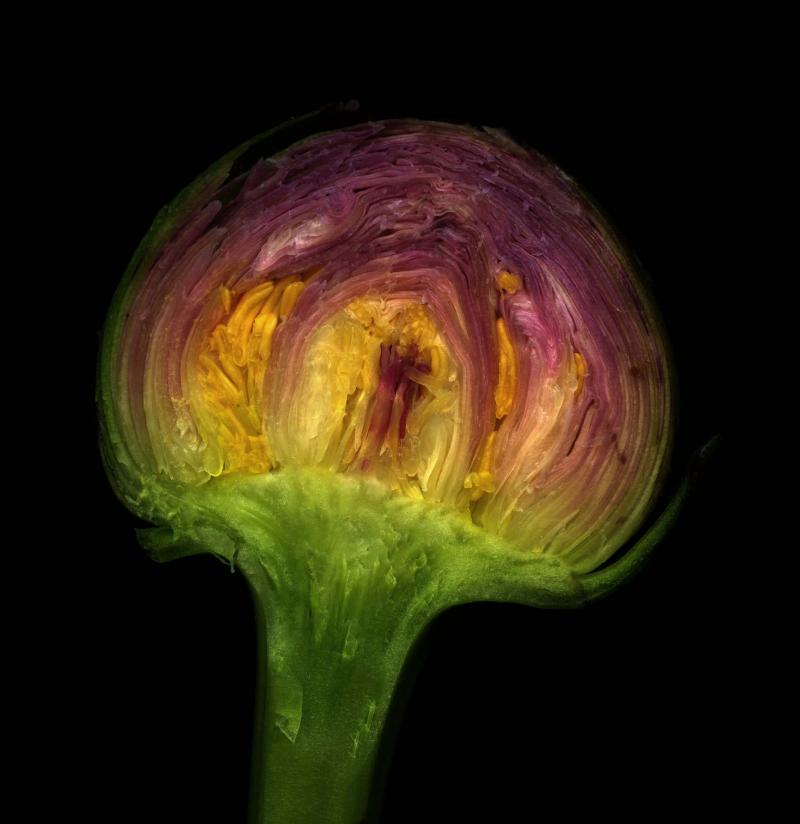
Curious about what’s inside? A peony bud bisect shows its glowing heart.
PHOTOS BY Mathew McCarthy
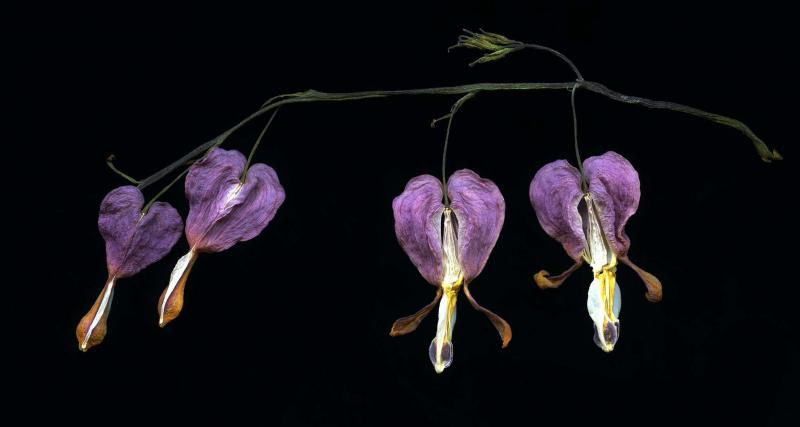
A thin stem of delicate, dried bleeding-heart flowers reveals an air of vulnerability in this photo interpretation by Mathew McCarthy.
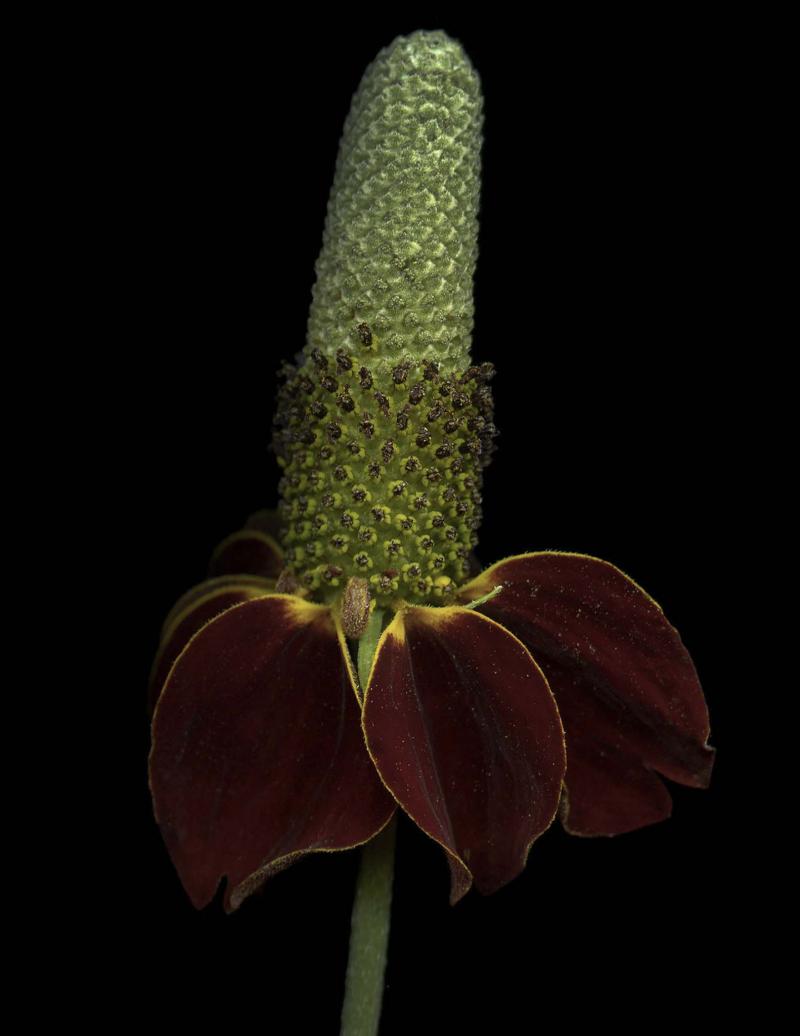
Fully dressed, Red Midget is at its height of beauty, but it’s still pretty late into the season.
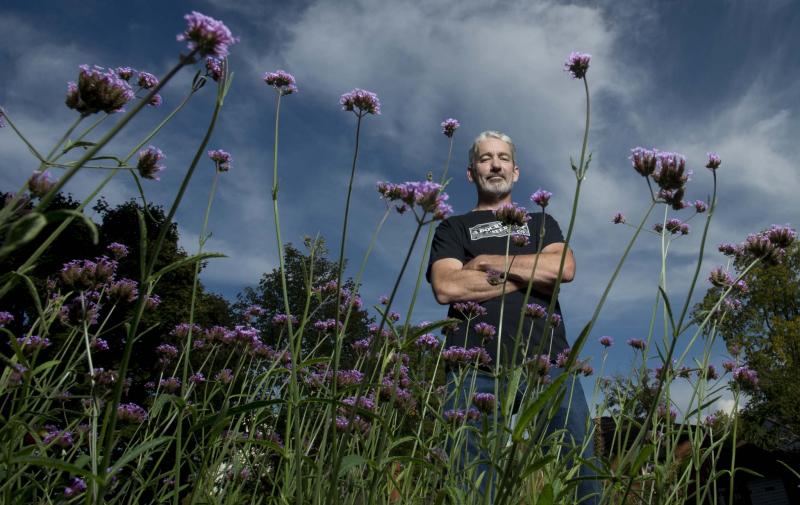
Mathew McCarthy
Mathew McCarthy’s moody perspectives of plants make for fascinating imagery. ‘There is a whole range of things that happen to a plant during its life cycle from seed to the compost heap that is beyond just our visual perception,’ he says.
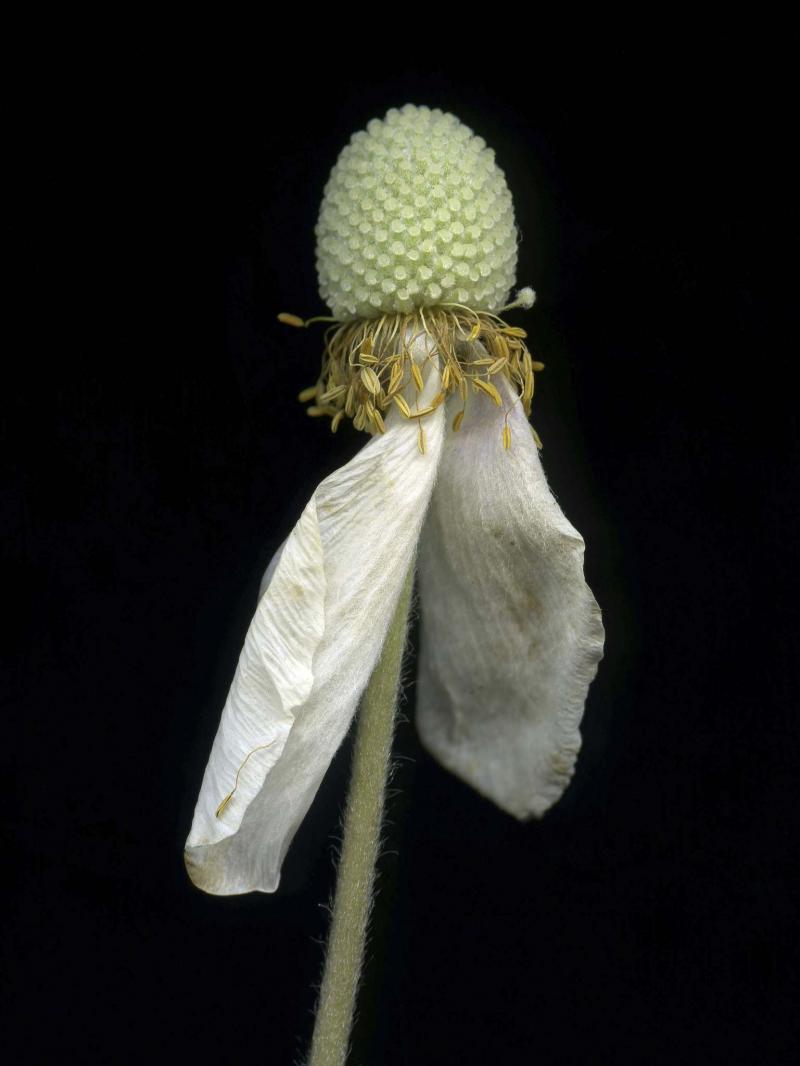
Take another look at the spent blooms in your garden. Beauty is in the details of this shabby but elegant anemone flower.
Mathew McCarthy is in the business of storytelling. As a photojournalist for the Waterloo Region Record in Kitchener, Ont. — McCarthy’s camera and photography skills visually bring a story to life. But there are parameters. The subject matter dictates the type of image so it corresponds to the details of the story. The goal is to visually tell someone else’s story, he says, and communicate it to an audience without imposing his own point of view.
McCarthy says initially he got into photography because he likes making things look interesting so his imagery draws in the viewer and has an impact. McCarthy began taking photos of plants before he had any real interest in gardening. After a series of assignments took him into various gardens, plants and the notion of gardening began to get under his skin. He started growing all types of different plants and, like any other gardener, he immediately began taking photographs.
The best picture-takers among us are skilled at capturing images of plants that are beautiful without being run-of-the-mill or commonplace (as in, you’ve seen it before, many times). A peony is a peony is a peony, right? Not when it is captured by McCarthy’s camera and discerning eye.
While the more perfunctory gardener might give only a fleeting glance to a flower head that has been stripped of its petals or sees a plant that has few surviving remnants of its former glory and pronounces it dead, McCarthy’s camera lens opens a window to reveal characteristics that few gardeners ever see in detail. In so doing, he gives plants new life and inspires us to define a different, less traditional view of beauty in the garden.
His unique style and perspective of garden plants began about seven or eight years ago with a burgundy hibiscus that had saucer-size flowers. When a bud dropped, McCarthy wanted to know what it looked like inside, so he cut the flower bud in half and shot a flower macro, but not for the purpose of highlighting the flower’s botanical structure. He darkened the photo with atmospheric light accents for a moody perspective.
McCarthy says he appreciates the beauty of cheery garden plants at their peak just as much as anyone else, but admits that plants in decay are often more interesting to him — a good attribute for any gardener to have, especially when a growing season ends as abruptly as this one has. We associate fall with certain colours, but it’s also the overall atmosphere that attracts us, McCarthy says. As plants go dormant, he says, it gives the garden a whole different feel.
"Nature is about life and death, and there is a whole range of things that happen to a plant during its life cycle from seed to the compost heap that is beyond just our visual perception," McCarthy says.
"We grow zinnias, for example, because we love their bright flowers," he says, "but these plants are trying to survive so are propagating themselves by producing a seed head."
By removing and photographing a seed head, he says, you visually capture a stage of the plant’s life cycle and see it in a new and totally different way. "It’s still very beautiful but it can also be kind of dark and fascinating." His evocative images will have you imagining something else. A tattered anemone retains its elegance. A stem of dried bleeding-heart flowers reveals an air of vulnerability. Ratibida columnifera Red Midget is still at the party wearing her velvet skirt. A bisect of a peony bud reveals its glowing heart. You decide.
McCarthy sees humour, too, and weaves a story around each of his images. "A little wind in the hair makes everyone look glamorous," he says in describing the decorative seed head of clematis. He likens the dried seed head of Queen Anne Lace to a woody cage, each individual seed a spiky oval waiting for a furry body or a woolly coat to grab onto and not let go.
McCarthy has filled his garden with many different types of seed-grown plants. A year ago, he took the bold step of launching his own business, the Apocryphal Seed Company. His website’s "about" page opens with an old family story about a long-ago relative who falsely claimed to be a plant hunter only to be eventually found out but not cast out.
Hooked, I wanted to know more. None of it is true, McCarthy says. As a child, McCarthy was entertained by his father’s elaborate storytelling.
"The stories were apocryphal because, with each telling, they were more exaggerated." McCarthy says he has always been fascinated with the concept of plant-hunting, so he made up his own apocryphal story about a plant-hunter.
It works — the sepia-coloured background of the home page with its vintage font provided by McCarthy’s 1930s-era Underwood typewriter draws you in instantly. The rest of the website is thoroughly modern and all of the plant images as sunny and cheery as you could desire. The curated list of seeds is small but satisfying.
Terry Neufeld, owner of Sweet Petals Farm, which is located just minutes south of St. Norbert, was an early customer last spring. She purchased numerous seed varieties which arrived in their own brown paper seed packet, each stamped with the Apocryphal Seed Company’s nifty logo. I’ll let her tell you which ones she liked best.
"I grew Black Magic Cosmos in a part-shade location together with dahlias," Neufeld says. "They were fabulous and pumped out flowers like crazy." The black-chocolate flowers with a vanilla and chocolate scent also needed lots of water. Cosmos Antiquity was very nice, too.
Fire Ball helichrysum, a fast-growing crimson-red strawflower with a bright yellow centre, shot up to 150 centimetres. Purple Sheen eryngium, though, failed to germinate, she says. They do sound a bit tricky. McCarthy recommends a cold treatment for about five days before planting. After pressing the seeds into soil and covering them lightly, place the pot into a plastic bag and refrigerate for two weeks. Neufeld has placed an order for some more.
Zinnia Uproar Rose is at the top of her list. Neufeld always includes zinnia in her bouquets and grows many different types. Uproar Rose, with its showy magenta-rose flowers and multiple layers of petals, is in high demand by cut-flower growers (hence its price, 10 seeds for $5) and has excellent heat tolerance.
"I’m ordering more of the Camelot Lavender Digitalis," Neufeld says. "I didn’t realize that they keep producing all summer long. After cutting the nice, big stems for an event, the plants continued to produce flowers right until frost." Neufeld has added Camelot Rose variety to her order, too.
Later this fall once her order arrives, Neufeld plans to seed some of the varieties (Larkspur Giant Imperial White and Blue, Bupleurum Griffithii Decor and Bells of Ireland) straight into the garden so they come up next spring. She has had success with this before, at least with the Larkspur. "I may rototill before I plant, make a shallow trench, and plant the seed," she says. Now, wait for spring.
colleenizacharias@gmail.com