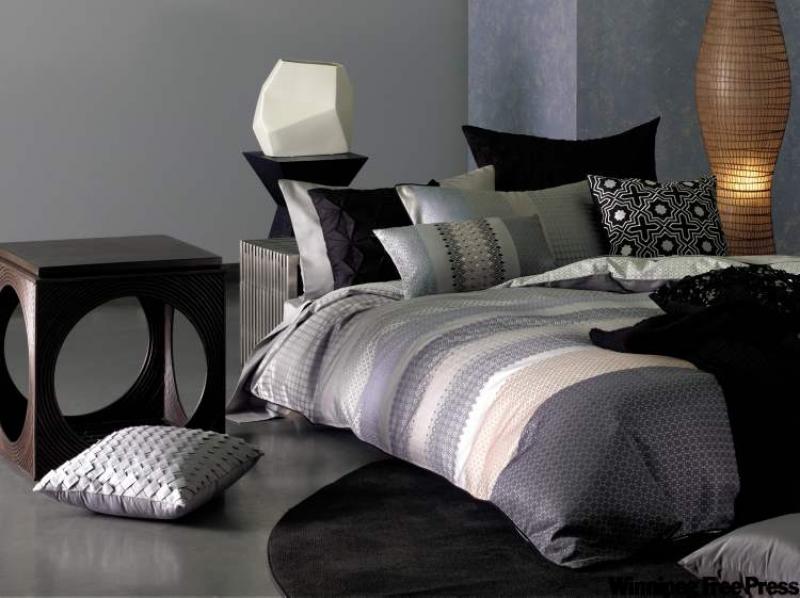
Our feature photograph, courtesy of Dulux Australia-Linen House, touts a contemporary bedroom that is understated yet dramatic. There isn't a lot of colour in the room yet it still catches your eye. What gives this room personality is pattern.
The various patterns used in this space are the real star here. Pattern gives this room visual movement and texture. If the bedding were a solid colour the room would appear stark and bland.
Keep pattern in mind when planning your space. The simple introduction of pattern can transform a room from boring to beautiful. In this example, additional texture and pattern has been added through the pleated toss pillow on the floor and the pleated sham. Note that none of the pillows is the same size or pattern. This technique further enhances the space.
Including pattern in your decorating plan doesn't have to be difficult. As you can see from our feature bedroom, simply choosing patterned bedding over solid colours can make or break a room. Infuse pattern into your space through linens, window treatments, wallpaper, artwork, accessories and paint treatments. The tall floor lamp in our feature space has a pattern in it and sits in front of a partial wall that has a soft paint treatment on it.
Mixing patterns can be a challenge but one that can be overcome with a few techniques and some trial and error. If the thought of trying to mix patterns throws you, opt for items that have done the legwork for you. For example, many bed sets come in coordinating patterns and colours. Visit furniture stores and make note of the store displays.
You can get a lot of great ideas from these vignettes. Find decorating photographs that show successful pattern mixing to take with you when shopping.
Fabric stores are a great place to study pattern mixing. Use the following technique as your starting point: mix small patterns with larger patterns, not small with medium or large with medium. You need a large scale gap between patterns to achieve success. In our feature room, the one bed pillow that is not part of the matching set (far right) works because the pattern is much larger than the tiny pattern on the rest of the bedding. Even though the pattern on this pillow is quite different from the bedding, it adds a punch of interest.
Mixing patterns also means mixing colour. Try to keep within the colour palette of your main pattern. Pull small hints of colour out to use as accents. If, for instance, you choose wallpaper for the bedroom that has a small rose pattern with a soft yellow background and hints of green foliage, you could upholster a sitting chair in a wide, vertical stripe in soft yellow and red. You could add further pattern by placing a decorative toss cushion on the chair in a small checkered pattern of soft green and yellow.
Balance is key
Too much pattern in a space can be visually overpowering. Keeping the correct balance should be your main focus. I prefer to add pattern through accessories and non-permanent fabric that can be changed easily. Table linens, curtains, toss cushions and even a small area rug in the right pattern can make a space. In smaller rooms, using patterned wallpaper is an easy update that can give the room new life. Focal walls can also be created using pattern. If your space lacks focus, consider a patterned paint treatment or wallpaper to create a little drama. If your finished space seems a little busy, break up the pattern with some solid, co-ordinating colours.
Classic patterns like toile, paisley and florals work well in the bedroom or powder room. Small checks in the kitchen are still a fun casual choice. Medium to wide stripes in soft colours can work in any room and will add visual height. Wide horizontal stripes in graduating shades of the same colour will open up a room making it feel much larger. Even something as simple as a fabric-covered lampshade on the bedside table can add tons of charm to a room.
There are many simple ways to add beautiful patterns to your decor. All you have to do is choose one.
connieoliver@shaw.ca