The beagle has one of the best-developed noses in the dog world. They're tapped to sniff out narcotics, pheasants and now, it seems, interior design trends. It was on one of their regular walks that Olive the pup and her owner, artist Casey McGlynn, uncovered some unlikely furniture pieces. McGlynn was not window shopping in his Junction neighbourhood in Toronto, but rather mining the tangled discards along the railroad tracks that run behind the home he shares with his partner, Jen.
In this pile of garbage that's always changing, he found an eight-foot-long wooden bench (an old hockey dressing-room reject scratched with names and jersey numbers) and an oddly shaped, uncracked mirror. Both now sit in the dining room, and both are tagged with graffiti. You can tell it's done by a good graffiti artist too, by the flow and quality of the line, says McGlynn, an oil-on-canvas man whose art has a decidedly graffiti-like look. He also admits to occasionally dabbling in spray-can art. Both pieces have that raw, roughed-up look we love.
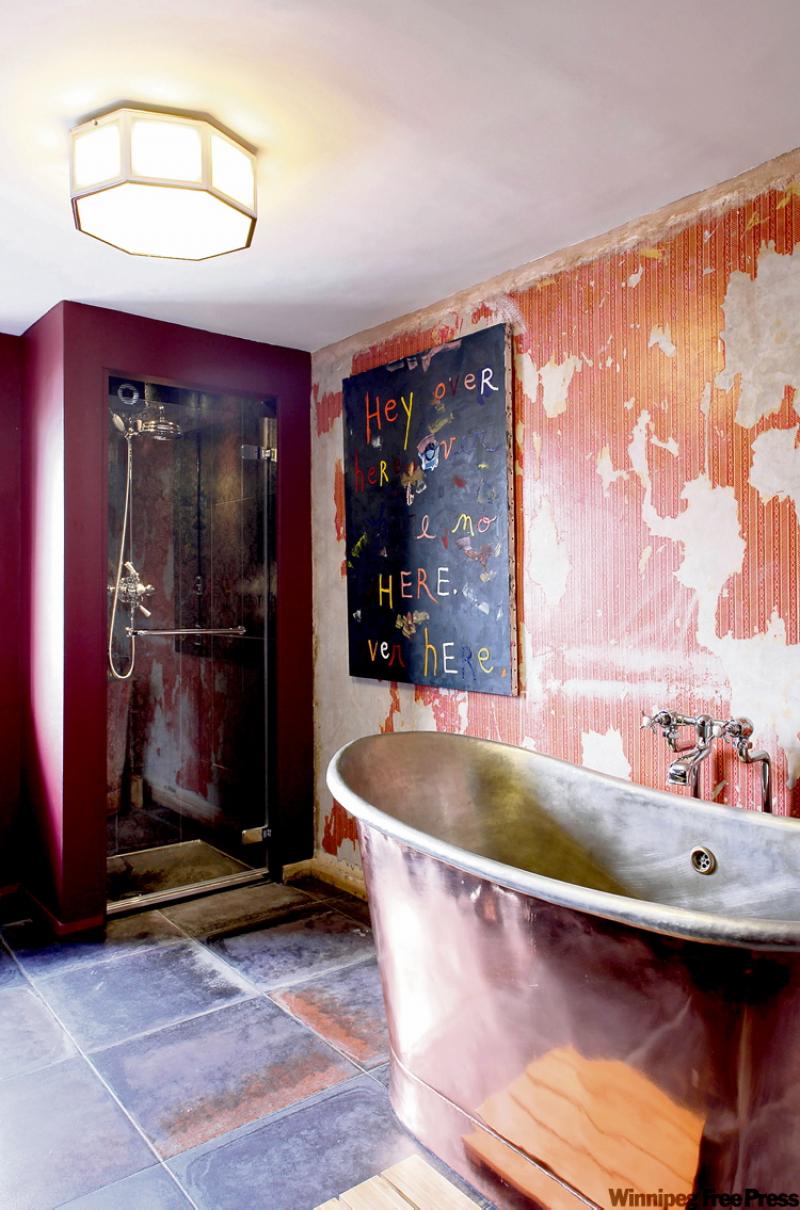
The couple has unwittingly found themselves on the inexpensive end of the urban decay design trend. This manner of recycling and repurposing doesn't involve a good sanding, a slap of fresh paint or shiny new fixtures -- the beauty lies in all the rusted, dented, peeling and threadbare details.
We don't bother restoring too many of our pieces -- it's a waste of time, says Paul Mercer, co-owner of Smash, a store-gallery in the Junction that specializes in industrial and architectural salvage. People want things that are banged up.
Much of Smash's stock comes from factories around Ontario that have been emptied of their workers but are littered with furniture in the making. Stools and workbenches seem to leave as quickly as they come in. We can't keep up, he says. Their bases and wooden tops are so beautifully beaten up, they're compelling.
In one corner of the big Barrymore Furniture showroom in Toronto, where the utility pipes criss-cross the ceiling and the floor is refinished concrete, its designers will assemble an industrial chic gallery in March, complete with a hefty dolly table ($1,270) and tarnished vintage desk lamp ($790). Items like these were key to the manufacturing process, when so many factories were going full-tilt, says Sandy Callahan, Barrymore's marketing director. The patina of age and their imperfections connect us somehow to the past.
To be sure, the look has an edge to it; one that high-end paint purveyor Farrow & Ball has captured in its Urban Decay palette. The collection of seven shades -- from the brooding plum of Pelt to the acidic sting of Arsenic -- channels high-fashion, street art and graffiti, says Joa Studholme, the company's international colour consultant. It's very much related to the credit crunch -- people are embarrassed by glitz right now, she says. This isn't a look that's pretty or entirely comfortable; it's somewhat oppressive and there's a hint of menace to it.
For those of us who don't reside in a centuries-old home or an industrial loft or who aren't about to take a belt sander to the walls, a sense of urban drama and decay can be applied with unexpected colour and texture, says Studholme, like lacquered black trim or a shocking yellow ceiling.
Or you can hang it. Toronto photographer Mathew Merrett shoots all sorts of broken-down subjects: the network of pipes in abandoned factories, rusted-out cars in overgrown lots and empty corridors where the paint is peeling off the walls like great, curling fins.
But it's not all about doom and disaster. Inviting urban decay indoors is also about play and humour. Often one or two elements can have the greatest impact, Callahan says. And it can work just as well in a boho loft or a country chic home.
Use Barrymore's fir-topped table ($2,390) in an ultramodern kitchen for a dose of rugged warmth, for instance, or shock the ceiling with Farrow & Ball's Day room Yellow and extend the drama with a rococo chair and stained mirror. You can even bring a little street sass to the table, albeit in a very refined way. To wit: Lovegrove & Repucci's London Delft $170 five-piece set is done in delicate bone china and decorated -- or defaced, depending on your point of view -- with a spray of royal blue graffiti.
When it was done on canvas in the '80s, graffiti was shocking and was labelled as low art, says Rafi Ghanaghounian, a private dealer in Toronto who sells the china. Applying it to everyday, usable objects ups their cool factor.
The sprayed scrawl is turning up on all sorts of functional pieces, from reupholstered antique chairs to the shade on a $1,200 pendant lamp. What was once low art is now high irony. Would McGlynn purchase it new when he can get it from his backyard for free? No way, he says. Not as long as Olive is taking me for walks.
-- Canwest News Service