Marc LaBossiere / Free Press
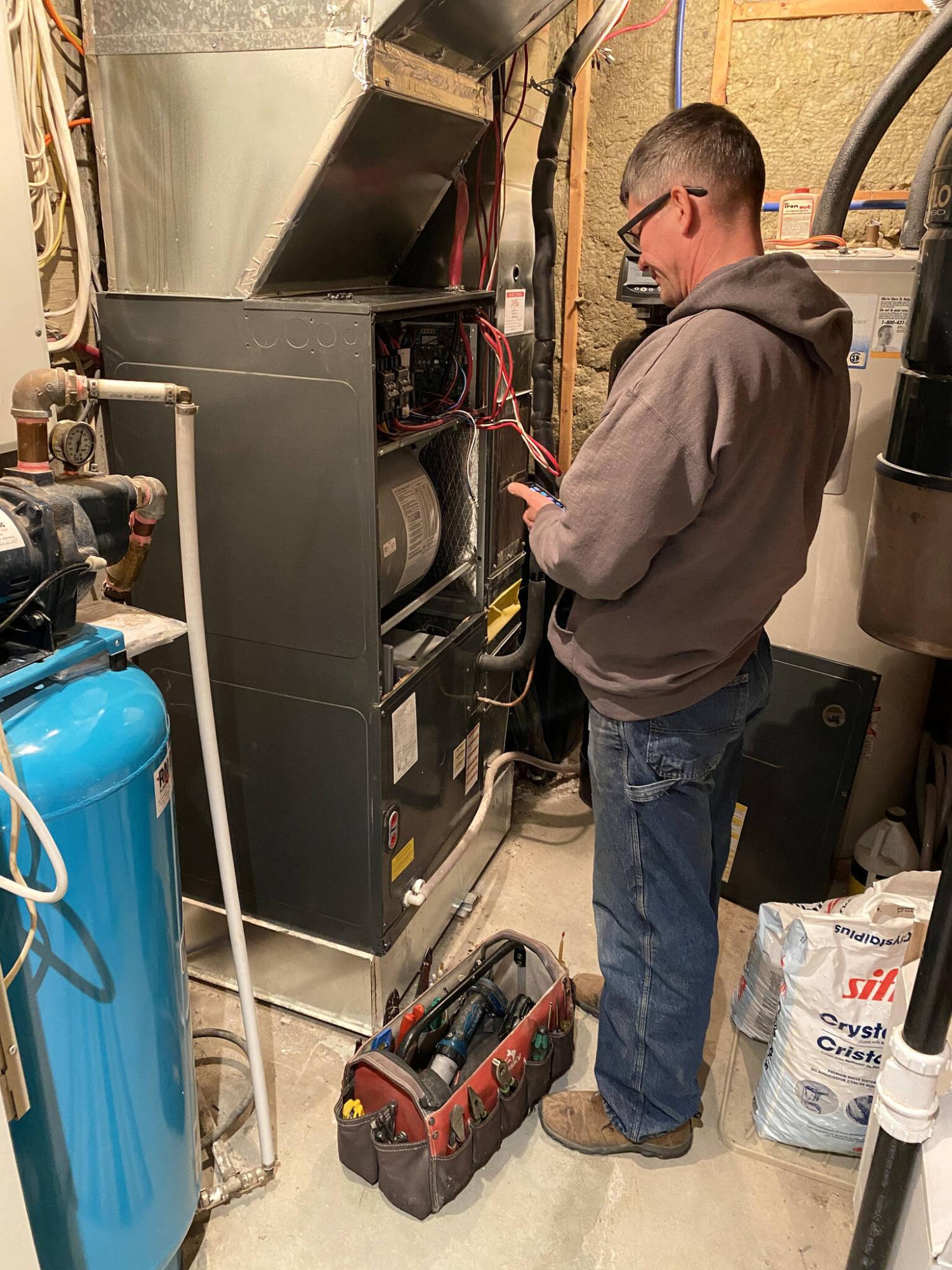
After several attempts at restoring my HVAC system, a phone chat with the manufacturer’s customer service department expedited the control board re-programming process.
Marc LaBossiere / Free Press
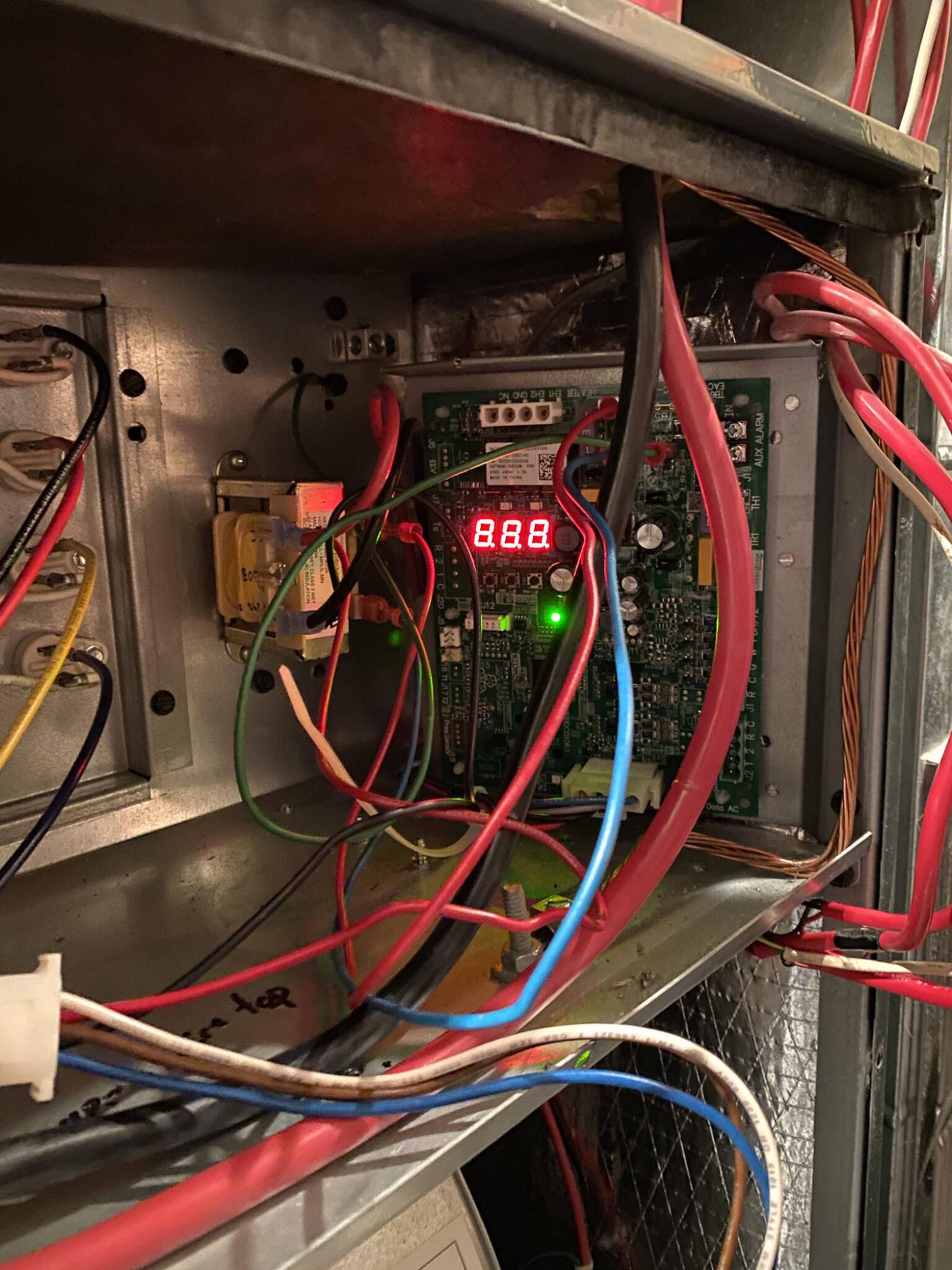
As the circuit board booted up, we held our breath until the fan and heating elements kicked on, indicating a successful control-board replacement.
Marc LaBossiere / Free Press
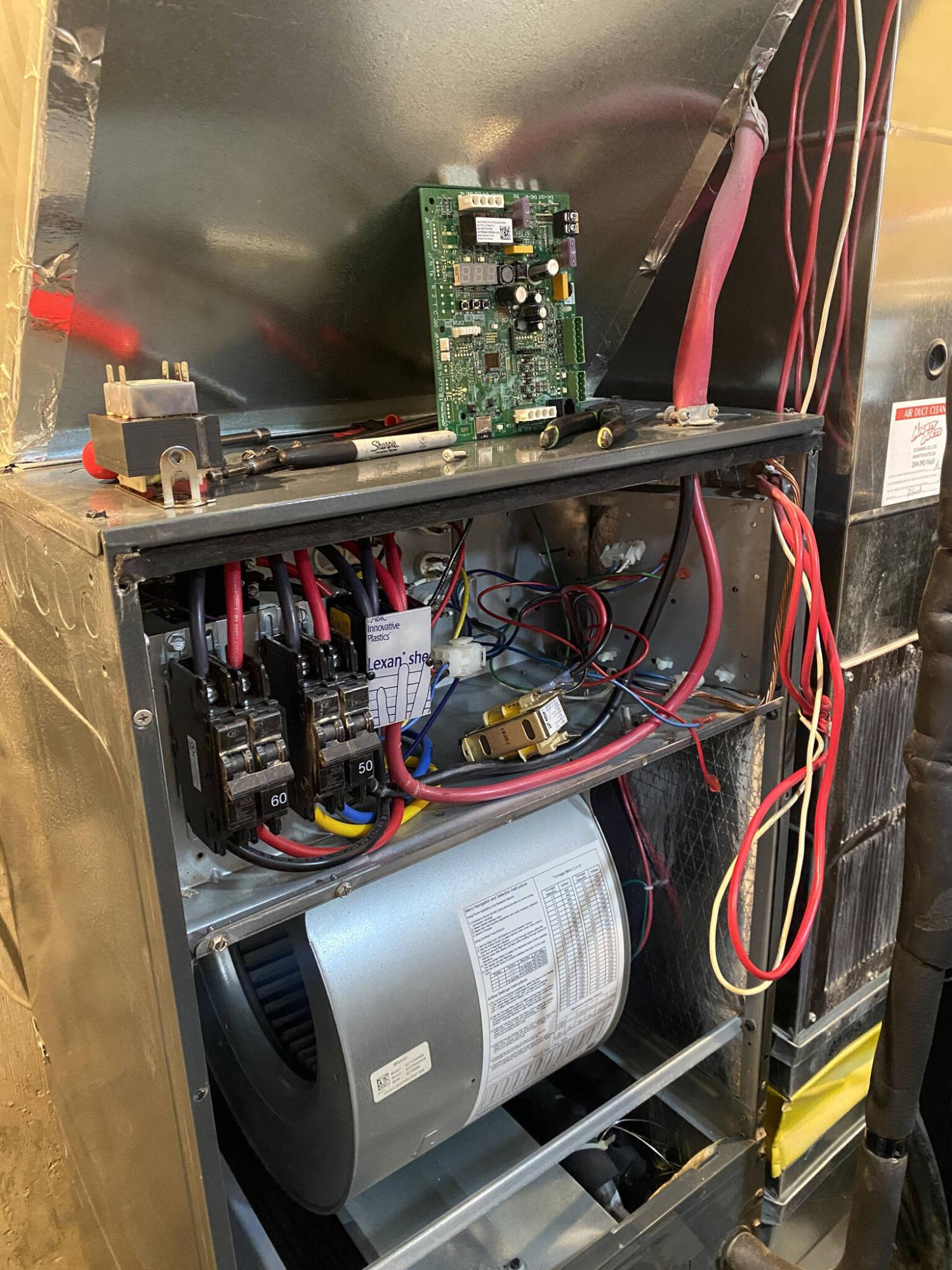
With the air-handler disabled and powered down, we ascertained the transformer that converts true electrical current to 24v had also fried.
Marc LaBossiere / Free Press
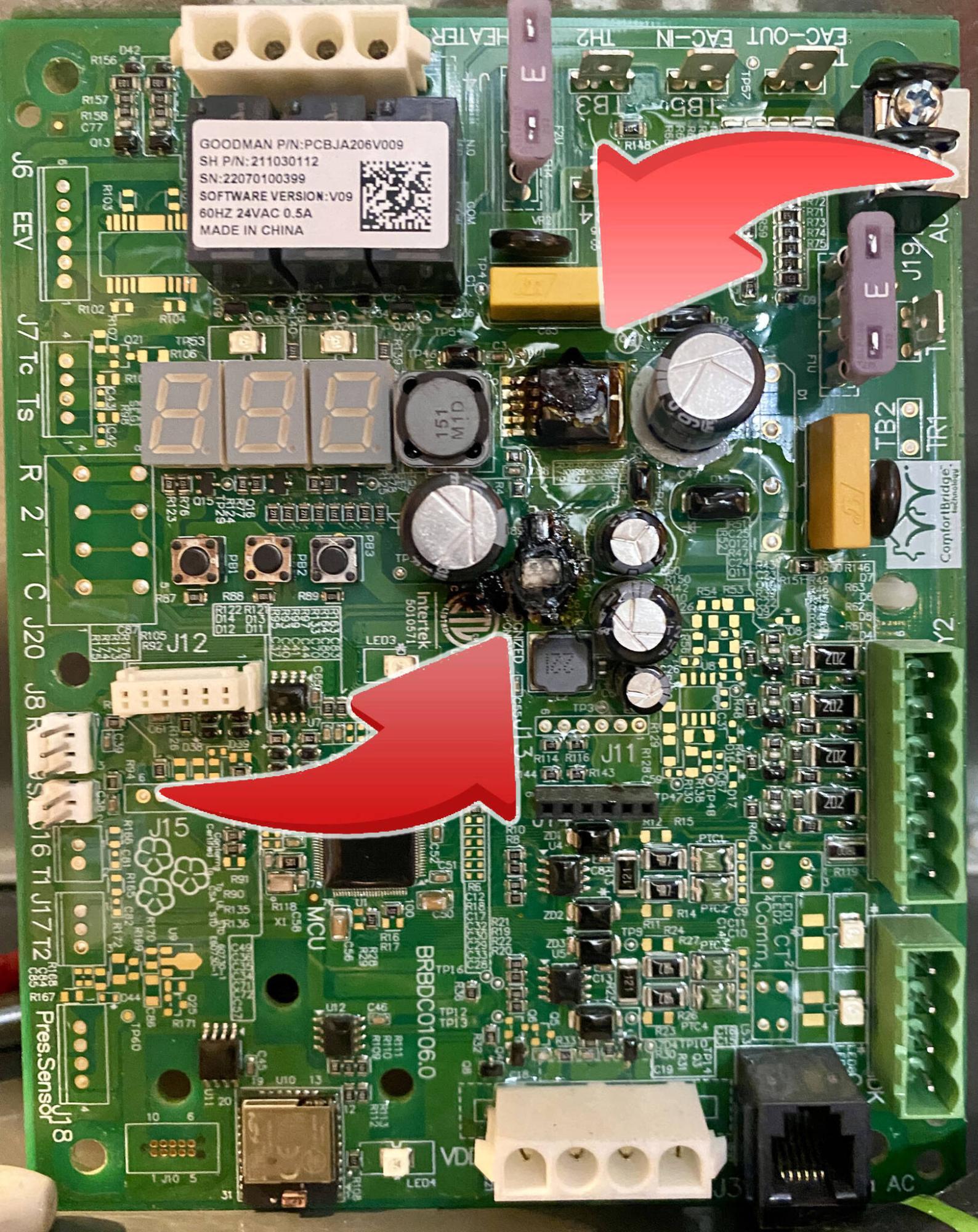
When the control board of my air-handler (furnace) failed, the smell of melting electronic components permeated the house.
In high school when I had spare time, I customized a 1952 Chevy half-ton truck. For vehicles of that era, most mechanical issues that arose could be addressed with a wrench and a screwdriver.
Nowadays, the technological advancements that heighten our driving experience often preclude those types of fixes, because new vehicles are heavily integrated with circuit boards and on-board computers. As such, when something goes wrong, a skilled technician is required to both properly diagnose and subsequently address the issue. It appears this is also true regarding most contemporary household systems, including HVAC.
Two Mondays ago, ironically while fixing the bulbs of a vintage electric fireplace, the smell of burned electronics began to permeate the room. Having just completed the fireplace repair, it occurred to me something within the box may have burned out. However, closer inspection seemed to reveal that the source of the smell was emanating from the floor vents, which could only mean one thing — the furnace.
In my house, a 19-kilowatt air-handler supplies forced-air throughout the home. Working in co-operation with a two-stage, three-tonne heat pump (tantamount to an air conditioner for cool air in the summer, that also supplies heating during the milder winter months), the air-handler behaves much like an electric furnace. When the system calls for heat during the winter, it first requests from the heat pump (provided the outside temperature is above the lock-out value of -12 C) the first heating stage to begin heating the house. If the house does not heat up rapidly enough as determined by the system, the second stage kicks in to create more heat.
Finally, when both stages are struggling to reach the desired temperature, the system then requests auxiliary heat from the air-handler. Burners begin to fire up, until the system is satisfied that the amount of heat being distributed throughout the house will reach the desired temperature within an appropriate timeline. My system is controlled by a Nest thermostat, which I can also manipulate via the Nest App on my iPhone — it has proven quite convenient with presets and for spontaneous manipulation.
Control board kaput
Once I had determined that the burned electronic smell originated from the air-handler, I quickly threw the breaker, and opened the front access on the air-handler unit. The control board was indeed smoking, with a pungent smell that had now spread throughout the house.
A short while later, my HVAC technician popped in to verify what had transpired. Not only did the circuit board crap out, the transformer that converts true current to 24-volt current had also fried. Although it was easy to replace the transformer, the circuit board would need to be replaced, which meant ordering the part and having it shipped as a “rush priority” delivery.
It was clear we would be without heating for a few days. Luckily, there are four electric fireplaces in the house and heated flooring in the main bathroom on the second floor, not to mention four mobile oil-filled radiators we strategically positioned in the main spaces to keep the interior temperature as comfortable as possible.
And although the temperature dipped to a frigid -28 C that first night, the house surprisingly maintained an acceptable average temperature throughout, ranging from 16 C to 19 C, depending on where the supplemental heating sources were placed. Thankfully, we also seemed to dodge the extreme cold during this ordeal, in that milder temperatures were forecast. This proved fortunate, as it took five days for the new control board to arrive. And as fate would have it, installation of the new circuit board was not as straightforward as simply plugging in the wires. The board came as a blank, and needed to be programmed to meet my system requirements.
This brings me back to my prologue — short of being trained on this particular unit that uses this particular control board with my particular system configuration, it wasn’t as easy as one may have hoped. Fortunately, my HVAC service technician knew which questions to ask, and to whom to direct them.
Not only was the circuit board in need of programming, it was necessary to link to the board via Bluetooth using an app which revealed a few shortcomings, primarily the fact that my specific unit model number did not even appear listed. As such, and while on the phone with the manufacturer’s customer-service representative, my HVAC guy was able to (on Day 8) use the app and manipulate the control board’s settings using on-board buttons to finally re-engage the air-handler.
So, we finally have heated airflow throughout the house again. And to add insult to injury, the heat pump is still not operational as we await replacement parts, a scenario that arose before the holiday season. No matter; there weren’t many mild days when the heat pump would have been useful anyway. However, I am very much looking forward to having my entire system fully functioning once again. Whether I’ll be able to fully trust it will depend on the length of time before another component fails.
What really keeps me up at night is: what would we have done had it been a week’s worth of -35 C temperatures?
At this point, all we can do is be grateful milder weather arrived when we needed it, and hope for the best in the coming months.
RenoBoss.Inc@outlook.com