MOST gardeners at one time or another have experienced rampantly growing plants that threaten to take over far more than their allotted space. Even after pulling them up, vigorous shoots can continue to appear throughout the garden for years. One such plant is Sem false spirea -- so lovely to behold at the garden centre but beware of its aggressive suckering habit.
There is a difference, though, between plants that have vigorous spreading habits and plants that have been deemed to be invasive species, which pose far more of a threat than just crowding their neighbours. Creeping bellflower, for example, produces as many as 15,000 seeds per plant and is extremely difficult to eliminate. Indeed, these alien species threaten Manitoba's biological diversity and can have significant negative economic impact.
Do you have a mystery plant in your garden that you haven't been able to identify? Recently, a Free Press reader inquired about an enormous mystery plant that turned out to be henbane, an invasive species. Jessica Wood, today's contributor, is with the Invasive Species Council of Manitoba, an organization committed to identifying and eradicating invasive species. If you discover you have an invasive species growing in your garden but are reluctant to dig it up because it has some attractive attributes, the ISCM can provide you with a list of alternative plants that are less harmful to our environment.
Next week: David Austin roses.
Colleen.Zacharias@gardensmanitoba.com
-----------------------------------------------------------------------------------------------------
Have you ever looked at your garden and thought: My flowers are trying to escape? Probably not. However, that could be the case. Many plants that are brought to Manitoba with the intent to beautify our gardens end up in our ecosystems, where they don't belong. We call them invasive species.
Invasive species are plants, animals or other organisms that grow outside their country or region of origin. These aliens out-compete and sometimes even replace native organisms, threatening Manitoba's biodiversity. Coming from ecosystems in other parts of the world, invasive species often have no natural enemies to keep their population under control. This gives them a big advantage over native organisms, which are kept in check by native predators, competitors or diseases.
Often invasive species are introduced into Manitoba accidentally. Foreign plants intended to be ornamental can escape your garden if they have aggressive growing or seeding systems. So why are these new species a problem? The issue lies in the aggressiveness that leads to their escape. Invasive organisms take over natural ecosystems, urban landscapes and agricultural lands at an alarming rate. The invasive plants cost large sums of money to control particularly in agricultural settings, affecting productivity of farmlands.
As a Manitoban gardener, there are several ways you can help stop the spread of invasive species. The key is prevention, early detection and rapid response. Gardening is a great way to spend our time, so take a few steps to keep our ecosystems safe.
Prevention, being the first step in protection, is what we as gardeners must focus on. If you plan to purchase seeds or plants, remember some exotic plants can be invasive. Take a few minutes to research your purchases to ensure they are safe to plant in your garden. Please see the Grow Me Instead brochure, produced by the Invasive Species Council of Manitoba (ISCM), for safe alternatives to some invasive flowers. Another tip: When shopping at local nurseries, greenhouses or garden centres, check plant tags for the scientific name or the origin of the plant. If this information is not available, don't buy the plant.
Another big no-no is purchasing unlabelled wildflower-seed packets.
These mixtures often contain invasive plant seeds. If the species are not listed on the package, do not purchase that particular mix.
After prevention, the best way to actively help fight the battle against invasive species is to become a weed spotter. Weed spotters are part of a network of volunteers who assist the ISCM by keeping their eyes open and reporting any potentially invasive weeds. Weed spotters help with the early detection part of the fight against invasives. The ISCM provides training and the tools needed to identify, collect data and report suspicious plants. If you are interested in participating as a weed spotter, you don't need to have a background in botany -- just a healthy interest in plants and their environment. The council will also provide you with information on what action to take if you find an invasive species on your property. If rapid response is needed, your report will be forwarded to the appropriate organization for action. Anyone can be a weed spotter just by keeping an eye out and using the invasive plants list found on the ISCM website, www.invasivespeciesmanitoba.com . It is a great tool to increase your knowledge on the subject.
Some invasive plants are much easier to identify than others. Two species that are a major issue in northern Manitoba are the ox-eye daisy and scentless chamomile. These plants look just like a classic white daisy and flower from June to August. Both species, however, invade natural areas. They are often sold under the name Shasta daisy and can be found in wildflower mixes. Avoid purchasing these flowers. Since Manitoba (and the rest of the Canadian Prairies) does not have any native white daisies, ox-eye daisy and scentless chamomile are easy to spot.
Common baby's breath, an ornamental perennial often used in flower arrangements, is also considered invasive. Baby's breath easily relocates from one region to another and widespread infestations occur across both Canada and the northern U.S.A. In the winter months, stems break off and are blown around, allowing the plant to take root elsewhere.
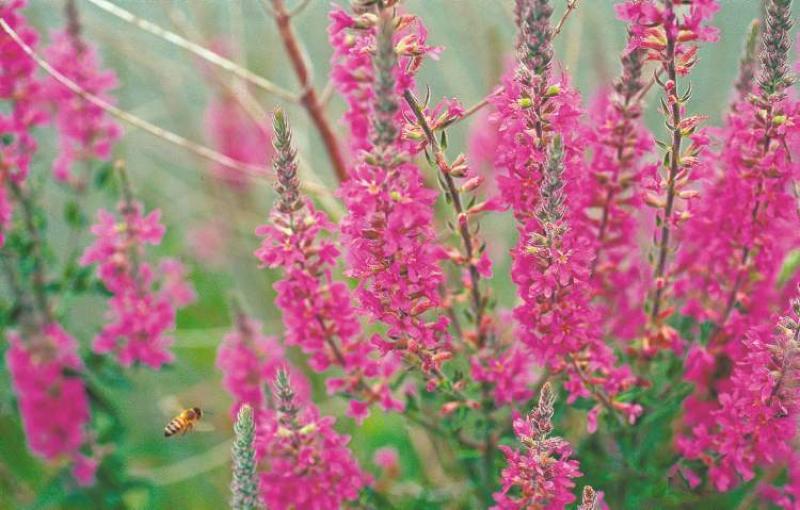
Other easily identifiable invasive plants include purple loosestrife, with its tall strong purple spires, and common tansy, which features deeply divided, fern-like leaves and numerous button-shaped bright yellow flowers. If you see any of these plants, be sure to report your sighting to the ISCM.
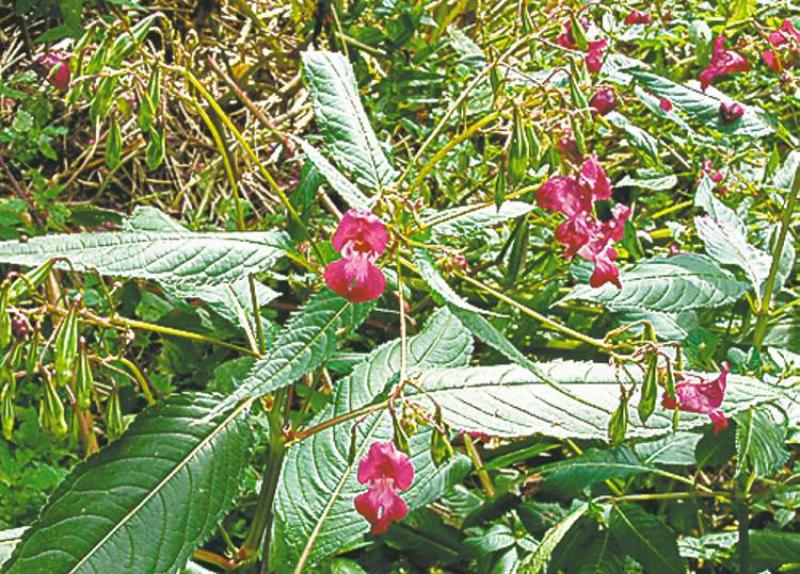
Invasive species are often very nice to look at, which is why they were introduced into our gardens in the first place. One example is Himalayan balsam, a fast-growing annual with attractive, orchid-like pink or purple flowers. Its brittle seed capsules explode on contact, spreading seeds six metres. This flower should never be planted in your garden.
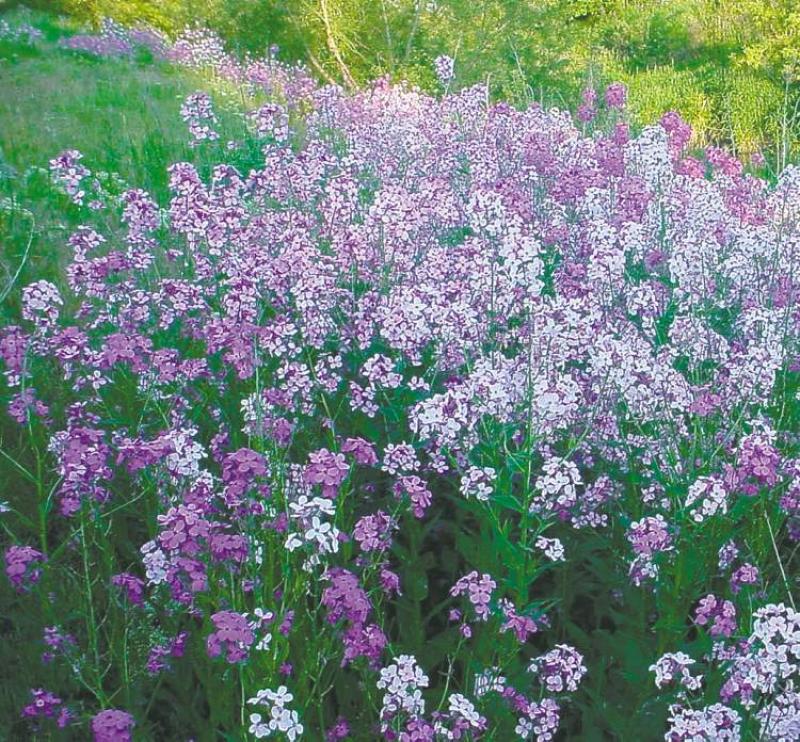
Another pretty invasive, dame's rocket, is often confused with garden phlox and is especially problematic near woodlands. Do not plant this flower and be wary when buying wildflower mixes, as they often contain this species. Dame's rocket can be identified by its petals and leaves. It has four petals with alternate leaves, while Garden Phlox has five petals with opposite leaves.
There are many other invasive species to avoid planting in your garden, such as creeping bellflower, salt cedar, yellow and Dalmatian toadflax, leafy spurge, yellow flag iris and flowering rush, to name just a few. Photographs and other information on these plants can be found on the ISCM's website. Remember, the key to fighting invasive species is prevention and early detection. The earlier we catch it, the better. Manitoba has many invasive species knocking on its doors.
For further information or to receive or download a copy of the Grow Me Instead brochure or our free e-newsletter, or to report sightings of invasive plant species, please visit the council's website at www.invasivespeciesmanitoba.com or call 204-232-6021. You can also find us on Facebook by searching Invasive Species Council of Manitoba.
INVASIVE
Purple Loosestrife
Scentless Chamomile
Himalayan Balsam
Dame's Rocket
Ox Eye Daisy
Common Baby's Breath
Common Tansy
Creeping Bellflower
GROW ME INSTEAD
Blazing Star
False Sunflower
Joe Pye Weed
Purple Prairie Clover
False Sunflower
Pearly Everlasting
Black-eyed Susan
Wild Flax