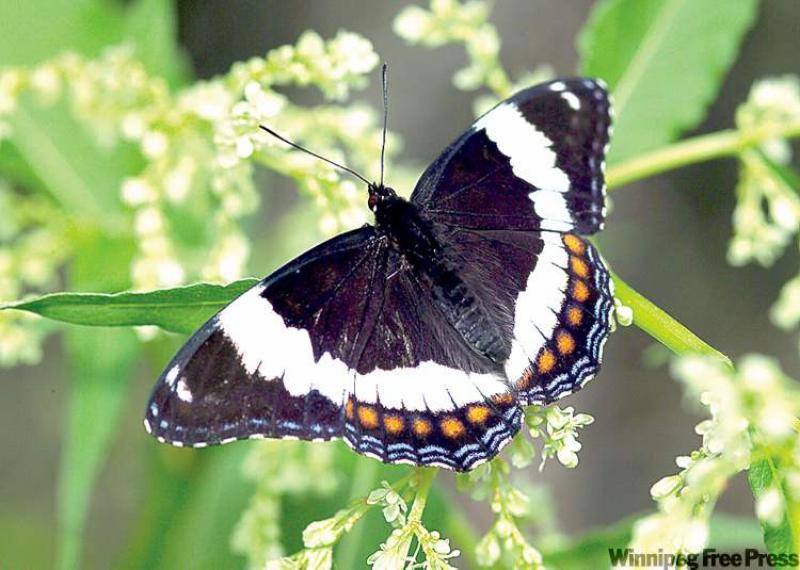
Nothing announces warm beautiful weather like seeing a butterfly fly by.
In Manitoba, you have the potential to spot about 150 species of butterflies and skippers.
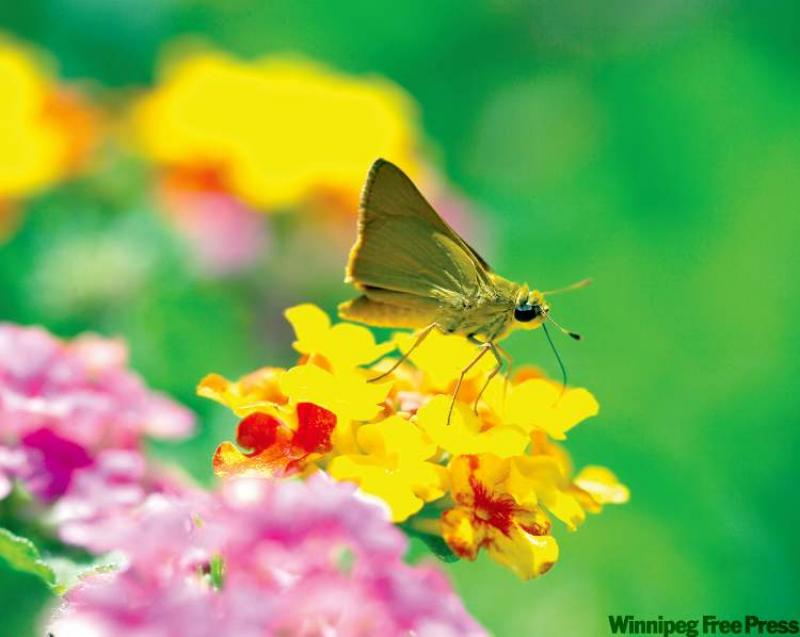
Skippers are close relatives of butterflies with similar daytime flying and nectar sipping habits and are included in most butterfly field guides.
In spite of Manitoba's butterfly species diversity, most Winnipeggers aren't familiar with these butterfly species. Concrete urban development, big flowerless grassy lawns and aggressive mosquito-spraying programs make much of Winnipeg unappealing to butterflies.
To find many species of butterflies within the city limits, you have to know where and when to go, and what you're looking for. That can make it hard for a beginner to see The Butterflies of Manitoba, even if you have a copy of that excellent field guide by Klassen, Westwood, Preston, and McKillop.
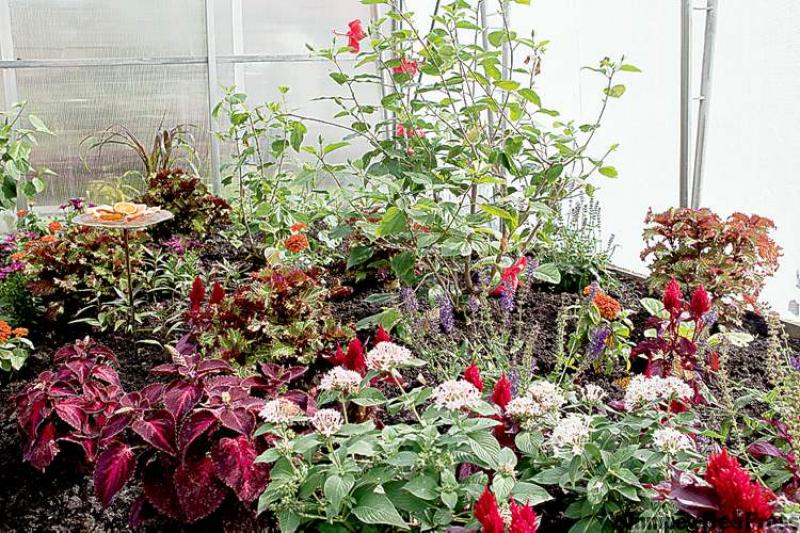
One way to see more butterflies in Winnipeg is to make your local environment more suitable for them. That means providing for their basic needs of food, water and shelter as part of a butterfly garden.
Most people think of flowers as being the perfect food for butterflies. They're right but only in part. Not every flower produces nectar for butterflies to use, and caterpillars don't eat nectar. A butterfly garden has to provide suitable flowers for adult butterflies and also suitable plants for the caterpillars.
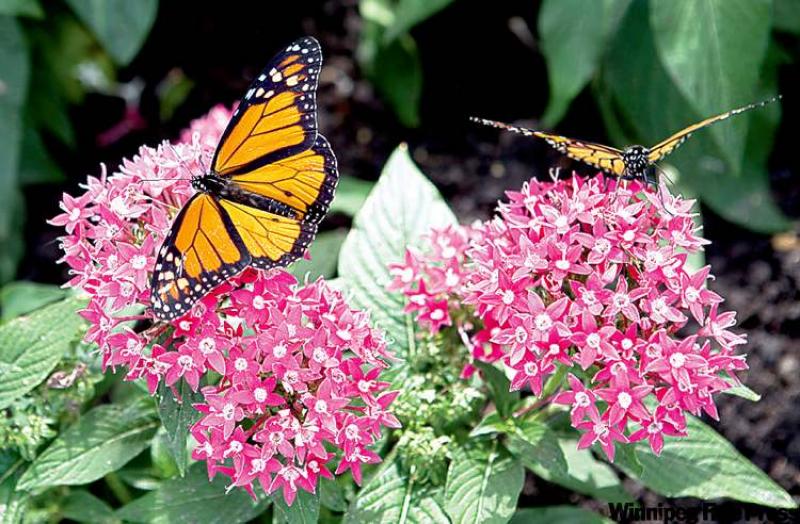
Milkweeds (recommended varieties include swamp milkweed, whorled milkweed and dwarf milkweed) are nearly perfect perennial plants for the butterfly garden. Their flowers provide nectar for many species of butterflies, and the foliage of the plants provides food for the caterpillar of the monarch butterfly, one of the largest and showiest butterfly species in Manitoba.
Each summer the Living Prairie Museum at 2795 Ness Ave. holds a Monarch Butterfly Festival which features the relationship between this butterfly and the milkweed plants on which it depends. This year's event will take place on July 17.
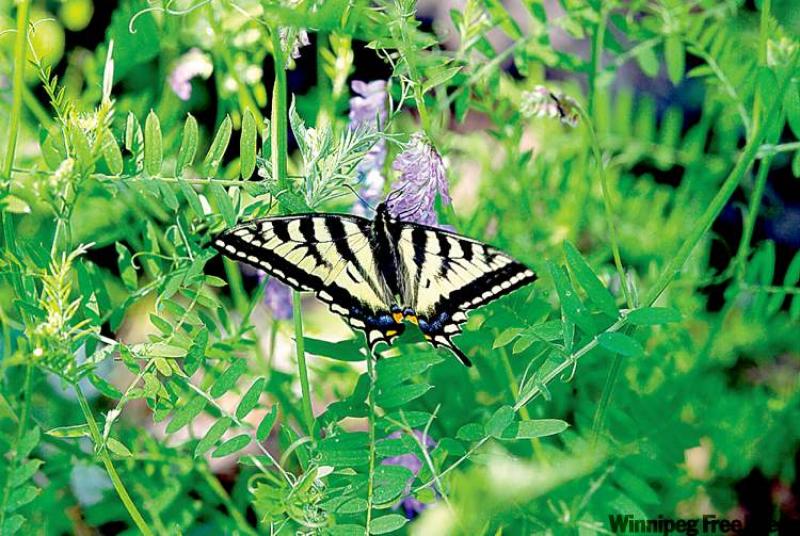
However, you need not restrict yourself to milkweed in your butterfly garden. Common vegetable garden plants such as carrots, parsley and dill are the preferred foods of the black swallowtail caterpillar. European cabbage white butterfly caterpillars eat cabbage, kale and broccoli. If you are willing to share your vegetable garden's bounty with caterpillars, your flower garden will be graced by the adult butterflies.
Other quick and easy plants to include in a butterfly garden include sunflowers, zinnias and cosmos. These annual plants produce blooms that are attractive to both people and to many species of butterflies and they flower in the first year they are planted.
If you have a little more time and you want a garden that will attract butterflies for years, there are many perennial plants that are great for attracting adult butterflies. Garden favourites such as daisies, asters, ironweed, purple cone-flowers, blazingstar, sage, stonecrop and joe-pye weed are also butterfly magnets.
In addition to feeding on flowers, many species of butterflies also feed at mud puddles. Nectar contains sugar but very little salt, which the butterflies can get from a mud puddle.
It is sometime possible to observe hundreds of butterflies of several species gathering together at the edge of puddles. This is called mud-puddling. Leaving a muddy patch in a low spot in our gardens can be an important resource for feeding butterflies.
Overwintering butterflies shelter themselves over the winter as hibernating eggs, chrysalises or sometimes even as caterpillars or adults. They hunker down among fallen leaves and dry grasses in the top few inches of soil or in small holes in trees. Mulching a butterfly garden in the fall and resisting the urge to scour our gardens of all dead vegetation in the spring gives butterflies a chance to crawl out of their winter hideaways and repopulate our gardens in the summer.
The Assiniboine Park Zoo is about to make it a lot easier to get to know Manitoba's butterflies. Assiniboine Park is already a good place to see butterflies because it includes large expanses of undeveloped land. These include several distinct habitat types including riverbanks, woodlands and open areas. The park also has extensive flower-filled gardens where hungry butterflies can feed. Building upon these natural advantages, this summer the Assiniboine Park Zoo will feature a seasonal display in the newly opened Shirley Richardson Butterfly Garden with many beautiful native butterfly species. Consisting of two adjoining Quonset huts with beautiful indoor and outdoor gardens, this walk-through exhibit will be a great opportunity to see and learn about Manitoba's butterflies without leaving the city. The exhibit will also serve as a particularly good place for both adults and children to witness the miracle of metamorphosis.
The park will receive large numbers of chrysalises from Canadian butterfly breeders to include in the display and are also planning to receive chrysalises of tropical butterflies from as far away as Costa Rica. Visitors will be able to watch as the adult butterflies emerge from the chrysalis, harden their wings and mature to fly throughout the butterfly enclosure, gently landing on both people and plants.
It's a good metaphor for the Assiniboine Park Zoo butterfly exhibit, long in the planning stages and about to take off to delight us all.
Dr. Jeffrey Marcus is an Associate Professor of Biological Sciences at the University of Manitoba and the Tier 2 Canada Research Chair in Phylogenomics.