Magical garden tours
HOT, dry weather can bring with it the wish for some rain, but that desire may be accompanied by a gardener's concern for the lush, open blooms of June's spectacular peony displays.
Their heavy heads, supported by relatively thin stems, can completely bend to the ground in a strong rain or windstorm, so providing good support is essential.
Jim Hale, assistant manager at Lee Valley Tools, recommends a peony ring with a type of hinged hoop that is an innovation in just the last couple of years.
"The clamping mechanism has been redesigned so that the weight of the plant does not cause it to sag. The pole is made of solid, sturdy steel, not hollow aluminum." Hoop sizes include the standard 18-inch diameter or a larger-diameter 25-inch hoop.
Dorothy Dobbie, today's contributor, grows a variety of peonies in her garden, and I have had the opportunity to admire them on past garden tours. Dorothy is publisher and editor of Manitoba Home and Gardener Living magazine, celebrating its 15th anniversary this year.
On Saturday, June 23, from 10 a.m. to 4 p.m., the WSO Garden Magic and Music Garden Tour will offer eleven magical garden tours. Passports are $35 and are available at the WSO box office, or call 949-3999. Each year, the day tour is accompanied by an evening Garden Soiree with WSO musicians in three stunning gardens, complete with a progressive dinner. Wednesday, June 27, at 6 p.m. Tickets are $135 each or $225 per couple and include the WSO day tour. Visit www.wso.ca for more details.
Colleen.Zacharias@gardensmanitoba.com
_________________________________________________________________________
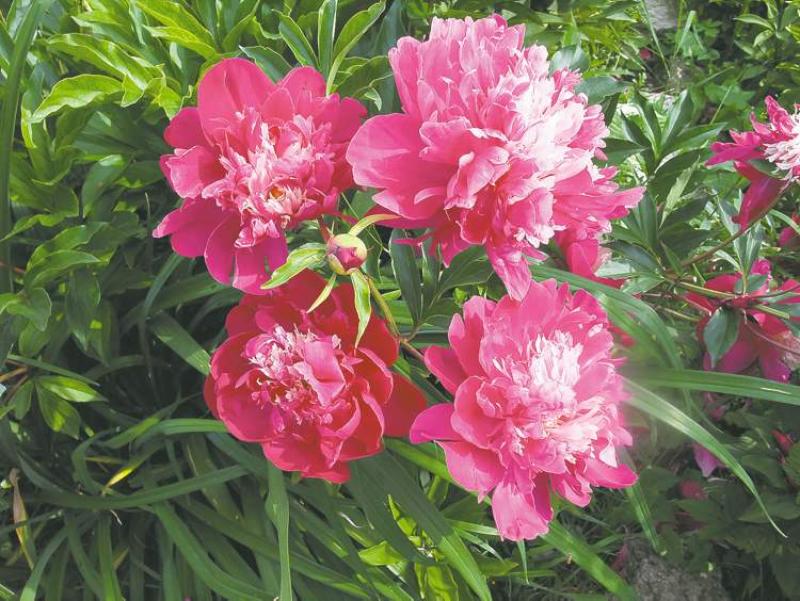
June in Manitoba is the month of peonies, which burst into bloom and scent the air with their musky fragrance.
According to Jennifer Bisch, Manitoba Historical Society, a campaign in the early 1920's by a Mrs. Edward Harding to beautify Winnipeg resulted in thousands of peony roots being planted. The May 27, 1922 edition of the Free Press records an address by Travers Sweatman, K.C., to the Manitoba Horticultural Society suggesting, in response to the campaign, that the peony be named as Winnipeg's civic flower. Currently, the city has no floral emblem.
Traditionally, I have grown mainly herbaceous peonies, generally Paeonia lactiflora, the Chinese peony. Tree peonies made their appearance here at least by the 1990s, when I bought one from RBM Gardens in Headingley. I followed the planting instructions meticulously, positioning the plant six feet away on the north side of an evergreen -- in this case, a cedar. It makes me chuckle now when I think of it, but the instructions must have been carefully thought out, because 18 years later, this peony is still thriving without any special mulching or other care. It rewards me most springs with gigantic, silky, magenta blossoms centred by golden stamens.
Other peonies thrive in our climate as well. The lovely intersectional or Itoh hybrid peony, a cross between the herbaceous and tree peony, has a nice long blooming time of about three to four weeks and blooms a little later than the herbaceous varieties. While most peonies require five hours of strong sunlight to bloom well, there is the delicious woodland variety, Paeonia mlokosewitschii (also known as molly-the-witch) that will grow in the shade, producing yellow or cream-flushed-with-pink flowers early in spring.
Winnipeggers also grow fern-leaf peonies, Paeonia tenuifoli, with a success rate that belies their mystifyingly high cost. Their red or pink blossoms are often the first flowers to appear in the garden, and the plant will spread, so give it enough room.
Peonies are marvelously versatile and make excellent cut flowers. Cut at the marble stage, when they first show colour, peonies will last longer in a vase than those cut when fully open. It is also easier to rid the flowers of ants before they open, especially if cut in the evening when there are fewer ants at work harvesting the oozing nectar from their blossoms. When cut at this hard-blossom stage, peony flowers can be kept refrigerated in a vase of water for up to six months, although the open blooms of these preserved flowers won't last as long as when freshly cut. But they'd do for a wedding if your favourite bride has her heart set on peonies in September.
If you cut Itoh hybrids or tree peonies, be sure not to cut into the wood, which contains the secret of next year's flowers. Display these blossoms, which can be 10 inches across, in a shallow bowl for best effect.
Peonies may be increased by division, but they can take a couple of years to recover. As the old adage says: first year sleep, second year creep, third year leap. Loosen soil with a garden fork about 18 inches from the crown and lift the plant out carefully. Wash off the soil, then cut through the crown.
Each division should include at least one strong tuberous root and three to five eyes (where the stem grows). The planting hole should be wide enough to accept the tubers and just deep enough so the eyes of the root will be no more than 1.5 inches below the surface.
Herbaceous peonies will not bloom if planted too deeply. They need the cold period to stimulate the setting of next year's flowers.
If you want to experiment with planting seeds, you need to be a patient gardener. Firstly, some hybrids will not produce seeds, but if your plant does, then plant the shiny, mahogany-coloured seeds in soil conditions similar to that in which the mother plant is growing. Wait a couple of years for the plant to emerge (mark the planting place well). Then wait another 10 years for the plant to produce flowers and don't expect the flowers to resemble those of the parent. The mystery is part of the fun.
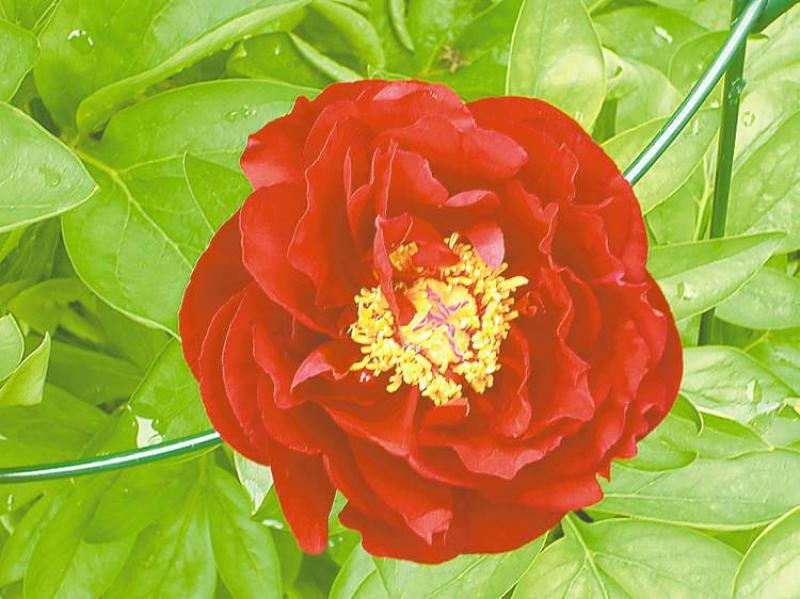
Herbaceous peonies are often classified by the shape of their blossoms, and some experts, making a fine distinction, claim a total of nine forms. The Canadian Peony Society recognizes five. Single peonies have one row of petals that may overlap. Wild peonies have five petals, but singles may have nine to 12 petals arranged in one or two rows around a centre of golden stamens, which bear pollen. "Scarlet O'Hara" and "Krinkled White" are two examples.
Japanese forms are similar to singles, but the stamens, although yellow, have no free pollen. "Kukene Jishi" and "Garden Lace" are lovely examples of the Japanese form.
Anemone-form peonies have one row of wide, flat petals that hold a bowl of upright stamens that have morphed into feathery petals. The popular "Bowl of Beauty" would fall into this class.
Semi-Double forms have multiple petals surrounding a centre of true, pollen-bearing stamens. Look for the coral coloured "Cytherea" and white "Rare China."
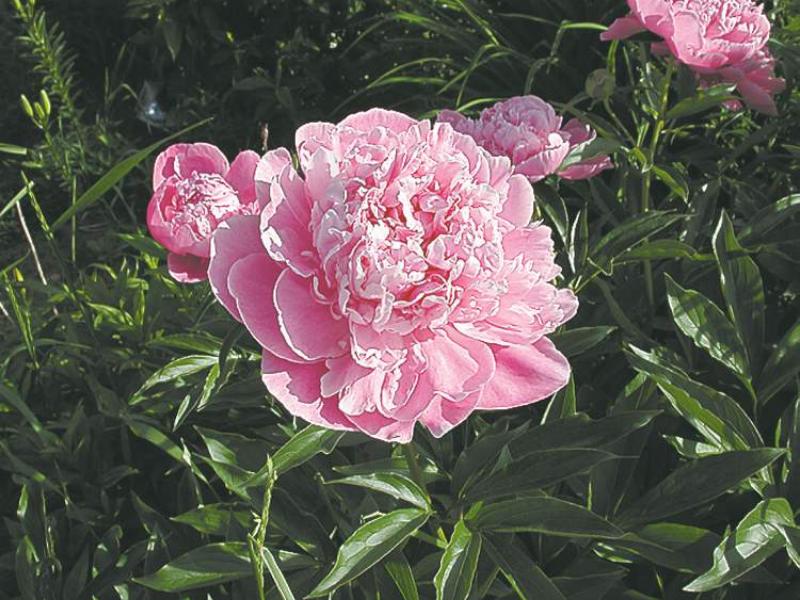
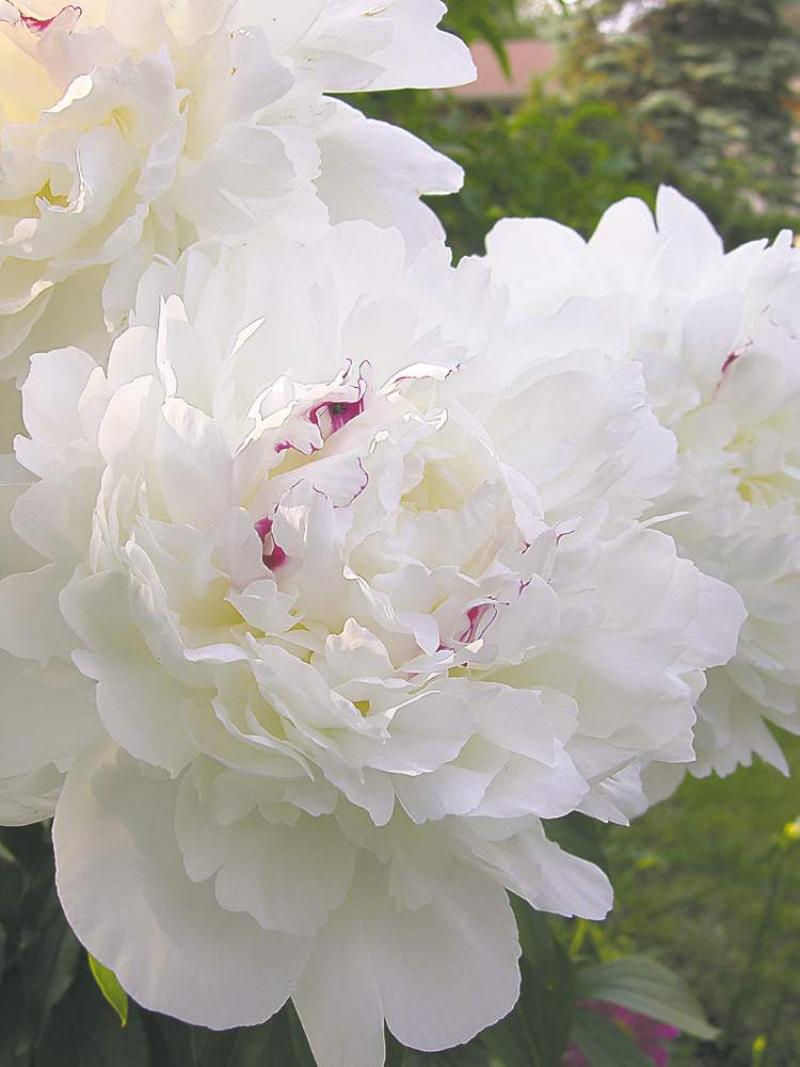
Finally, there are the doubles or bomb peonies with which most are familiar because when they arrived on the scene, they simply extinguished attention from all other forms. These peonies show no evidence of stamens. You will recognize "Sarah Bernhardt," the familiar pink peony, and "Festiva Maxima," with its few flecks of red hidden amongst the snowy-white petals.
We tend to fixate on the beauty of the flowers, but peonies were grown for thousands of years primarily for their medicinal properties. Their dried roots are known in Mandarin as shao yao, peony medicine. Peony medicine was used as an anti-spasmodic, an anti-inflammatory and a blood thinner as well as to combat dementia.
Among their many virtues, peonies are deer- and rabbit-resistant, drought-tolerant, subject to few diseases or pests and, best of all, they can live 80 to 100 years.