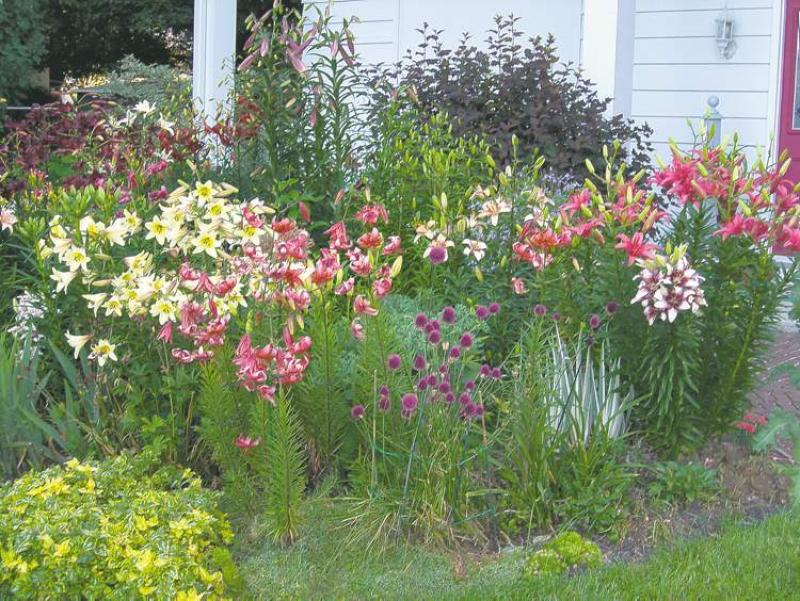
Lily festival
LILY experts from across North America will soon descend on Winnipeg as The Manitoba Regional Lily Society prepares to host the North American Lily Society Show, July 11-15, at Canad Inn, Polo Park. They will bring with them a wealth of shared knowledge and experience as well as the same passion for growing lilies that has stirred the hearts of Manitoba gardeners each summer.
Today's contributor is Frances Wershler, one of the conference's co-chairs and a longtime member of the MRLS. Wershler has been growing lilies for decades and has given presentations on lilies throughout the province.
There are six regional lily societies in Canada including four on the Prairies. Visitors to the show and conference will have the rare opportunity to see displays and designs of some of the most spectacular lilies grown in a variety of regions. In addition to a lineup of speakers and exhibitors, tours of lily gardens have been planned for the Lily Nook in Neepawa, Assiniboine Park's English Garden, Merlebleu in St. Andrews and a number of self-guided tours.
The Lily Nook in Neepawa, for example, grows more than 2,000 named cultivars with up to 30,000 seedlings. A complete list of gardens will be included in the registration package. For more information visit www.manitobalilies.ca.
***
Mark your calendar for July's summer garden tours. The Selkirk and District Horticultural Club, the East Beaches (Victoria Beach) Garden Club, and the Friends of Gardens Manitoba will host a combined tour on July 14, July 21 and July 25. Visit www.gardensmanitoba.com for full details or call 895-4560.
The Garden Club of Carman and the Carman Active Living Centre will host its garden tour on Saturday July 21. Visit www.carmanalc.com for details.
Birtle's second annual Gallery in the Garden will take place on July 14 and combines a garden tour and outdoor gallery with over 30 artists participating. For info or registration, call 773-0670 or visit www.birtle.ca/galleryinthegarden.
Nature Manitoba's Natural Garden Tour has been postponed this year but will return in 2013.
-- Colleen Zacharias
The abundant selection of lilies available to Prairie gardeners makes them an extremely popular and versatile addition to our gardens. Varying in colour, form, bloom time and habitat preference, there are lilies to suit every taste and every landscape. Many species of the genus Lilium originate in the northern hemisphere, so they flourish in our area, providing easy care and amazing resilience.
Short, foot-high varieties such as any of the 'pixies' or lilies with 'tiny' in the name suit border and bed edgings and come in all colours except blue. Tall spiky lilies such as Red Velvet or Burnett's Beauty mix well in borders among the more mounded forms of perennial flowers.
It is usual to plant lily bulbs in early fall, but some species need the warmth of the summer's growing season to produce roots to withstand our harsh winters. Purchase bulbs from reputable growers, especially those who specialize in lilies, and those who sell locally grown bulbs. The Lily Nook at Neepawa and Jeffries Nurseries at Portage la Prairie are two excellent sources. Plant as soon as you have new bulbs or refrigerate them until you plant them.
Well-drained soil is necessary for growing great lilies. It is a good idea to plant on a slope or in raised beds. Soil needs to have plenty of humus and may be amended with sand, peat and compost. Groups of three or five bulbs planted together make a strong splash of colour. Dig a hole large enough to plant the number of similar bulbs you have. Make it six inches deep for Asiatics or eight inches deep for trumpets and Orientals, with allowances of six inches between bulbs. Add a little bone meal around each bulb. Spread the roots and pack the soil around and over the bulbs. Water the area thoroughly to settle the soil around the bulbs and encourage immediate growth.
The majority of lily varieties we grow need full sun for most of the day, but the Martagon lily will grow in a shaded garden. This dainty species mixes well with other shade-loving perennials such as hosta, ferns and heuchera (coral bells). The colours in this group vary from white or pink through shades of rusty orange to dark brown or burgundy.
In 1964, the Royal Horticultural Society in England classified lily groups into eight divisions for the purposes of organizing lily shows. Each division may include several similar species with hybrids of those species. We most often see lilies from the Asiatic, Martagon and Interdivisional groups in Prairie gardens.
Interdivisional lilies may include hybrids derived from crosses with Trumpet, Aurelian or Oriental lilies. Hybrids derived in recent years through hand pollination and other advanced techniques such as cut-style pollination and embryo culture have produced lily crosses between distantly related divisions. The stunning results will be on display at the upcoming lily show in Winnipeg July 11 to 15.
Most people are familiar with the Prairie lily, Saskatchewan's provincial flower, Lilium philadelphicum. Many people remember the old-fashioned tiger lily, L. tigrinum. But, the Asiatic Division is most popular here now. Their sparkling colour and bright open faces look up or out to the viewer, and some face down.
The common orangey tones have been surpassed by brilliant tints of yellows and oranges or combinations such as those in a lily called Cancun. Beautiful rose tones appear in lilies such as Renoir, Pink Pagoda, Iowa Rose, tiny Pink Pixie or the double Ceres.
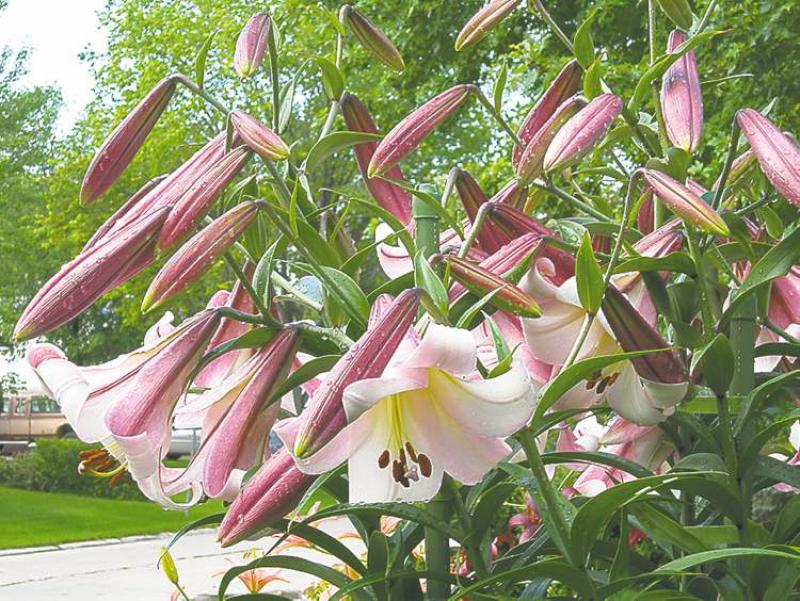
Interdivisional lilies include L. A Hybrids (Longiflorum x Asiatic), Orienpets (Oriental x Trumpet) and other division mixes that are the new stars of the lily world. Many of these have huge upfacing flowers in strong colours. Others reach heights of five or six feet and bear large trumpet blooms in exotic hues. Many have strong fragrance as a result of their Oriental lily connection.
My first plans for growing lilies evolved from the gift of a potted Black Jack lily, an Asiatic. I set out to acquire all the deep red lilies I could find. Dark red will not show well in a garden unless balanced by strong whites so now I grow pure whites such as Navona, Navara or Tiny Snowflake and White Baby. I followed these with white lilies with dark red markings such as Centerfold, Arrowwood, Purple Reign and Nettie's Pride. Some of the almost black lilies I grow are Black Out, Landini, Dimension and Burnett's Beauty, once called Alex 8 because it was a favourite hybrid from Alex Burnett, a well-known Canadian lily breeder who hailed from East Kildonan.
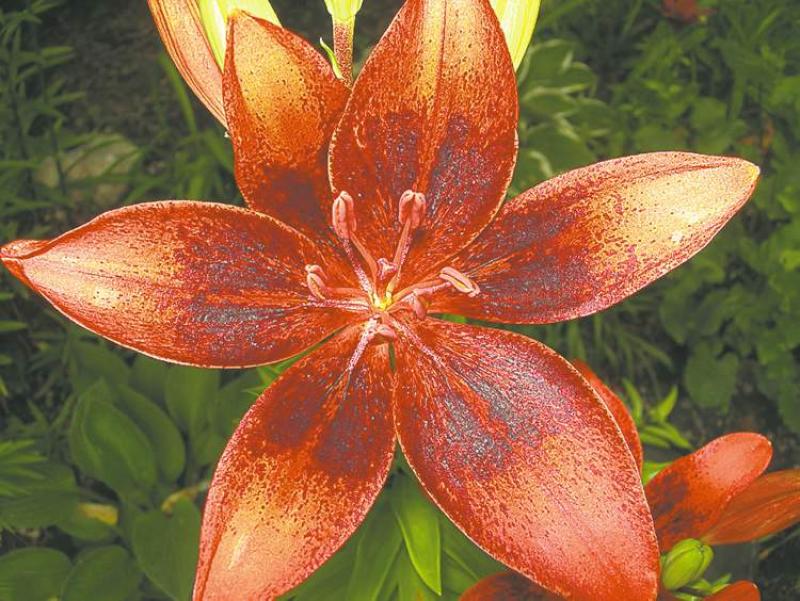
Beyond pure colour in the Asiatics there are special colour blends such as heavily speckled lilies called Burgundy Splash, Strawberries and Cream, or Tropical Breeze. These spattered and speckled lilies are nicknamed Tango lilies and their striking two-tone look brings appealing blends of many colours.
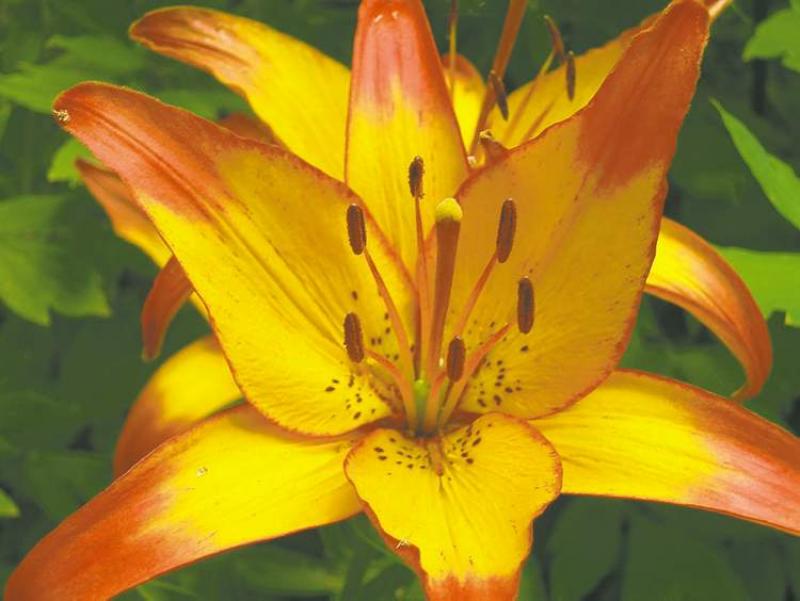
Another colouration, called the brushmark, appears as though someone had brushed a second colour over light coloured petals. Lollypop and Cancun are basically one colour, white and yellow respectively, with petals tipped with pink and rust.
Lily bulbs are large and strong enough that children can handle and plant them easily. The Martagon lily, for example, provides a good sized, solid bulb.
"The lily is a man's flower", said the late Barry Strohman, one of Manitoba's famous lily personalities. He used to say, "The blossoms are big enough and tough enough for a man's hands to work with." This was said in reference to removing pollen from the stamens of a chosen parent lily and applying it to the pistil of the second parent lily.
Other than the recent appearance of the red lily beetle, there is much to enjoy about growing lilies. For more information about the lily beetle you may go to The Manitoba Regional Lily Society website at www.manitobalilies.ca or plan to attend the Lily Show and Conference for a chance to talk to lily experts from across Manitoba and North America.