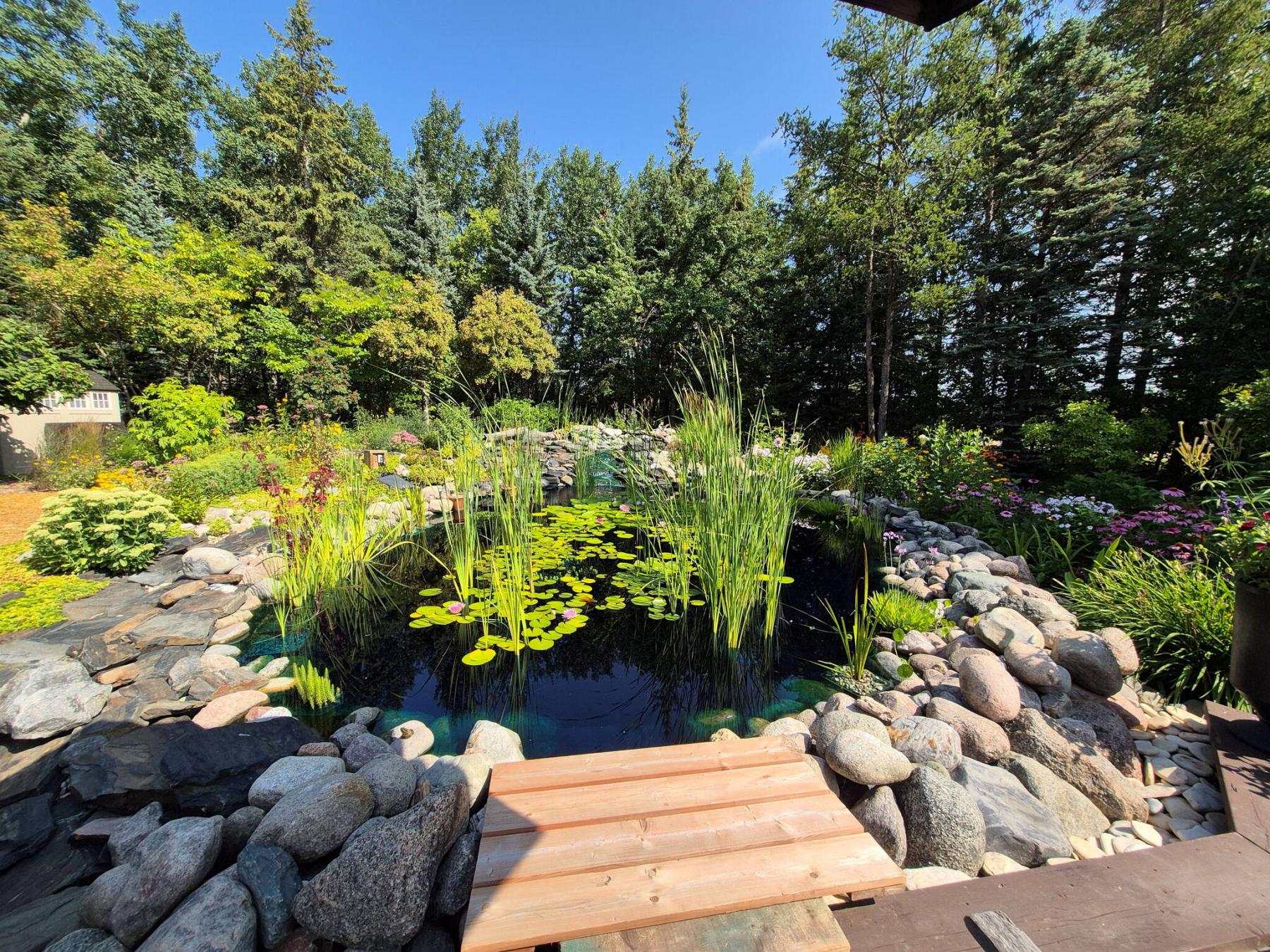
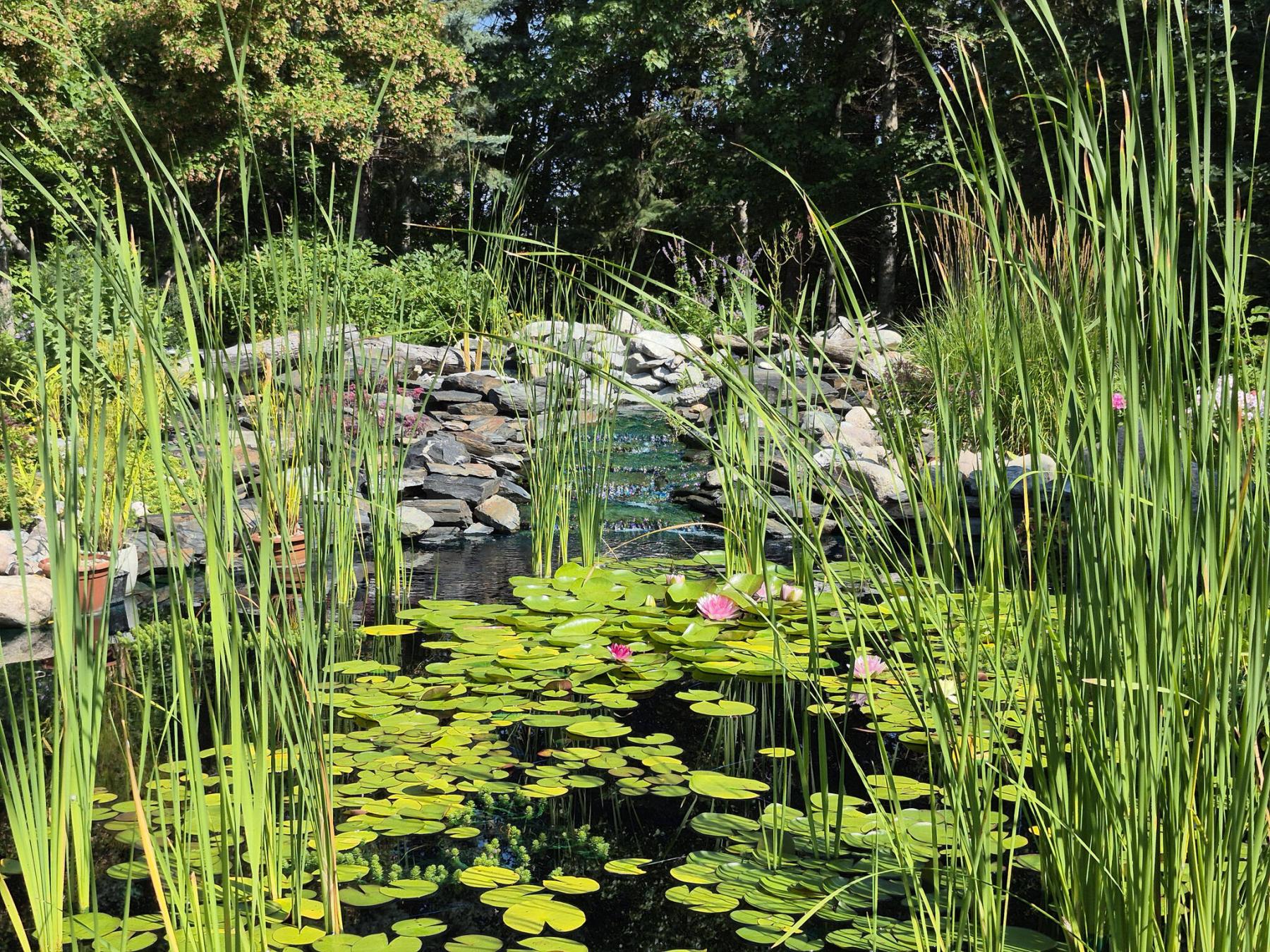
The handsome pond on the Choquettes’ 20-acre property features a waterfall and water lilies.
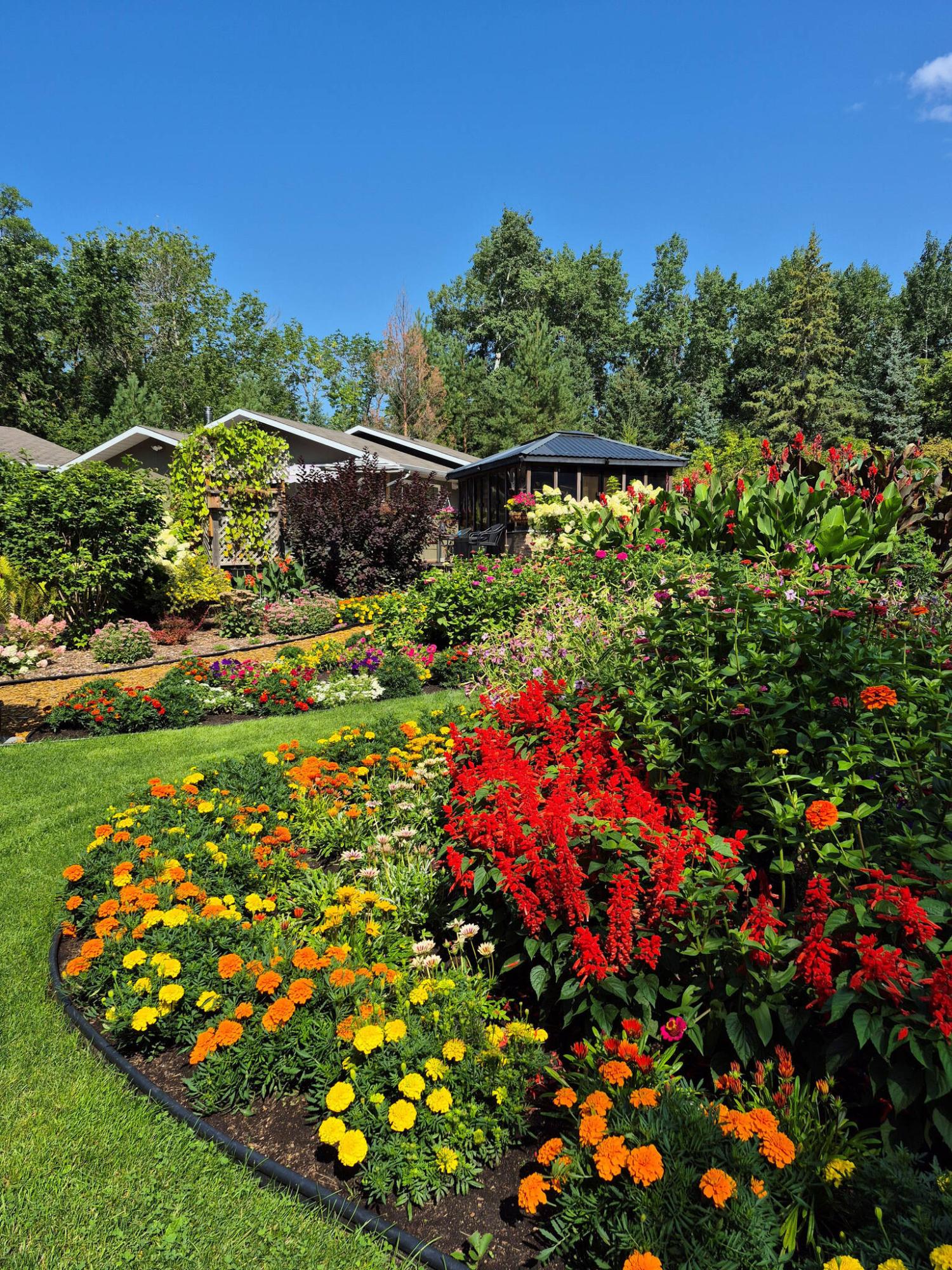
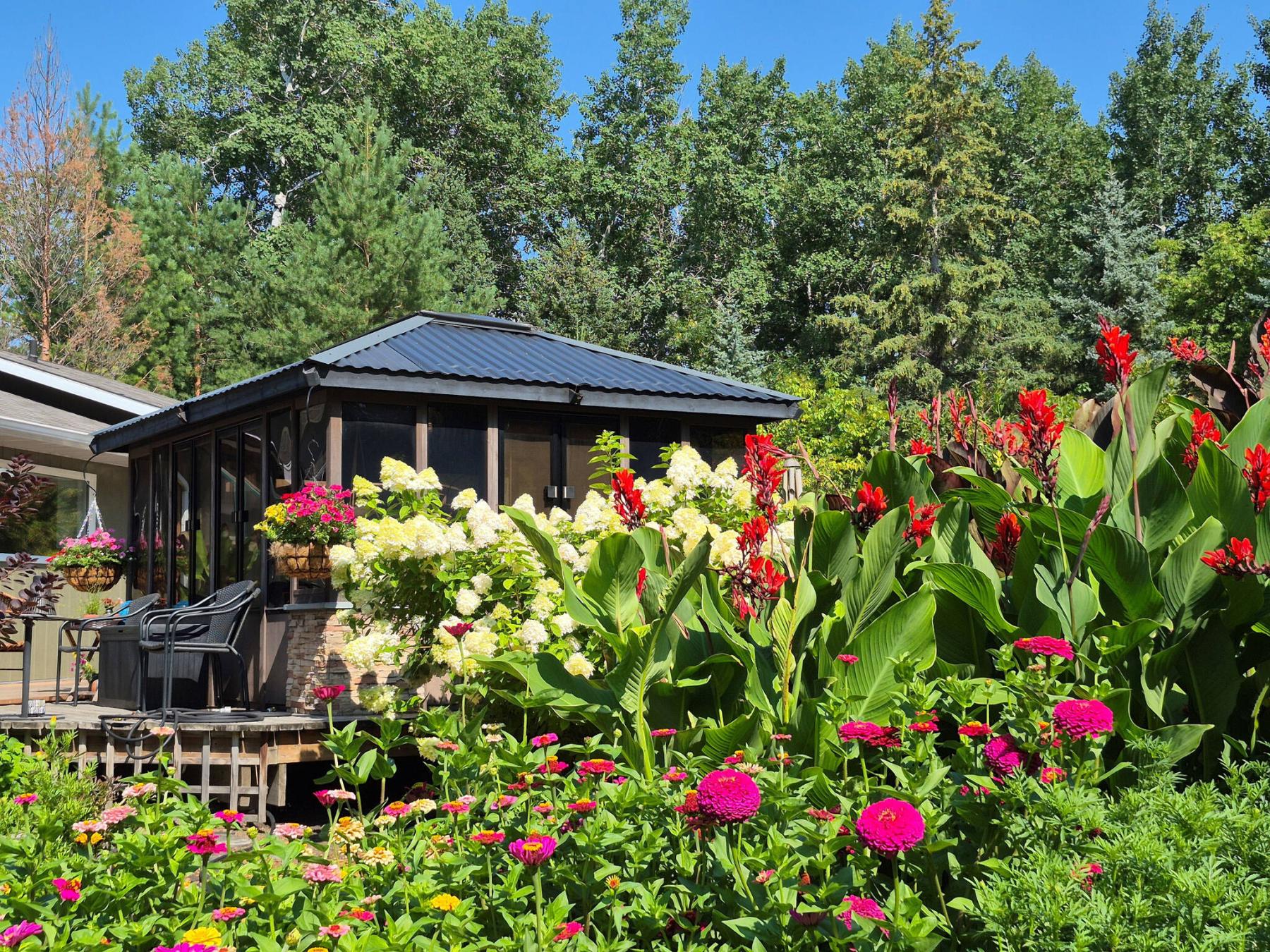
Hundreds of zinnias and marigolds started from seed grow in Robert and Susan Choquette’s curved garden beds.
Photos by Colleen Zacharias / Free Press
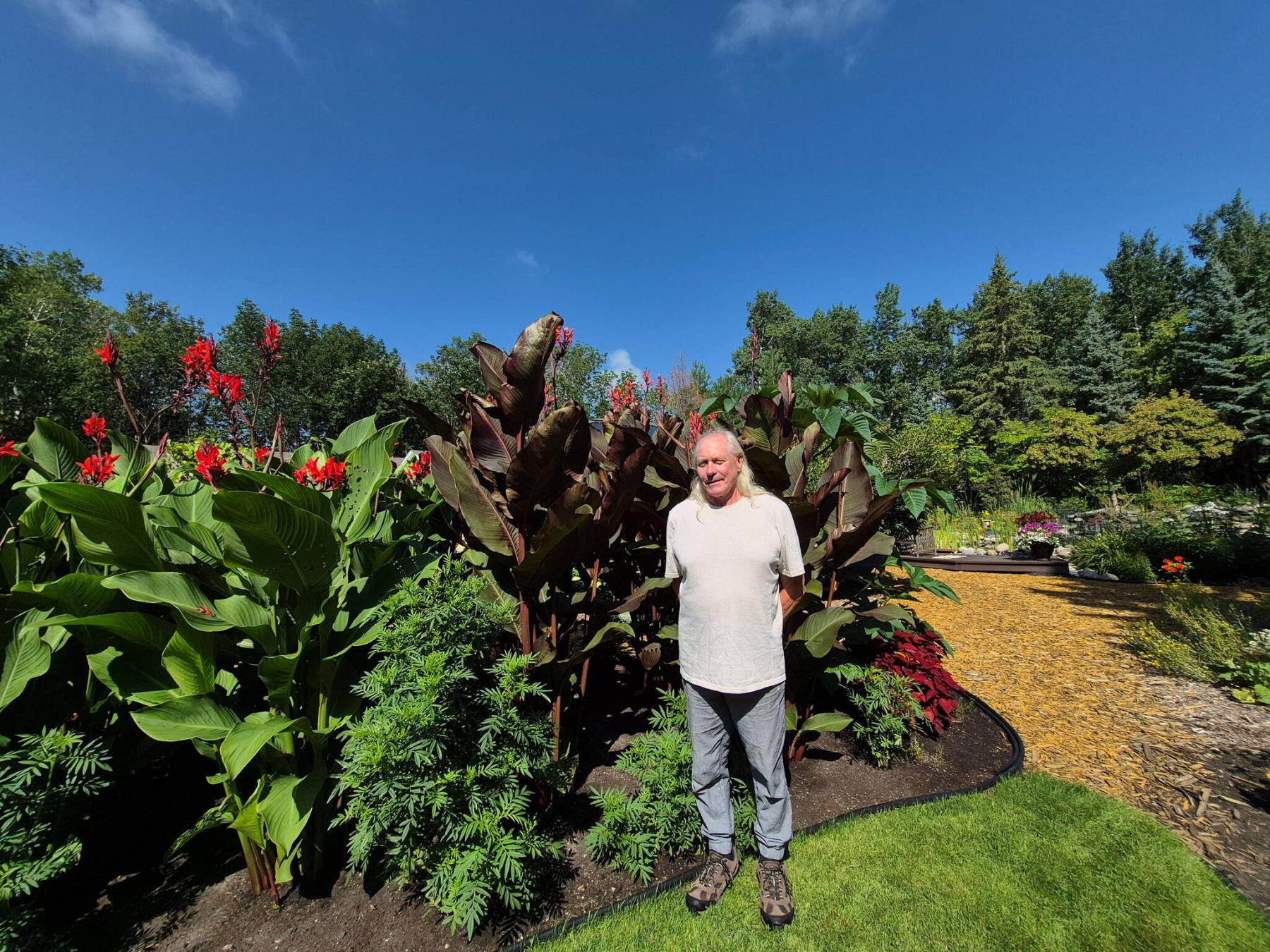
Robert Choquette grows dozens of canna lilies. He digs up the rhizomes in the fall and stores them for winter.
Colleen Zacharias / Free Press
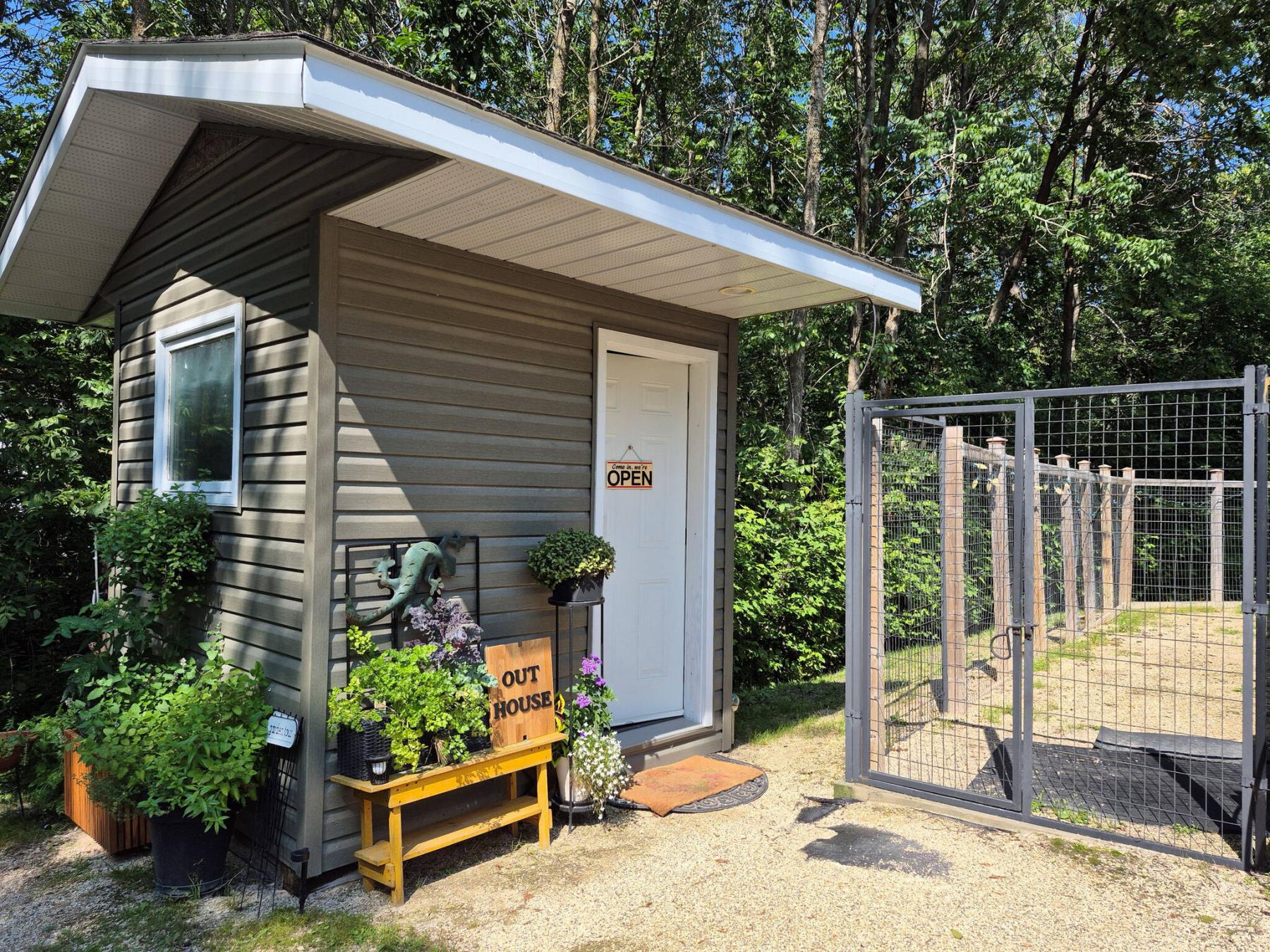
The spacious rural property has all the amenities, including a modern outhouse and roomy kennel for the family pet.
Colleen Zacharias / Free Press
A garden where not everything can be seen all at once cultivates a sense of mystery and anticipation.
The last few weeks have been a whirlwind of activity at Robert and Susan Choquette’s spacious rural property in Oakbank. They have been busy preparing multiple gardens for winter, digging and storing scores of canna rhizomes, and bringing tender plants indoors for the winter.
The couple’s stunning property was featured on this year’s Gardens of Distinction tour by Nature Manitoba which was held on July 4.
Visitors were wowed by the abundant plantings of flowering annuals in a long, curved border at the entrance to the garden. A mixed planting reminiscent of a traditional formal border includes marigolds and classic red salvia (Salvia splendens) with taller layers of colourful zinnias and stately, white-flowered Nicotiana.
“I would have had more zinnias this year if it hadn’t been for the cold weather we experienced in spring,” says Robert, who is an avid gardener. “I transplanted 350 seedlings in the spring and kept them in our gazebo, but I only had one heater running and 80 per cent of them died.” Robert started new plants from seed and filled one entire bed with zinnias which quickly grew thigh-high once warmer temperatures arrived.
Another standout feature each summer is a cornfield-like display of canna lilies and castor bean plants in a massive island bed carved out in a large area of the lush lawn.
Super tubers
By autumn, the canna lilies and castor beans reach an enormous height of around eight feet (2.4 metres). The Choquettes have already lifted and cured the canna rhizomes (often referred to as tubers) in preparation for winter storage but also give many of them away.
“We must have given away at least 10 dozen,” says Robert. “We give some away every fall. But I keep several. The tubers I plant are enormous. They have multiple growing tips. The original tubers are 30 years old. I put them into the ground on Mother’s Day. By the time I dig them up in the fall, it’s like digging out a tree.”
Robert also saves the seeds on his giant castor bean plants. On my visit, the plants towered over Robert, their massive textured leaves stretching nearly two feet across.
Robert and Susan are gradually transitioning one area of their garden to native plants. This fall, he added several ornamental grasses and dug up and moved a number of shrubs and perennials.
A large part of the Choquettes’ 20-acre property consists of mature trees and trails.
The couple has lived there for 40 years and their house, garden beds and one of their ponds are situated in an open, sunny area, almost like a clearing in an open space intimately surrounded by woods and nature.
Not everything can be seen at once. At first, the house, deck and gazebo can only be glimpsed past the gentle curves of deep beds, layered plantings, mature shrubs and winding paths. Someone visiting for the first time would have no idea there are also two magnificent ponds until their eventual discovery. The Choquettes’ garden design creates a wonderful sense of mystery and anticipation.
Features galore
The first pond is situated close to the house. Its curved shape set against a backdrop of tall trees has a natural, organic look. It features a gorgeous waterfall and is surrounded by layers of structural perennials, low-growing ground-covers and a mix of large, smooth, flat rocks leading up to big granite boulders like a crescendo. On one side of the pond is a wood deck with comfortable chairs and an umbrella, all the better to listen to the relaxing sound of the waterfall and enjoy the beautiful sight of water lilies in full bloom floating on the surface of the pond.
Robert built the garden pond in 2003. “I dug it out by hand,” he says. “The only thing I needed help with were some of the boulders as well as the liner which was really heavy.” The pond has three different pumps — a skimmer pump, a pond bio-filter pump and a mechanical pump for the water feature. Robert avoids the use of solar lights in or around his ponds. “I have read that solar flights negatively affect the mating of fireflies,” he says.
At one time, the pond was home to several koi fish. “About five or six years ago, we sold them to a fish store, Into the Blue, in Winnipeg,” says Robert. “Some of the fish were about two-and-a-half-feet long. When koi are that big, they like to dig into the potted water plants. I had to drain the pond right to the bottom to bring the koi in for the winter and store them in a large stock tank. Too much work.”
With the mild temperatures this October, the garden pond is still operating. The Choquettes plan to keep the pond running so long as temperatures remain above freezing. Tender pond plants such as the cardinal flower (Lobelia Cardinalis) have been removed and placed into a stock tank which is kept in their heated garage for the winter. “I add just enough water to keep the roots wet, and I use a small aquarium pump to keep the water moving so it doesn’t become stagnant,” says Robert.
The water lilies overwinter in their pots in the pond. Robert sinks the pots into the deepest part of the pond. One year, Robert and Susan kept the pond open for the winter. “It looked really nice, especially at Christmastime. I wouldn’t do it again, though. It cost a fortune.”
But now, let’s go see the second pond. Robert and Susan lead me along a tree-lined, gravel path. A stream and culvert run below the path. In spring, the area is brightened with yellow flowers when marsh marigolds are in bloom. We pass by a roomy kennel been built for their beloved 10-year old dog, Sable, who has been blind for most of his life.
Opposite the kennel is an attractive, modern outhouse complete with a window box and container groupings on two sides. In one container, Susan planted fragrant heliotrope with white lobelia, coleus and ornamental kale. There is also parsley to attract butterflies. Assorted aromatic mints act as natural olfactory landmarks and spatial cues for Sable. “I plant things he can smell so he knows where he is. It’s another way for him to navigate the yard,” says Susan.
Just beyond their Quonset hut lies the second pond. Its large size is startling — it’s more like a small lake. “When we built our home, we needed fill,” says Robert. “The cheapest way was to dig a pond. We used to swim in here at one time but not any longer.”
Water lilies cover nearly the entire surface of the water. Interestingly, the Choquettes began with only four water lilies. “All our water lilies are from those original plants,” says Robert.
The Choquettes still have a few garden tasks to complete before the cold comes. “We enjoy our yard, spring through fall and into winter. We put up our bird feeders the other day in the hope that bears don’t show up. We are receiving a number of visitors, including chickadees, nuthatches, blue jays and woodpeckers,” says Robert.
colleenizacharias@gmail.com