
Aubin Nurseries
Gerry Aubin is owner of Aubin Nurseries, which is celebrating its 90th year in business.
Aubin Nurseries
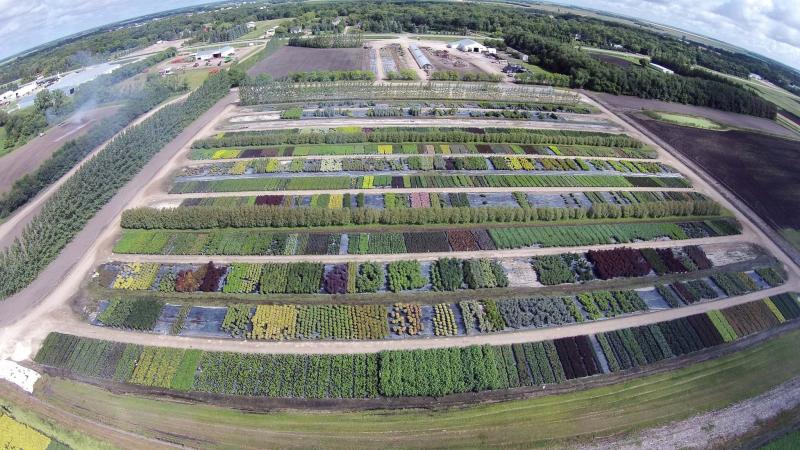
Established in 1927, Aubin Nurseries is a family-owned business that has grown to more than 500 acres.
Van Belle
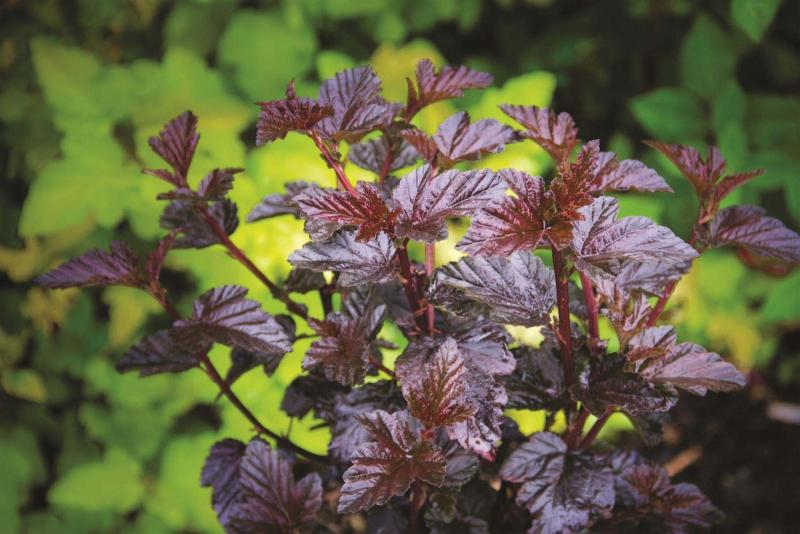
Hardy plants such as Burgundy Candy, a richly coloured ninebark, offer a low-maintenance option for today’s homeowner.
First Editions
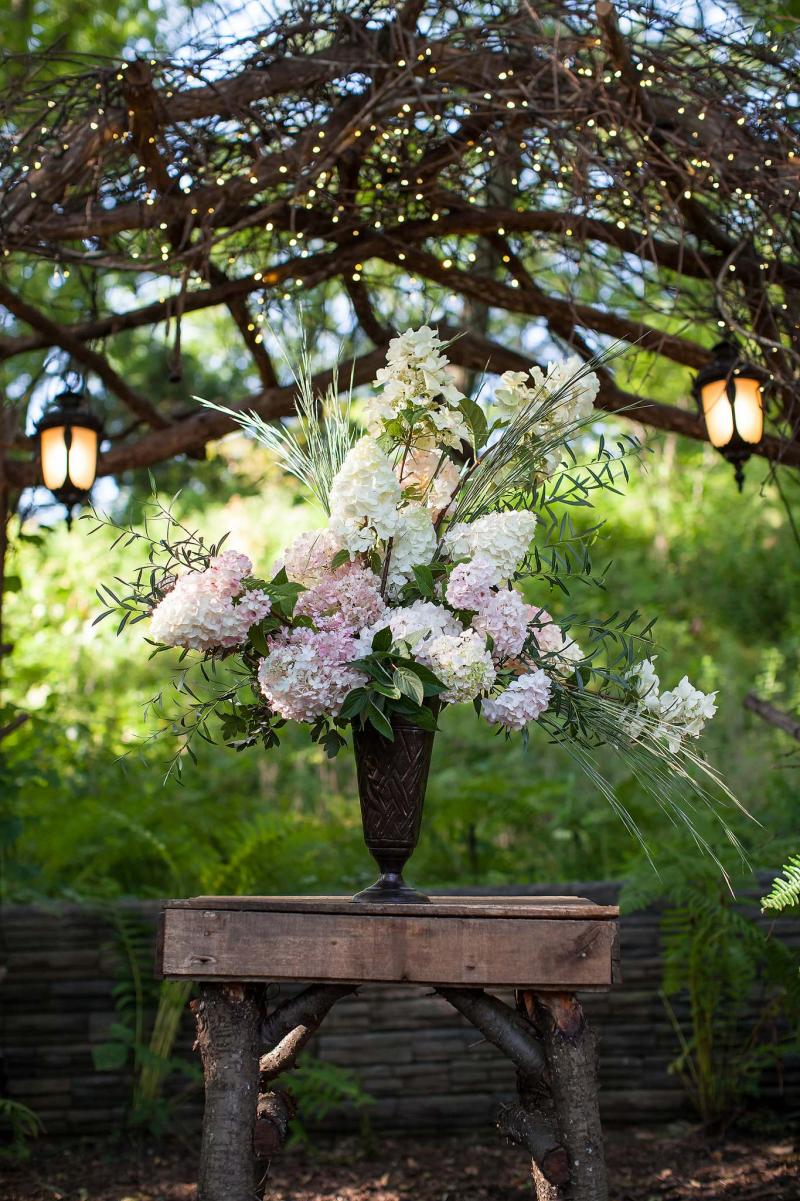
Fed up with hydrangea varieties that fail to overwinter? Strawberry Sundae hydrangea is a proven performer for Prairie gardens.
Planning to celebrate Canada’s 150th birthday in your backyard? Take some time to admire the trees, shrubs and perennials growing in your garden. Chances are, many of the ornamental plants in your landscape and neighbourhood come from nursery stock grown right here in Manitoba.
Recently, I toured the growing facility at Aubin Nurseries, a family-owned wholesale nursery celebrating its 90th birthday. I talked with owner Gerry Aubin, a third-generation nurseryman, for a look at Aubin’s proud past; the challenges, trends and innovations shaping the nursery industry today; and how Aubin Nurseries is preparing for the future in an increasingly competitive marketplace.
Question: Aubin Nurseries has been a family-owned business in Carman since 1927. How did it get started?
Answer: My grandfather, Gerald Joseph Aubin, moved to Manitoba from Quebec in the 1920s. He worked at Morden Research Station where he learned how to be a nurseryman. In 1927, he purchased land in Carman next to the Boyne River where he grew apples, plums and raspberries and started a U-pick fruit operation. By 1940, the nursery had expanded into the wholesale business, shipping nursery stock to customers such as Eaton’s.
Today, Aubin’s provides hundreds of garden centres and landscapers in Western Canada, northern Ontario and the Northern United States with cold-hardy trees, shrubs and perennials. What were some of the innovations that propelled it to be a major player?
In the 1930s and 1940s, plants were imported from Holland for distribution by local nurseries. Back then, the capability to propagate plants for mass production did not exist. Aubin Nurseries became the first nursery on the Prairies to create its own controlled-mist environments, which enabled it to make its own cuttings. That was a major change and allowed us for the first time to create vastly more plant material inventory at a lower cost so that we could sell to more garden centres and landscapers. It gave us the ability to compete with nurseries in British Columbia.
My father, Lawrence Aubin, was the first grower on the Prairies in the 1960s to create climate-controlled cold storage. For the first time, we could harvest everything in the fall and store plants bare-root for the winter. That was a radical change in the industry. Just picture plants with no soil on their roots stacked six meters high to the ceiling. Prior to climate-controlled storage, plants had to be harvested from the wet, clay fields in spring before they leafed out. Some years, depending on the weather, we harvested only 20 per cent of the crop.
Climate-controlled storage made it possible for us ship the product on time and in much larger volumes.
The key change, though, came in the 1970s, when our company moved to container production. Before that, there was no such thing as container production on the Prairies. It meant that instead of the necessity to plant bare-root trees prior to the long weekend in May, the consumer could purchase plants from mid-April to the end of October. We take that for granted today. Everyone in the industry told my father that it wasn’t possible on the Prairies to winterize plants in pots in -40 C temperatures. We found a way to do it.
What was the impact of these innovations?
We were finally able to compete with nursery growers on the West Coast and plant imports from Holland. Manitobans could now buy locally grown plants. We saw our perennial division go from 30 varieties to over 500 varieties. Today, we grow more than 400 varieties of trees and shrubs. By expanding our potted plant division to over 30 acres, we’re able to produce more than 400,000 trees and shrubs annually. We ship around 8,000 trees and shrubs and about 15,000 perennials per day in April and May.
What are some of the challenges?
Every tree and shrub needs to be pruned, weeded and fertilized by hand. In fall, container-grown ornamentals are watered well for the winter, then tipped over onto their sides and covered with lightweight foam blankets and tarps. Thousands of sandbags are used to secure the tarps. There is a lot of hard labour work. If it stays warm in November, it can be challenging, especially if there is high humidity.
The nursery industry has the ability to propagate huge quantities of plants, but with today’s smaller yards, production needs to be tailored to demand levels. In the U.S., for example, a surplus of nurseries and plants as well as the housing crisis has resulted in major nurseries going bankrupt.
Increasingly smaller yards need smaller trees and that is a real challenge for breeders. Another challenge is the demand for plant varieties that are not hardy to our climate. How far do we reasonably push the limits outside our gardening zone?
What advantages does Aubin Nurseries have in meeting the demands of today’s consumer?
Studies show that today’s busy homeowner wants a low-maintenance landscape. Hardy plants are the best choice for a low-maintenance landscape. That’s where we have an edge. We’re creating brand awareness with the Prestige Select label, which tells the consumer that the product is locally grown. Because the cost of land is less in Manitoba than it is in B.C., we can give plants more physical space in which to grow. This results in stronger branching habits on our shrubs and trees vs. the soft, lush material coming in from the West Coast that is less likely to adapt to our clay soils.
In addition, in Manitoba we grow our plant material in peat moss and compost. Plants imported from the West Coast are more likely to be grown in pine bark — this can result in the plant wilting in the landscape when temperatures reach 25 degrees Celsius or higher.
What are the names of a few proven plant performers for Prairie gardeners?
Dropmore Linden, which was developed by Frank Skinner, a Manitoba horticultural pioneer, is a bullet-proof tree variety. Baby Bear cedar developed by his son, Hugh Skinner, is, in my opinion, the only dwarf pyramidal cedar that will work in our climate. It doesn’t get any winter burn.
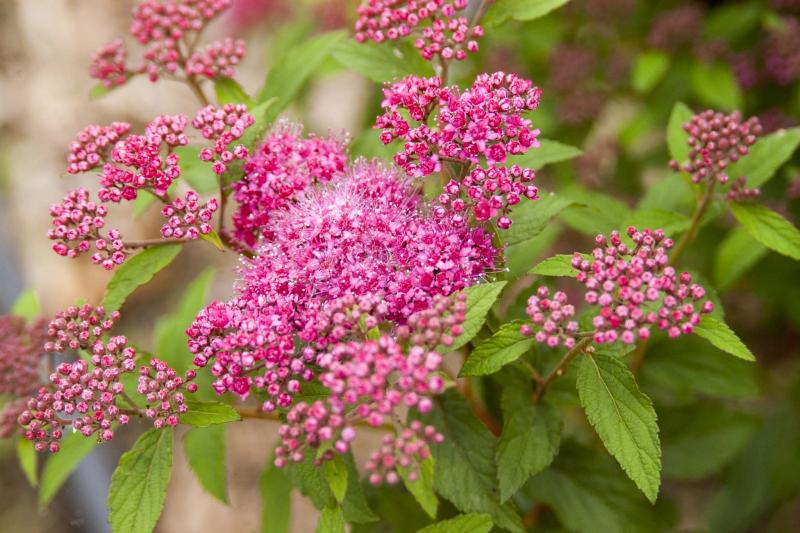
On the newer side, Burgundy Candy ninebark is an amazing dwarf shrub — rich colour and good heat and drought tolerance. Superstar Spirea is my favourite spirea variety. It was discovered by Denis Levac of Quebec and introduced by Bailey Nurseries. It’s compact with incredible colour that goes from deep green to scarlet red new growth to bronze colour in the fall.
The hydrangea category is exciting but not all are hardy for our climate. Strawberry Sundae, though, is one of the most winter-hardy of the hydrangeas.
How is Aubin Nursery poised for the future?
We have staked our future on garden centres vs. box stores. We have the ability to immediately provide large quantities of plant material on demand. We continue to implement new technology — most recently a high-tech potting machine from Europe.
We are a family operation. My wife Gail operates the retail store and our son Jared loves the business — he’s the fourth generation and is ready to succeed.
colleenizacharias@gmail.com