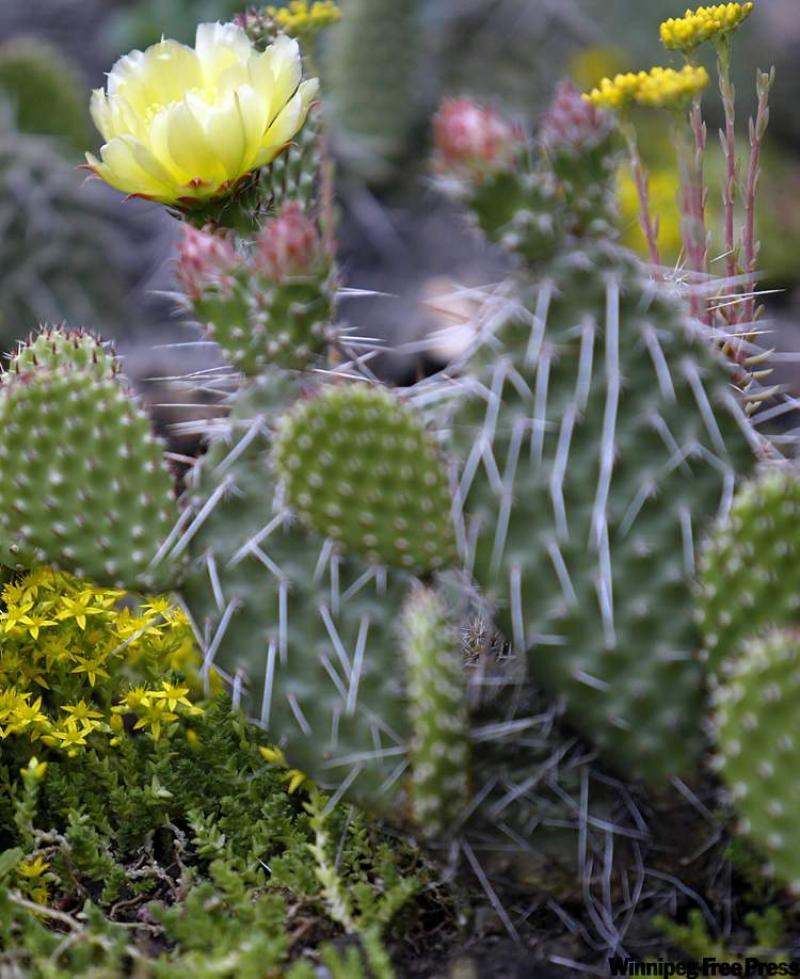
QUESTION: I have a 10-year-old solid cactus that's 12 centimetres across and 25 cm high. It bloomed only twice in the last two years, once one flower and then three. Is there a way of enhancing flowering?
ANSWER: There are a few tips that might help in getting the plant to flower.
While cacti are desert plants, the sand they grow in does have some humus or organic matter in it. If you are growing your cactus in sand, try adding some compost to the mix or buy some commercially prepared cactus-planting mix, which will contain the right combinations of sand and organic matter.
Water the plant once a week from April to September, but only once a month from October to March. Although this is a guideline, it does work for most varieties of cacti. This change in watering regime is important because it is part of the plant going into dormancy during the winter months. It is this dormancy that helps to get the plant into a flowering mood.
Make sure the plant is in the brightest window you have. Light is critical for the bloom, as well.
Try fertilizing with a 5-10-5 formulation in the spring. Also, look for a fertilizer formulated and labelled as cactus fertilizer. Do not fertilize during the winter months. Again, this is the dormant period for the plant and is very important to the plant setting blooms.
QUESTION: With the lovely winter days we've been having, my thoughts have turned to spring and gardening... yippee! I'm not an expert gardener, so I always have questions and from reading your articles, I know you're the man to ask.
My question today is about mulches. I am completely mulch ignorant. Could you could explain the pros and cons of the different mulches for flower beds that have shrubs and flowers?
As I do not compost, I would have to buy the best mulch for the situation. I heard or read somewhere bark mulch is not the best, but I don't remember why. I would like a low-maintenance mulch that is esthetically pleasing. I should stress I don't want to have to rake it up and dispose of it each spring.
ANSWER: Thank you for your kind words and yes, spring is on the way -- at last. My favourite mulch is shredded cedar bark. It's pleasing to the eye and smells great after it rains or is watered.
With some bark mulches you need to add extra nitrogen in the form of a fertilizer because as they break down they can rob the soil of this nutrient. I find that cedar bark breaks down slowly and just normal fertilizing of the bed keeps the plants happy.
Cedar bark also has weed-inhibiting properties. I have fewer weeds to deal with and the ones that do take hold are easy to pull because they're spindly and less healthy.
I mulch my beds to a depth of 12 cm. I find this sufficient for weed control and moisture retention. You'll find the mulch will compact over the winter and break down over time, so you'll need to top up the mulch every spring. I add enough every spring to bring the depth back to 12 cm.
Adding fresh mulch every spring also helps tidy the beds up and makes them more appealing. That lovely cedar smell comes back, as well. When applying the cedar mulch around flowers and shrubs, leave a mulch-free space of approximately five cm near the base of the plant to keep any rot problems from developing there. I also do not use a landscape fabric with my mulch; I simply add it right on top of the soil.
A wide variety of mulches is available to the home gardener, both organic and inorganic. Some examples of organic mulches include compost, leaves, grass clippings, shredded newspaper, wood chips, pine needles, sphagnum peat moss, animal manures and straw.
There are inorganic mulches available such as landscape-grade plastic, landscape fabrics and rocks, but organic mulches offer many more benefits. Organic mulches offer better moisture-retaining qualities and replenish soil nutrients. Since you're looking for an esthetically pleasing, low-maintenance mulch, the cedar bark would definitely be the first choice.
Gerald Filipski is a member of the Garden Writers Association of America. If you have any questions, e-mail them to filipskishaw.ca.