
Becky Slater
Repetition and unity punctuated by specimen plants are the mantra of this well-planned garden.
Becky Slater
Switch on the light in your garden and extend your enjoyment of the nightscape.

Colleen Zacharias
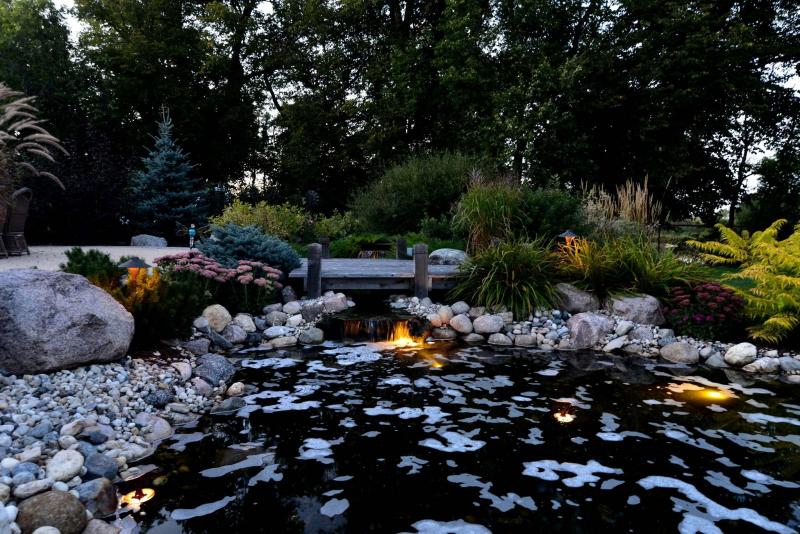
The Bennett's pond and waterfall is a stunning focal point in their riverside landscape.

Colleen Zacharias / Winnipeg Free Press
Tiger Eyes sumac and Joe Pye Weed are just two of the many fall plant combinations that light up the garden with bright, warm colour.
THERE aremany things to think about when designing a garden— where toplant, where touse hardscapingmaterials, whether to include space for a vegetable garden and so forth.
What to plant is one of the biggest questions, but so, too, is how to structure plantings using techniques of massing and repetition.
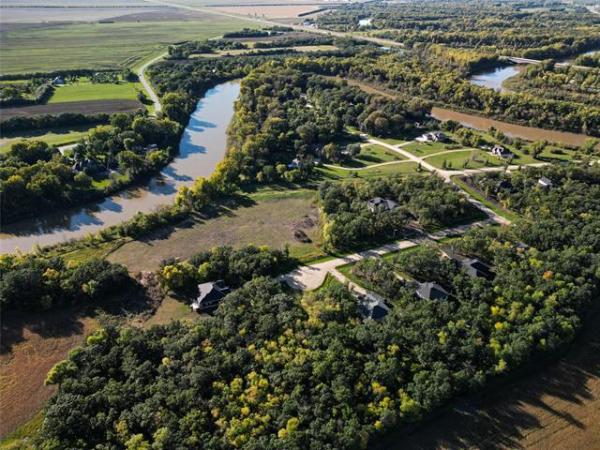
When Ross and June Bennett moved into their bedroom community, located about two kilometres west of Winnipeg, they started with a blank slate apart from a naturalized area (about nine metres deep) of native grasses growing on the front portion of their property at street level.
The spacious backyard, with a view of the Assiniboine River, consisted of a backdrop of mature oak, elmand balsam fir trees.
The path to achieving their finished design started with their own ideas and creativity until a referral to Ken MacDonald of Prairie Sky Landscaping took it to the next level.
MacDonald, designing for a wellco- ordinated palette of rich fall colour that extends the use and enjoyment of the garden, also created focal points and incorporated lighting.
Today, the Bennetts’s picturesque landscape invites passersby to slow their step — even park their car — for the opportunity to admire a landscape with a genuine sense of continuity and flow; one that is filled with a gorgeous array of plant textures, colourful blooms, curving paths and terracing.
The backyard is their private retreat, a revelation of good planning and design that expertly links separate garden rooms, patios and curved beds.
Awaterfall, pond and footbridge sits adjacent to a large patio off their deck for an ambient outdoor living space that makes room for the homeowners and their guests to relax and enjoy during the day and well into the evening.
June says that, although the warm season is coming to a close, now is the time when she and Ross really love their garden. Their enjoyment has everything to do with the rich fall shades of the surrounding trees and shrubs, perennials and grasses but also their nightscape, when landscape lighting brings their garden to life. Unity in the garden isMacDonald’s modus operandi.
In front of a Rosetta stone retaining wall, which gives definition to the upper level of the front yard — separating it from the swath of native grasses — MacDonald installed groupings of Shasta daisies, Black-eyed Susan, red-purple Rose Glow barberry shrubs and Panicum virgatum HeavyMetal, a compact, upright ornamental switch grass with blue-green foliage and hints of smoky red-purple in the fall.
The switch grass and barberry shrubs mimic the red-purple tones found in the naturalized area of grasses. A specimen plant, Crimson Frost, a purple-leaved birch tree with exfoliating white bark, accents the purple tones further.
June says that the Shasta daisies and Black-eyed Susans have begun to work their way into the naturalized area, likely as a result of seed dispersion both by wind and squirrels. The result has been a serendipitous fusion of colour and texture. Like most landscapes, this one has areas that are hot and dry and others that are suited only to moisture-loving plants.
IN the south-facing front yard on the east side, in a foundation bed alongside the walkway leading to the front entrance, drought-tolerant plants such as Karl Foerster ornamental grass, Autumn Joy sedum and Rose Glow barberry have been planted inmultiples with an emphasis on upright form, texture and rosy-purple colour contrasting with the golden colour of Karl Foerster. A gloriously wispy, blueflowered Russian sage is the specimen plant used to highlight the entranceway, its colour balanced by a pair of upright blue-greenMedora junipers. Nearby, the fruiting branches of a Mountain ash are laden with clusters of brilliantly orange, waxy berries.
Taller, more dramatic plantings decorate the southwest side of the front garden. A 1.8-metre tall and wide Tiger Eyes sumac flanks the entrance to the front steps, its deeply dissected foliage and evolving colour (fromchartreuse to rosy pink) providing a vivid contrast to the statuesque clump of Joe Pye weed planted next to it.
At 2.4metres tall with sizable purplepink blooms and dark green foliage, the drama of Joe Pye has been paired with the showy, creamy blooms of a trio of Limelight hydrangeas planted in a circular Rosetta stone retaining wall. Rising above is an Amur cherry tree with its distinctive coppery-coloured exfoliating bark.
MacDonald continues all of these themes into the backyard, although the large pond and waterfall take centre stage, transitioning this portion of the property to what June describes as their personal Garden of Eden.
The installation of landscape lighting was both a design element and a practical necessity. Without it, the view from indoors of this stunning river property after sunset and the onset of night would be reduced to a black hole. That would be a waste.
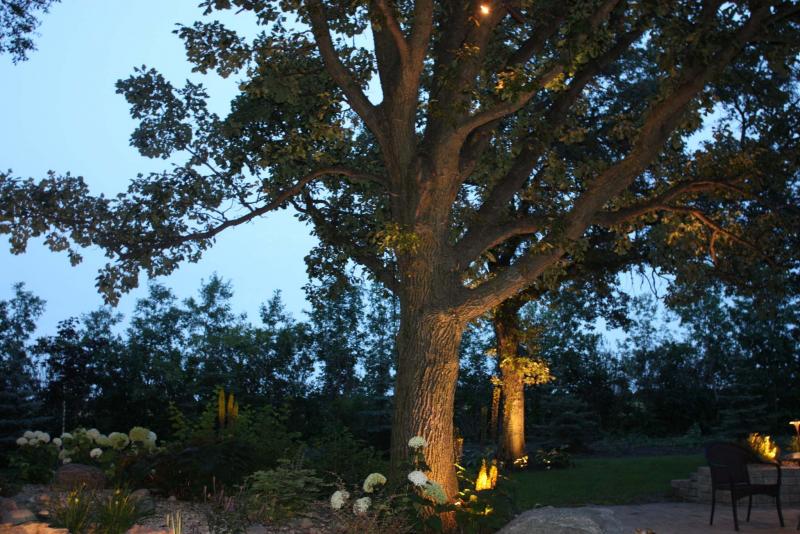
MacDonald uplit several trees along the tree line on the riverbank and installed lighting in the pond and waterfall as well as on the perimeter of the surrounding patio.
He chose CAST lighting, a low voltage landscape lighting product recommended by one of his professional colleagues, LynneMelvin, owner of Riverdale Supply.
MacDonald says the trend has shifted towards LED vs. halogen in part because it is more cost effective over time.
Melvin adds that innovation in the quality of the light that LED provides has resulted in greater longevity and a more natural and warm light without blue, muted colour.
The goal, says Melvin, is to create two different landscapes— one for the day and then another for nighttime.
"Don’t light it up, though, as if it’s Disney World," she cautions.
MacDonald began the installation process by creating small trenches for the lines or wires that run underground about 10 to 15 centimetres below the sod.
These connect to a transformer, the size of which is determined by the number of lights being used and their wattage. Transformers are always situated near an electrical outlet. MacDonald says the process is fairly straightforward.
Melvin can’t say enough about the advantages of uplighting and downlighting mature trees, capturing their character and directing ambient light towards a patio or other focal point.
Solid bronze and copper China Hat lights illuminate pathways and provide a soft glow inside the pond and waterfall. Melvin suggests using a timer so that the lighting system runs a specific number of hours.
No need to worry about seasonal changes when the day turns to night at different times.
"The photocell," saysMelvin, "automatically comes on at dusk and stays on until a specific time that you have set."
Homeowners, says Melvin, can install the lights well.
"The benefit of a lighting designer," she says, "is they know the ideal placement and can get a little fancier with their lighting design, creating a little moremagic with silhouetting."
Switch on the light in your garden. Enjoy the warm, glowing colours of the season and take advantage of themany warm evenings yet to come.
colleenizacharias@gmail.com