Need a coach in the garden?
If you have a hankering to grow vegetables in your garden, you need to meet local authors Donna Balzer and Steven Biggs. Their No Guff Vegetable Gardening (No Guff Press, 2011) hit bookshelves in early April but they've offered excerpts today to whet our appetites.
First up: how to get started; which veggies to grow, and when.
There's no right or wrong when it comes to choosing crops to grow in your vegetable garden. That's why we won't tell you what to grow. It really depends on what you like.
So that's the first message: grow what you like.
If what you like is grown commercially in warmer climates, it doesn't mean you must automatically rule out growing it. Even in regions with less heat than is ideal for heat-loving crops such as watermelons and peppers, you're bound to find gardeners pushing the limits and finding ways to grow them.
Coaches' thumbs-up guide: Three vegetable garden must-haves
1. Carrots. Try carrots because once you have tasted a fresh, sweet carrot straight from the ground, you'll feel pumped about your vegetable garden.
2. Swiss chard. Grow this crop because, unlike lettuce and spinach, which produce for a short while and are then no longer edible, Swiss chard just keeps on going all season long. You can continually cut back the leaves and it will keep on producing well into the fall.
3. Tomatoes. There are countless interesting tomato varieties you can grow, from pink to yellow to red, from round to teardrop to egg-shaped. With all the hype about a Mediterranean diet, fresh tomatoes have become must-haves.
Coaches' thumbs-up guide: Seven crops to make guests say 'wow'
Half the fun of growing veggies is sharing them with other people. And when you have guests who are excited about your garden produce -- or when you go to a potluck and people ooh and ahh -- then growing vegetables becomes especially satisfying.
Here are some not-too-mainstream-yet vegetables that are sure to elicit glowing feedback.
-- Beans (pole)
With many pole bean varieties being a bit longer and flatter than bush beans -- and with yellow and purple varieties too -- imagine a veggie platter with raw, crunchy, colourful beans that are perfect for dipping.
Colour is a big part of the wow (the purple colour disappears when you cook them) so serve them raw.
-- Carrots
Again, colour is the trick. Carrots come in white, yellow, red -- even purple. Serve an assortment of colours, either fresh or cooked, and watch for the smiles on the faces of eaters.
-- Dahlia
No, it's not a typo. Yes, dahlia is an annual flower. But it also has an edible root -- and we have market gardener David Cohlmeyer to thank for putting us onto this 'wow' crop.
-- Fennel
In addition to Florence fennel, with an edible bulb, there's bronze fennel grown for the beautiful foliage, which dresses up a plate beautifully. And then there's the flowers on both bronze and Florence fennel -- airy, light-yellow clusters sure to elicit questions and enhance salads.
-- Ground cherries
Though technically a fruit, the ground cherry deserves a place in the vegetable garden. People love to unhusk the cloaked fruit -- and then smile as they enjoy its pineapple-like zing.
-- Mexican gherkins
Size matters. In this case, the size is small, as Mexican gherkins (also known as mouse melons) are small, fingernail-sized, pop-in-your-mouth novelties for guests.
-- Tomatoes
Stripes, splotches, striations ... tomatoes will give you a patterned delight to make guests say 'wow.' Add to that varied flavours, and an assortment of tomatoes is very worthwhile.
Menu substitution: No-sweat crops please
Savvy diners aren't shy about asking for a menu substitution at a restaurant if what's offered doesn't suit them.
Here are examples of low-sweat, labour-saving substitutions you can employ in the garden.
-- Bush beans versus pole beans
It's no less work planting pole beans, but when it comes to harvest, pole beans can entail a lot less bending and kneeling. Plant them against a fence so there's no need to bother with stakes.
-- Cauliflower versus broccoli
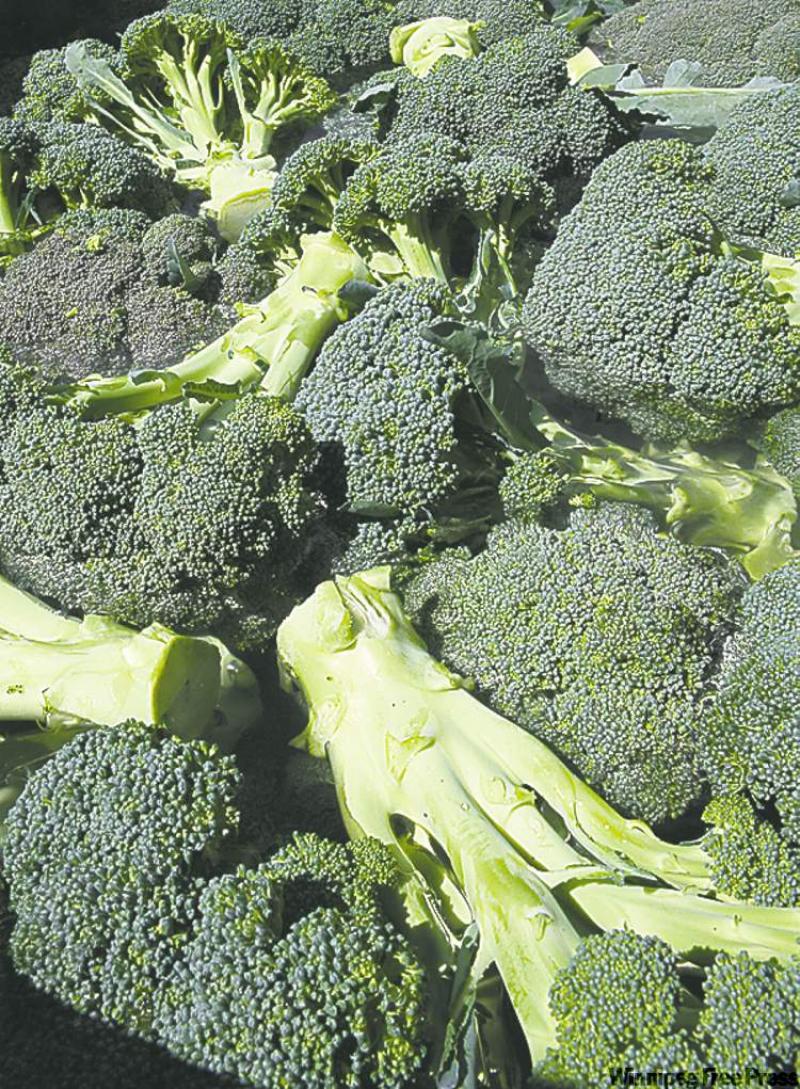
Not only is cauliflower more finicky, to get snow-white heads it must be blanched, which is often done by holding the leaves over the head with an elastic. It's a lot of bother compared to broccoli, which requires no blanching. Sprouting broccoli is even easier than regular broccoli.
-- Sweet potato versus squash
Squash is so much less work. Instead of transplanting sweet potato plants, you just poke squash seeds into the soil. And -- here's the biggie -- instead of digging out sweet potato roots, you just snip squash from the vine. You still get the sweet, orange ingredient for baking.
-- Postmedia News