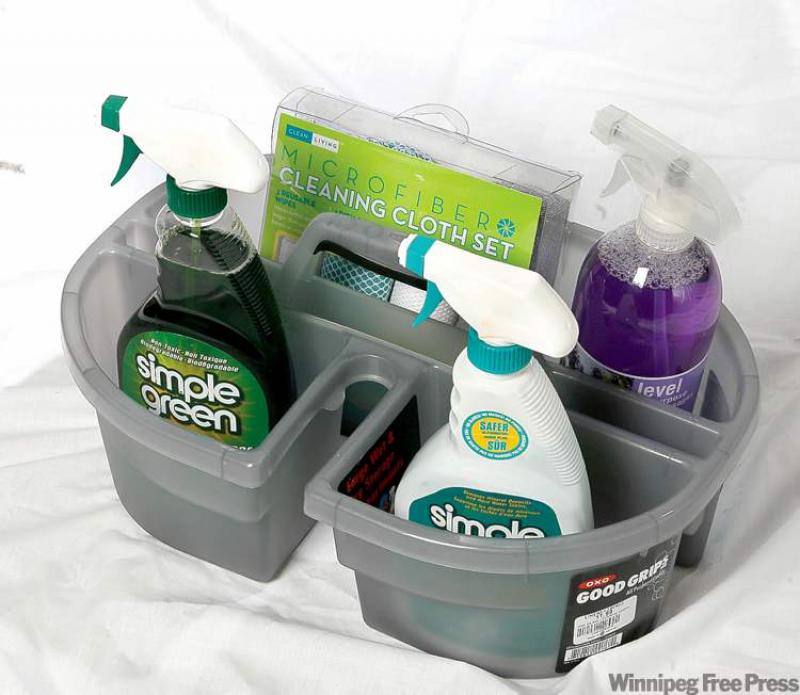
As the need to shovel snow trickles down the drain, homeowners' thoughts turn to spring -- and the annual big cleaning chore.
Much as most of us cringe at the idea, professionals assure us it isn't a complicated process and it shouldn't take more than two or three hours to complete if you have two people working at it.
Most people already have a basic cleaning routine that typically involves weekly or twice-weekly chores such as vacuuming, dusting and bathroom cleaning.
This regular maintenance prevents dirt from building up on the surfaces, but the annual spring cleaning will leave a house spick and span in places we don't always look at.
Professionals compare spring cleaning to what they refer to as a "move-out clean," a reference to giving a rental unit a thorough cleanup after a tenant has moved out. While some people would consider a vacuum and quick wipe clean enough, the next tenant may see it differently.
"Renters are typically messier than homeowners," says Paula Whitehorn, a Molly Maid franchisee. "Its probably because homeowners have more pride of ownership."
She says most people do a good job with the basics, but typically miss a few key areas.
"The most overlooked area are kitchen cupboards and behind major appliances, such as the fridge and stove," she says. "We also clean the freezer, something few people think to do."
Carpets need to be cleaned at least once a year -- more often if there are young children or pets in the house. During a thorough cleaning, it's a good idea to the clean up the accumulation of dirt that lies undisturbed behind sofas and other heavy items around a house.
Families with toddlers, young children or pets need extra cleaning on any surface under a metre high.
Children typically grasp chair legs for stability or touch the faces of lower cabinets in the kitchen.
These are the same areas a dog or cat brushes up against. Depending on the age of the child and how sticky their hands are, a daily wipe-down may be appropriate. This constant cleaning also applies to ridding the house of smudges and other messes from dogs -- and sometimes cats. Curious pets can be relied upon to leave nose prints on any window or glass door they have access to.
Even neat freaks forget about some common dust magnets.
"Areas that people fall down on are typically the baseboards around the house, mini-blinds and picture frames," says Whitehorn. "Some may dust the front of entertainment centres, but don't take a few more seconds to reach behind to clean the space behind electronic equipment. Another frequently missed spot is the underside -- not the top -- of baseboard heaters."
She estimates it takes her two-person cleaning team 21/2 hours to thoroughly clean a typical two-bedroom residence -- and that includes cleaning all the windows and the bathroom from top to bottom.
Her company charges clients approximately $350 for the service.
Whitehorn recommends families create a long-term cleaning calendar to ensure nothing is overlooked. The list should be personalized to suit a family's needs. For example, where a family eats should also be taken into consideration when creating a cleaning schedule.
"These days more families eat in the living room," she says. "Food and sticky fingers aren't good for the upholstery so they require more frequent cleaning."
-- Postmedia News
Here are Paula Whitehorn's recommendations for simplifying your cleaning routine. It's a given that kitchen counters and sinks get cleaned after each use.
Weekly:
Vacuum/mop floors
Laundry
Clean bathroom
Dust
Monthly:
Vacuum upholstered furniture
Clean furnace filters
Clean behind bed headboard
Clean behind dressers
Clean behind couch
Every three months:
Clean light fixtures
Clean blinds
Clean clothes dryer vent
Every six months:
Clean windows inside and out
Clean window tracks
Clean behind the refrigerator
Clean behind the stove
Every 12 months:
Clean carpeting (more often if children and pets in house)
Clean upholstery (more often if children and pets in house)
Clean curtains