
MONTREAL -- In the rush to spur spending and create jobs through renovations, the various levels of governments have not mandated any green conditions to be eligible for their newly announced rebates.
As the refrain goes, "every crisis is an opportunity," so it will be up to homeowners to green their renovation.
The environmental battle cry, now more than ever, is that going green saves you money in the long run and, as Renee Gratton, a director on the Canadian Green Building Council, says, "building construction, renovation and operation consume more earthly resources than any other human activity. We are all stakeholders."
Gratton says choosing green materials for your home starts with consumers educating themselves to avoid greenwashing traps.
In a recent survey by TerraChoice Environmental Marketing, 1,018 products bearing environmental claims were identified in six category-leading big-box stores. All but one made claims that were false or misleading.
Gratton says you have to look at the environmental impact of the product throughout its entire life cycle, from the cradle to the grave.
How much raw material is used? Is there recycled content? How is it manufactured and how harmful is the process? Is it local or has it been shipped from afar? What's the durability? Is it energy-efficient? Will it be harmful to health? (Consider volatile organic compounds (VOCs) and formaldehyde content.) What will happen to the product at the end of its life?
It's a new way to think about consumption, but Gratton believes that "as Canadians get a better understanding of the facts, most will take action for a better-built environment."
Here's what to look for in some of the most popular kinds of renovation projects:
Flooring
If you're a DIYer, what about using reclaimed floorboards? Otherwise, there are several environmentally conscious options.
For a little bounce in your step, cork floors are made from 100 per cent post-industrial recycled content (leftovers from wine-cork manufacturing). Cork itself is sustainable, the harvested bark growing back within several years.
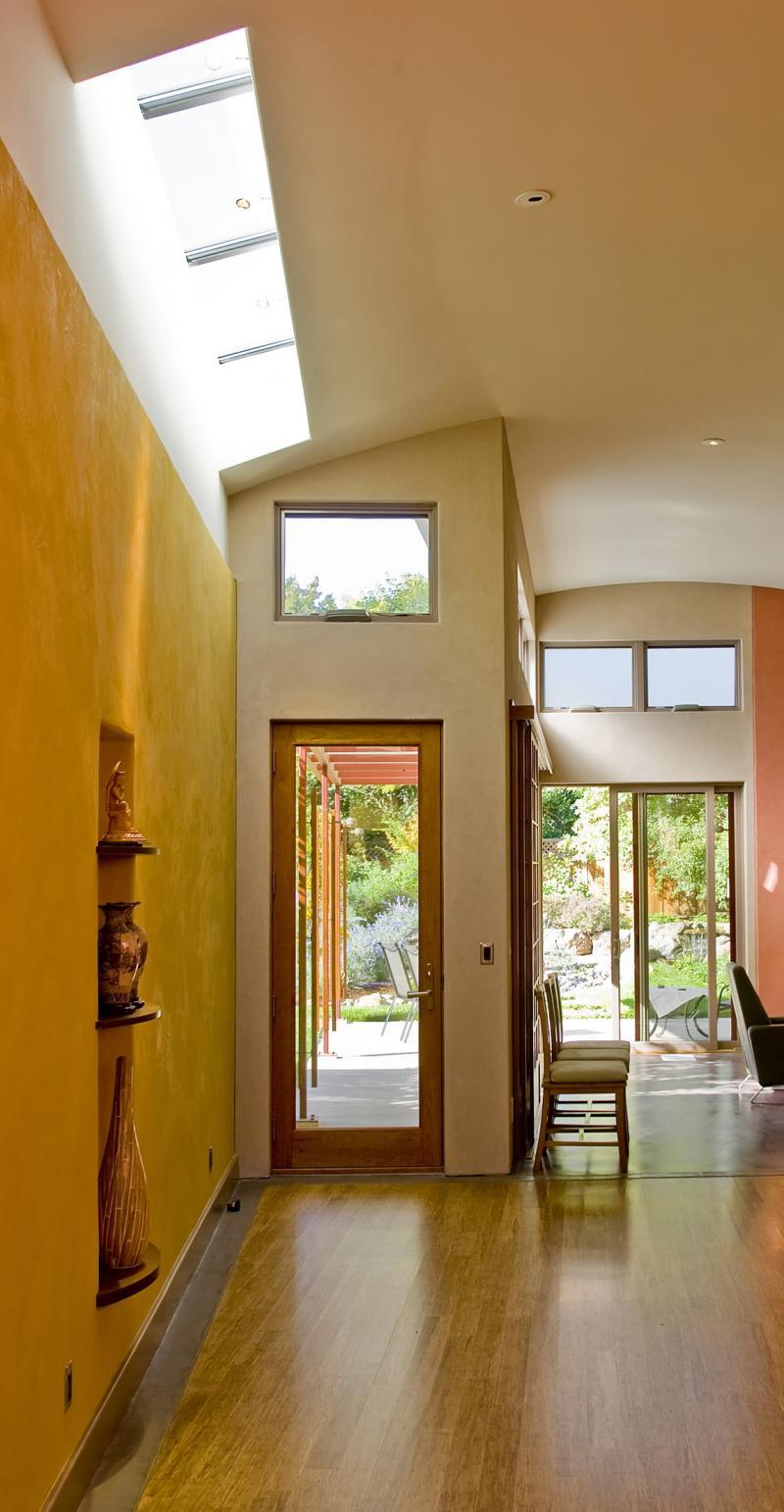
Bamboo is another option. Bamboo grass regenerates eight times faster than hardwoods.
If you need that hardwood under your feet, make sure it's Forest Stewardship Council (FSC)-certified, meaning the forests are managed sustainably. Also, finishes and varnishes can off-gas harmful VOC solvents; look for low-VOC, water-based urethane.
Carpeting
A typical sample of synthetic carpet contains as many as 120 neurotoxic chemicals. No wonder that new-carpet smell makes many people woozy. Synthetic carpets are made from petroleum-based materials like nylon, polyester and acrylic. What you don't see -- the carpet backing and adhesives -- is just as important: more petroleum products and toxic glue.
So look for natural materials like wool, and backings like jute, which is bio-based. Another option is Interface's FLOR (www.interfaceflor.ca) carpeting. The largest modular carpet manufacturer in the world, Interface has the goal of leaving a zero footprint by 2020. Various products are made from recycled and/or renewable materials (derived from corn starch) and its Cool Carpet line is carbon-neutral. TacTiles, a glue-free installation system, results in a 90 per cent reduction in the environmental footprint.
Painting
Check VOC content, those solvents that make paint flow freely but also contribute to smog as well as being detrimental to a healthy home environment. Consider using paints and stains made from recycled materials.
Insulation
Due to our northern climate, proper insulation is the most important (and usually most expensive) aspect of making a home energy-efficient. There are more sustainable options than fibreglass.
For moisture-free locations, try cellulose, which requires up to 30 times less energy to make than fibreglass.
For great R-value (a measurement of thermal resistance), choose Envirofoam (www.envirofoaminsulation.com). Applied as a spray, it expands into an airtight seal and contains no VOCs. The foam is made from renewable soybean oil and recycled plastic bottles.
Water
Where to get the rebates
Revenue Canada Home Renovation Tax Credit: http://www.cra-arc.gc.ca/gncy/bdgt/ 2009/fqhmrnvtn-eng.html
Revenu Quebec Tax Credit for Home Improvement and Renovation:
http://www.revenu.gouv.qc.ca/eng/ particulier/impots/impot/credit--remb/ renovation/index.asp
More financial assistance is also available for energy-efficiency upgrades.
See the Renoclimat website: www.aee.gouv.qc.ca/en/my-home /renoclimat/financial-assistance/
Home Depot and Rona are also offering up to $1,000 in gift cards on purchases and services related to home renovations. See individual stores to get details.
-- Canwest News Service