Wall art doesn't have to cost big bucks to make a big impression. Photographs from a family vacation, your child's colourful fingerpaintings or an inexpensive poster mounted in a funky frame can turn a bland space into lively showpiece.
But before you hammer that first nail in the wall -- preferably one with a stud or beam behind it for good support -- it's important to understand the art of picture hanging.
Joel Pleet, an Ottawa-based gallery director, says one of the biggest mistakes people make is hanging art too high or low on the wall, using the middle of the frame as a guide to be hung at "eye level".
Pleet points out eye level to one person may be shoulder height to another.
"You get people talking about eye level that are five-foot-two, and people talking about it that are six-foot-nine," says Pleet. "So what's eye level?"
Pleet says when he goes into a client's home, or even in his own place, he looks at what "makes sense" in a specific situation, rather than following a precise guideline or rule.
"I believe -- in this business especially -- that rules need to be broken," says Pleet.
For consistency in his gallery, the middle of a painting should be about 1.4 metres from the floor, which can be a good "general ballpark" for those who have no idea where to start.
"We follow certain guidelines here that seems to work for us, but in a home situation, it is completely different," he says. "It depends on whether or not there is furniture in the house, if it has to go above furniture or you have to account for a low ceiling."
Like Pleet, Paz Blundell, who is an installer, says the positioning of the frame depends on its size and the environment. The first thing he tells people who are hanging frames themselves is to place two hooks, or anchors, in the wall, and then place the wire strung across the back of the frame over both hooks, not one, so the frame does not go off square.
He says hooks should be at least a couple inches apart; and the farther apart you can get them, the better.
"Pictures should not be hung on one hook, for stability (reasons)," says Blundell. "So you don't always have to walk around your house and straighten out your pictures."
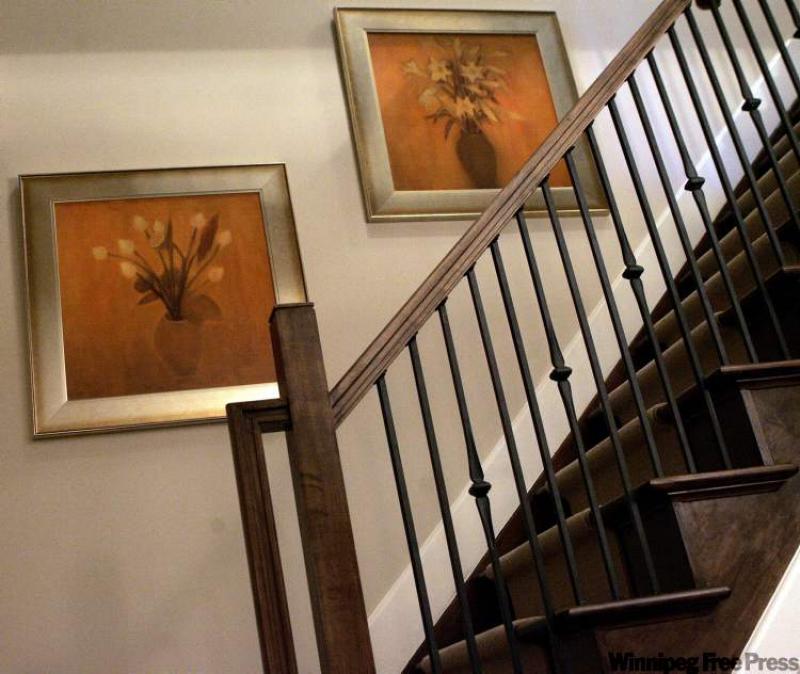
A collection of family photos, vibrant artwork and oversized mirrors can bring your walls to life. But hung incorrectly, the impact is lost.
Here are some expert tips and tricks for successful picture hanging.
-- Mark the spot: Holding the frame against the wall at the height you want, mark the spot with pencil on the top of the frame. To position the wall anchor (or anchors if two hooks are needed), pull the picture wire tight towards the top of the frame and measure the distance between the pencil mark on the wall and the top of the wire.
-- Tape: You can also use painter's tape to mark a spot. Painter's tape is better than masking or clear tape because it will not damage paint or wallpaper.
-- Uneven walls and ceiling: Blundell says most homes don't have straight ceiling lines and walls, so you have to hang your art to fit the room.
"If you have a large piece and it's close to the ceiling and the ceiling isn't perfectly straight and the picture is, the gap is different and the picture is going to look like it is actually not straight," says Blundell.
"If the wall is a little bit out, put the picture a little bit out, and visually the picture will look correct," he says.
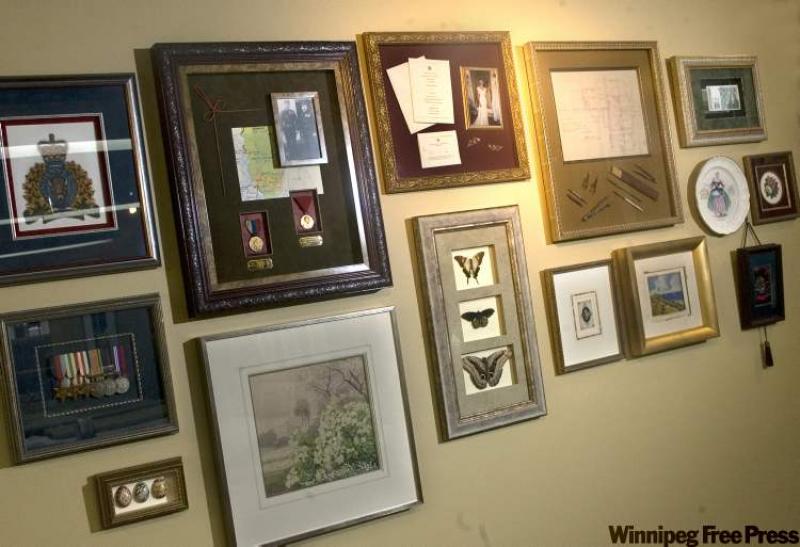
-- Groupings: When working with a grouping of frames, Blundell suggests laying them out on the floor in front of the wall to determine the arrangement before transferring to the wall. Or cut out paper the same size as the frames and put the templates on the wall, moving them around to see where they look best.
-- Layout: The size of the groupings and if they can be hung horizontally or vertically depends on the size of the wall and what's around it.
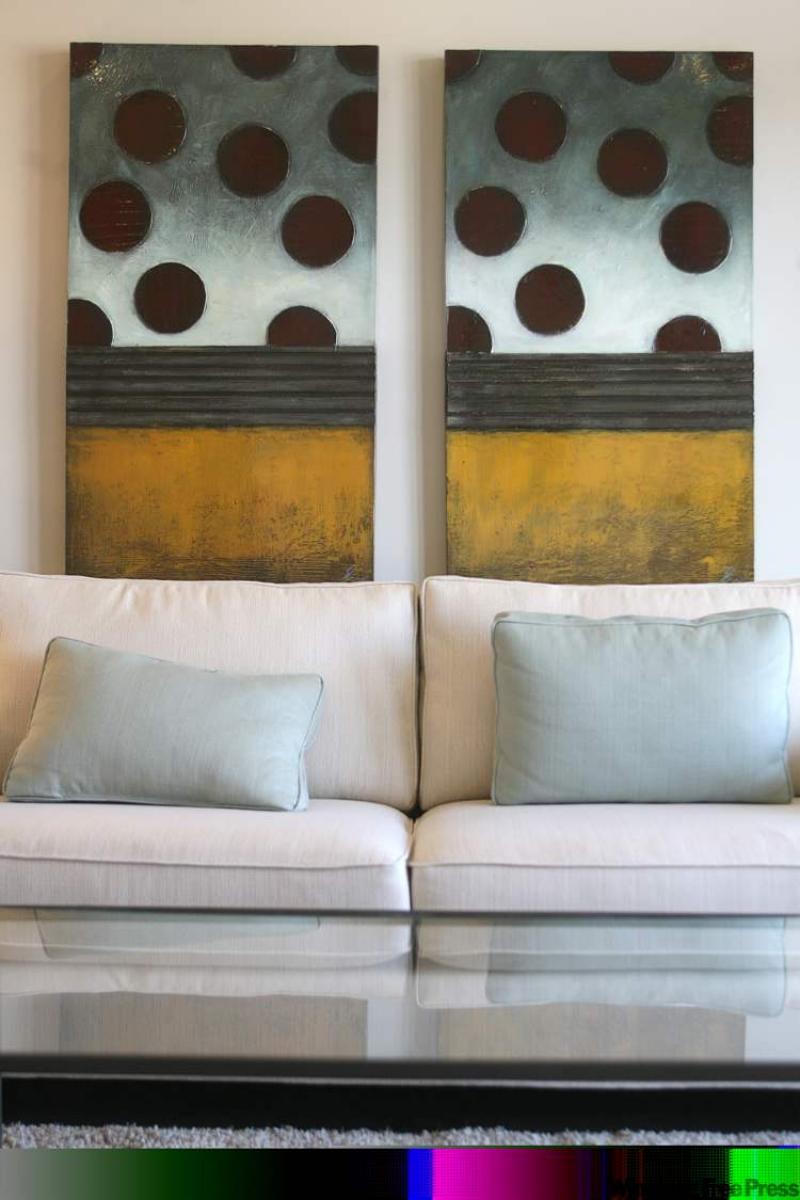
"Avoid hanging one small picture on a huge expanse of wall -- art looks better when it seems to extend the lines of furniture, windows or doorways or when several small pieces are grouped together," says Pleet.
-- Postmedia News
Online tips
home-decorating-made-easy.com/wall-art.html
marthastewart.com/article/arranging-pictures
wikihow.com/hang-a-picture
diynetwork.com/decorating/tips-for-hanging-pictures/index.html