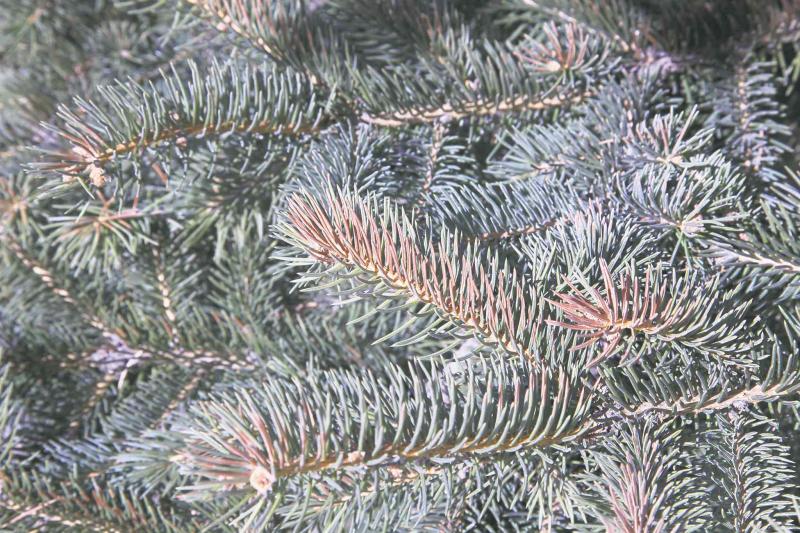
The arrival of spring this year has brought noticeable changes to some evergreen trees and shrubs, with rusty brown and even red colours on pine and spruce needles and on the leaves of cedars.
What we are seeing is a dehydration phenomenon called winter burning or sun scalding, which typically shows up in late March or early April. Needles facing the sun are often burnt while those facing away are not (see photo).
Heat from the sun's radiation causes the release of moisture from the evergreens by evaporation. To compensate for this moisture loss the plant's roots must take up some moisture from the frozen soil. These roots are very small and that can only absorb the molecular water film around minute soil particles.
Most evergreens can do this if they are well adapted to our local climate and soil conditions. However, many evergreens are brought into our area from warmer parts of North America, especially from B.C. and the northwestern U.S. These plants simply cannot successfully grow here because their roots have not developed the ability to adapt to our long periods of severe cold, deep penetration of frost into the soil and strong winter sunshine.
What can you do? If we get very warm weather in late April or early May, start watering evergreens that show the rusty-red colour on their needles and leaves. If winter burning has not affected all the evergreen needles and leaves, these plants may recover. Later in May and early June, you should fertilize with a low nitrate-high phosphoric acid fertilizer.
Wrapping evergreen plants with burlap is not advisable as this covering traps late-winter heat and causes even more dehydration. Instead, place several firm wood stakes in the ground before the ground freezes and attach the burlap as screens. The screens should be somewhat higher than the plant, if possible.
Place one screen on the south side and one screen on the southwest side of the plant. Make sure these screens are continuous, leaving no gap. Keep the burlap at least one foot away from the needles and evergreen leaves.
In the long run, it's also best to purchase the hardiest plants that you can from well-established reputable nurseries in Manitoba.
I will be presenting a course sponsored by the City of Winnipeg Leisure Guide on the care and treatment of evergreens at Fort Rouge Leisure Centre at 7 p.m on April 24. Call and register if you want to know more details how to take care of stressed evergreen trees and shrubs.
Michael Allen is a consulting urban forester, tree diagnostician and certified arborist, and owner of Viburnum Tree Experts.
viburnumtrees@shaw.ca