What are the benefits of growing plants from seed? Sure, it's more economical to start your own plants but isn't the extra work unnecessary when you can just buy ready-to-go plants at the greenhouse in late spring?
Browse through one of the many seed catalogues that have landed in gardeners' mailboxes in the past month and it's easy to see the selection of flower and vegetable varieties, many of them unfamiliar, could liven up any planting scheme with their sheer diversity.
Kevin Twomey, co-owner of T&T Seeds, a family-owned Winnipeg business, enjoys going on seed hunting expeditions every year. His quest for something new and different for local gardens is always predicated on what will grow well in our colder climate. Never without his camera, Twomey takes many of the photos for his catalogue.
Twomey says it's possible to grow almost anything by seed. His uncle, Jerry Twomey, who started the business with his father, got his start in the rose-breeding business by growing roses by seed. One of his roses, Love and Peace, a multicoloured tea rose, won an All America Rose Selection (AARS) distinction.
Twomey loves his vegetables, and this year has expanded T&T's selection of ethnic varieties. Some need a longer growing season so will need to be started indoors rather than sown directly into the garden. Twomey was introduced to Armenian Cucumber on a visit to the California plant trials. Its melon-like taste is as distinctive as its unique stripes and curved shape.
Twomey recommends slow-bolting Silverado Baby Swiss Chard, which has much less rampant growth than Rainbow Mix Swiss Chard and only grows to 40 centimetres. Selecting the most nutritious varieties of vegetables is also important to Twomey, who takes healthy eating seriously.
The healthiest ways to cook vegetables are by steaming and stir-frying. For maximum flavour and appearance, try Orient Wonder Beans or Sorento Rapini. Like it hot? The pungent flavour of Singer Asian Chile pepper will add zing to your favorite Asian dishes. Twomey likes to dry spicy peppers and grind them into a powder in his coffee grinder for use in recipes year-round.
Eggplant is more popular than ever. Twomey says that last year's sales eclipsed total sales for the previous five years. Two varieties to try are Shoya Long eggplant and Vittoria Hybrid.
Vegetables combine beautifully with annuals both in beds and containers. New for 2015, Nasturtium Ladybird Cream Purple Spot is a compact nasturtium like no other. It has creamy yellow blooms and splashes of vivid dark purple. Twomey came across Penstemon Arabesque Red at each plant trial he visited and says its stunning bi-colour red-and-white bell-shaped flowers commanded his attention every time. This AAS winner grows 40 or 60 cm high and will attract butterflies and hummingbirds.
Johnny's Selected Seeds in Winslow, Maine, has a mail order business that attracts gardeners from across North America. The company has built its solid reputation on being an independent, employee-owned company in a marketplace where small-seed companies are being swallowed whole by large conglomerates. Johnny's pledge not to sell genetically-engineered seeds piqued Twomey's interested and prompted him to pay a visit. Now local gardeners will find some of Johnny's varieties at T&T Seeds, specifically selected for our short growing season.
Seed swap
Heritage-seed collectors are a whole other breed. I have never met one I didn't like. Their zeal is inspiring and more often than not, their passion for collecting has introduced them to some fascinating people, forging lifelong connections and friendships.
We owe much to seed collectors who specialize in rarities. Each one has a story and collectors are eager to share both stories and seeds.
Monique Buckmaster owns Red River General Store, five kilometres south of Lockport. She carries only Baker Creek Heirloom Seeds, from a family-owned company in Missouri. All are open pollinated heritage seeds. A seed saver for more than 20 years, Buckmaster claims to have tomato varieties that can't be found anywhere else locally.
This is why you want to get to know seed collectors. Every one of them has something different to offer. Buckmaster has planned a heritage seed exchange for Feb. 8. Have seeds to swap? Pop yours into an envelope, label it with your name, the type of seed, where it was collected and the date it was acquired, then bring the packet to Red River General Store to exchange it for something else.
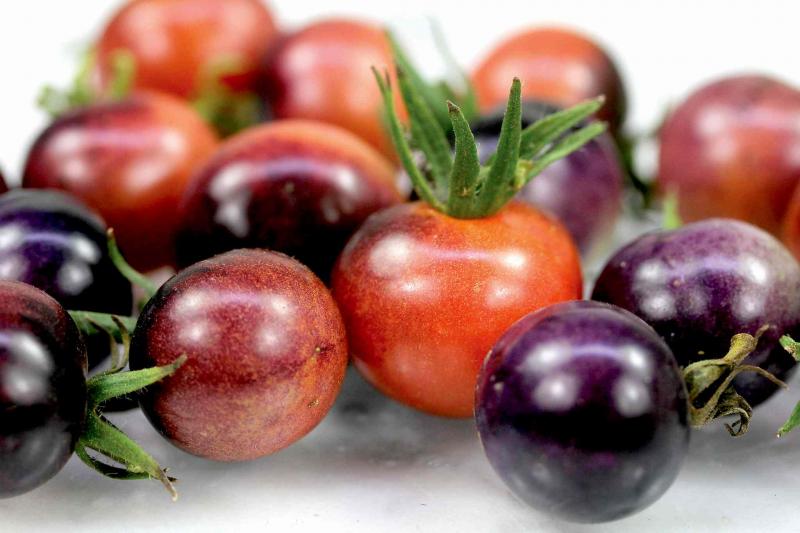
Blue tomatoes are all the rage. You might want to try Baker Creek Blue Berries tomato, a small cherry variety that is amethyst purple in colour and rich in anthocyanins. Buckmaster says the flavour is intensely fruity.
Forget about boring head lettuce from the grocery store. There are countless varieties of lettuce to choose from, each one a jewel of different shapes and colours. Buckmaster has been growing Amish Deer Tongue which has spiky, triangular-shaped leaves. An old favourite of the Amish, it is slow to bolt.
She also grows Grandpa Admires, a heat-tolerant butterhead lettuce that dates back to Civil War veteran Grandpa George Admire, born in 1822. The seeds have been faithfully preserved by his descendants.
Buckmaster thinks of herself as less of a flower girl and more of an eater, so she only recently began growing heritage flower varieties such as Black Currant Whirl hollyhock. If you are looking for something to steal the show in your home or market garden, Buckmaster says you must try the Chocolate Streamer sweet pea.
A rare and unusual variety of sweet pea, it has distinctively red-and-white tinged, chocolate-speckled blossoms. Buckmaster starts many seeds for sale as seedlings in the spring for those gardeners who do not have the space or the inclination to start their own.
Mandy Botincan, owner of Mandy's Greenhouse in Tyndall, almost closed the book on her seed-saving days when she briefly considered focusing exclusively on growing alpine plants.
Passionate in her belief that heritage seeds, so rich in genetic diversity, are meant to be shared or risk being lost forever to future generations, Botincan is back. She's interested in the backstory of every seed she collects, and visitors to her revamped website can immerse themselves in tales of history and intrigue.
Of course, Botincan's name is almost synonymous with tomatoes. With the discerning taste of a connoisseur, Botincan selects her tomatoes for shape, production, and mouth-watering flavour.
Ziegler's Fleisch, with its perfect ratio of sweet to acidic, is a new favourite. So, too, are the Sara Goldstar and Striped German tomatoes, which Botincan says positively glow.
Botincan, though, is a particular fan of pole beans and has many seed varieties. She highly recommends Kuma Anna's Charcoal Grey Pole, a creamy pole bean that is a heavy producer and uncommonly attractive with flecks and washes of deep rose and plum.
Botincan will be at Seedy Saturday on Feb. 14 at the Canadian Mennonite University.
Jim and Rachelle Ternier, a father-and-daughter team operating Prairie Garden Seeds in Humboldt, Sask., will also be at Seedy Saturday. A few years ago, Ternier was invited by the Benedictine Monks at St. Peter's Abbey in Muenster, Sask. to plant as many seeds on their land as he wanted in exchange for growing all of the vegetables for their kitchen.
It has proven to be an interesting and worthwhile experience for Ternier, whose seed collection includes everything from beans, peas and grains to leafy and root vegetables, as well as flowers. Interestingly, his old wheat varieties, some of which date to the beginning of agriculture, are attracting more and more attention with the rise in celiac disease and gluten intolerance.
Ternier has numerous lettuce varieties, including Philosopher's Mix, and credits Frank Morton of Wild Garden Seeds in Oregon for his amazing work in preserving heritage seeds.
Ternier has been growing quinoa on his farm for 20 years. The seeds are higher in protein than cereal grains. The quinoa in my pantry comes from Bolivia, but with more and more farms in Manitoba and Saskatchewan experimenting with this popular seed crop, quinoa could soon have a very productive future right here on the Prairies.
Seedy Saturday will be held Feb. 14 from 10 a.m. to 3 p.m. at the Canadian Mennonite University, 600 Shaftesbury Blvd.
colleenizacharias@gmail.com
Notice:
Interested in starting plants from seeds but not sure where to begin? Prairie Originals will present a workshop at FortWhyte Alive on Feb. 15 at 1 p.m. Join Kelly Leask and learn when to start, how to water, lighting needs and when to move your plants outdoors. Visit www.fortwhyte.org or call 204.989.8355