
All-America Selections
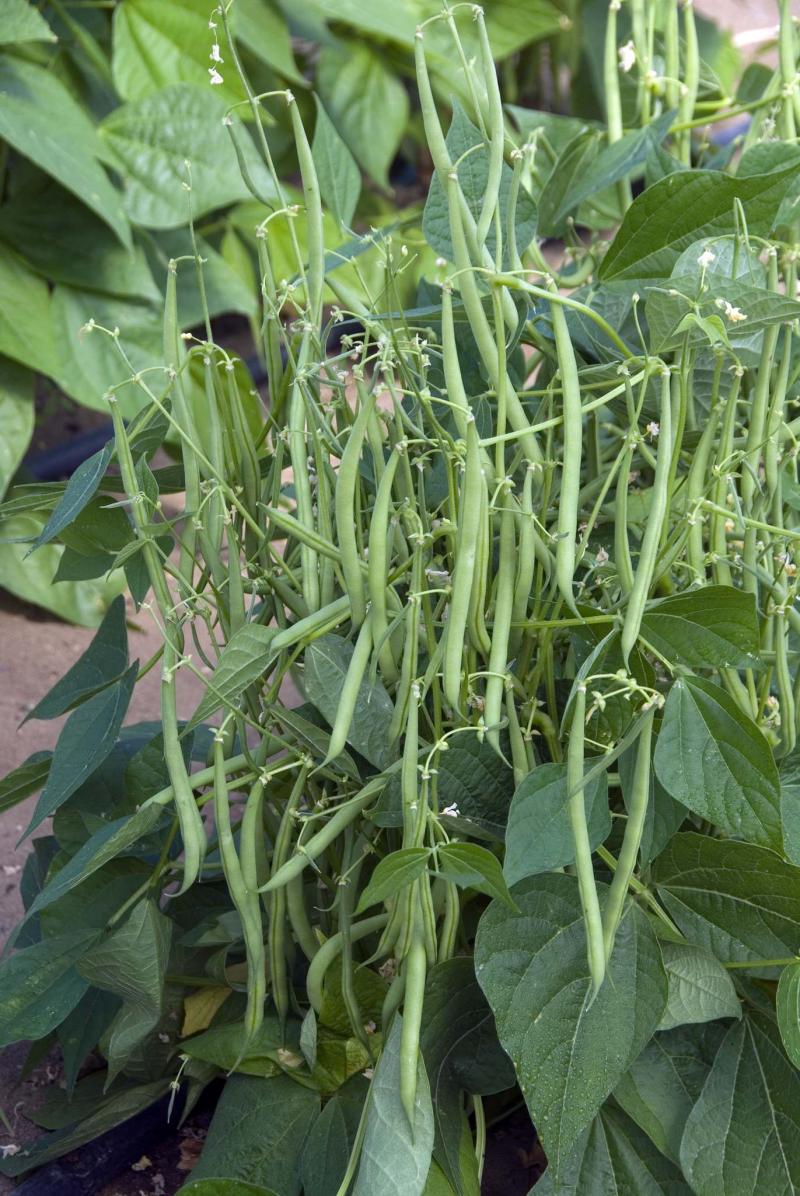
Corn, squash and beans are an example of a beneficial plant association. Beans supply nitrogen to the soil, corn stalks allow beans to climb and give shade to squash, whose broad leaves provide a living mulch that keeps soil cool and moist.

Ball Horticultural
Only the French marigold can have a pest-deterrent effect in the root zone, but it does take time before that takes hold in your garden and it will only impact one nematode.
Victoria Boudman
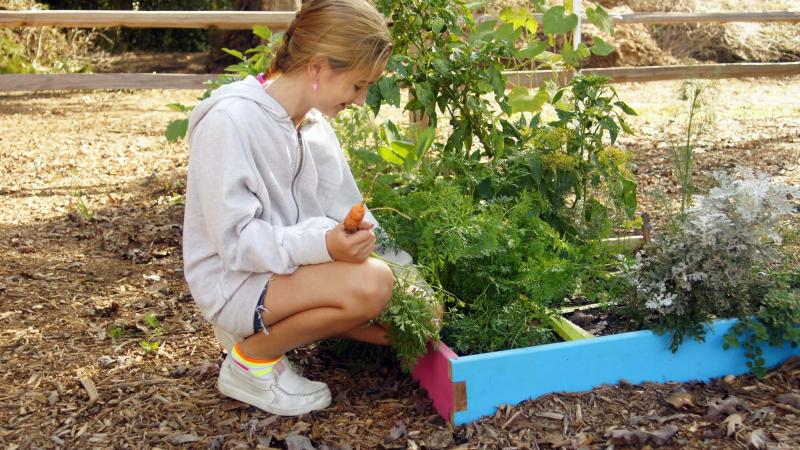
The myth of companion planting would have you believe that carrots must never be planted near herbs such as dill. You'll have better results if you forget than and focus on sustainable management practices instead.

Jack Scott
Linda Chalker-Scott will be in town later this month to bust more horticultural myths.
Suppose for a moment that your next-door neighbour grows exhibition-quality roses in her backyard and reveals to you one day that the secret to her success is the use of Epsom salts to boost magnesium levels in the soil. She suggests that you soak unplanted rose bushes in a solution of water and Epsom salts before planting, followed by the addition of a small amount of Epsom salts to the bottom of the planting hole at the time of planting.
Perhaps if you also know of another neighbour who regularly adds Epsom salts to the soil around his succulently flavoured tomatoes and who swears by this method, that should be proof enough of the clear benefits of Epsom salts. Or is it proof enough when one takes into consideration the variations between gardens that may exist in soil health, exposure, drainage patterns and landscape management practices?
Anecdotally, Epsom salts are said to be a safe alternative to chemical fertilizers. There are also claims made that Epsom salts (known as magnesium sulfate) can increase seed germination, promote healthier growth in a wide range of diverse plants, improve yield and bloom production by preventing magnesium deficiency in soil and control pests such as slugs.
In her award-winning, horticultural myth-busting book The Informed Gardener Blooms Again, author Linda Chalker-Scott makes the case for a critical assessment of products and practices, as well as old horticultural "wisdom."
Before automatically accepting anecdotal information, it’s important to resist emotional appeal and consider whether there is scientific evidence to support claims.
Two of the questions Chalker-Scott recommends we ask are, "Does the rationale behind the practice make sense given our current scientific understanding?" and "Does the practice actually have a significant effect?"
According to the Province of Manitoba’s Department of Agriculture Soil Management Guide, most of the agricultural soils in Manitoba are calcareous. Typically, adequate levels of calcium and magnesium, both essential nutrients for plant growth, are present in calcareous soils.
Although magnesium deficiency is a common problem in soils under intensive agricultural production, Chalker-Scott says backyard soils are less likely to have this problem. In addition, she says, magnesium deficiencies are more often identified in soils that are sandy or acidic or heavily leached by rainfall or irrigation. Soils in the Red River valley are mainly alkaline and clay-based.
A soil test will accurately diagnose whether or not there is a potential nutrient problem in your soil. Excessive potassium in the soil, for example, is a factor that can affect plant growth and interfere with root uptake of magnesium, Chalker-Scott says. A soil test is the best management strategy in order to determine a direct or indirect nutrient deficiency.
The indiscriminate application of Epsom salts, Chalker-Scott says, is ineffective at best. The potential for a harmful build-up of nutrients and the risk of plant injury and soil contamination is of even greater concern. The wiser approach, Chalker-Scott says, is to understand how your plant works and to create and maintain healthy soils through sustainable landscape management practices.
Chalker-Scott, an associate professor and extension urban horticulturist at Washington State University, is one of the Garden Professors who educate and entertain through their popular blog and Facebook pages. She is also the author of an online column, Horticultural Myths.
When addressing common myths, she applies the C.R.A.P. test to any claims not immediately substantiated by references to peer-reviewed science. An acronym for a list of criteria — Credibility, Relevance, Accuracy and Purpose — the C.R.A.P. test is a list of questions to help gardeners differentiate good advice from bad advice (adapted from criteria for evaluating information developed by librarians at California State University).
If a claim, for example, is based on informal observations and has no basis in scientific research, Chalker-Scott says in a recent phone interview, gardeners would do well to take off their rose-coloured glasses and get rid of preconceived ideas.
A whole industry has grown up around supplying companion planting guides that contain very little scientific evidence to support the numerous generalizations. Gardeners are advised to plant certain herbs, such as basil, near most garden crops to increase their flavour and productivity, but are cautioned against planting certain herbs such as dill near vegetables such as carrots.
In one popular planting guide by Mother Earth News, it’s recommended, for example, to plant marigolds near all garden crops to not only stimulate vegetable growth, but also to deter "bean beetles, aphids, potato bugs, squash bugs, nematodes and maggots".
Chalker-Scott says there is only one species of marigold — French marigold — that repels a certain type of soil-borne nematode that can damage crops. Can you plant the new Strawberry Blonde French marigold in your garden in May and expect results by June? It takes time before French marigolds have an effect in the immediate area of their root zone. Interspersing your entire garden with French marigolds may provide some level of control, but only in regards to one type of nematode, Chalker-Scott says. Unless you can be certain that your soil is plagued by one particular nematode, your French marigolds will have little impact other than their significant esthetic value.
When discussing the science behind plant interactions, Chalker-Scott prefers to focus on plant associations such as beneficial mycorrhizal relationships underground and intercropping systems, which she says are more definable and credible than the vague phrase "companion plants."
An excellent example is an intercropping system called "Three Sisters". Native Americans historically planted corn, beans and squash together. All three of these crops, Chalker-Scott says, tend to do better together than by themselves.
Through research, it was discovered that beans — members of the legume family — are nitrogen-fixers and supply this nutrient to the soil, which benefits nearby plants. Corn provides structure for beans to climb and provides shade to squash vines that, with their broad leaves, provide a living mulch to help keep the soil cool and moist. Because each of these three plant varieties has similar requirements for water and nutrients, they don’t compete with one another. These are distinct benefits of intercropping.
What’s important, Chalker-Scott says, is that these are things that are testable. By taking human bias as well as environmental variability out of the equation and doing a controlled test based on scientific principles, Chalker-Scott says, you can arrive at an objective determination.
Often we want to believe there is a silver bullet that will remedy our problems with pests or plants. There is no silver bullet, Chalker-Scott says, for plant health problems caused by factors such as poor soil, improper plant selection, and poor management practices.
On April 22 at 1 pm at the Fort Richmond Collegiate, 99 Killarney Ave., the Manitoba Master Gardener Association hosts a presentation by Chalker-Scott who will explain the science behind sustainable gardening practices. Learn what to avoid and how to be a better gardener. Tickets are $10. Visit mgmanitoba.com for more details.
Then on April 24 at 7 pm at the Mennonite Heritage Village, Steinbach and Area Garden Club presents A Gardener’s Dessert Evening with a presentation by Chalker-Scott who will explore gardening myths — the science behind what works, what doesn’t and why. For tickets or more details visit sagardenclub.com.
colleenizacharias@gmail.com