QUESTION: I was told you may be able to help me. If building a farmhouse, what are the electrical requirements for electrical receptacles in bedrooms? Are they required at all? If it is mandatory that they be installed in bedrooms, is there a minimum number or minimum distance per outlet?
If there are standards that state one must have receptacles, is it the same for every room even if there is no desire for such? I have only one desire and that is to use little electricity, thus the desire for limited receptacles.
Thank you for your time. Todd
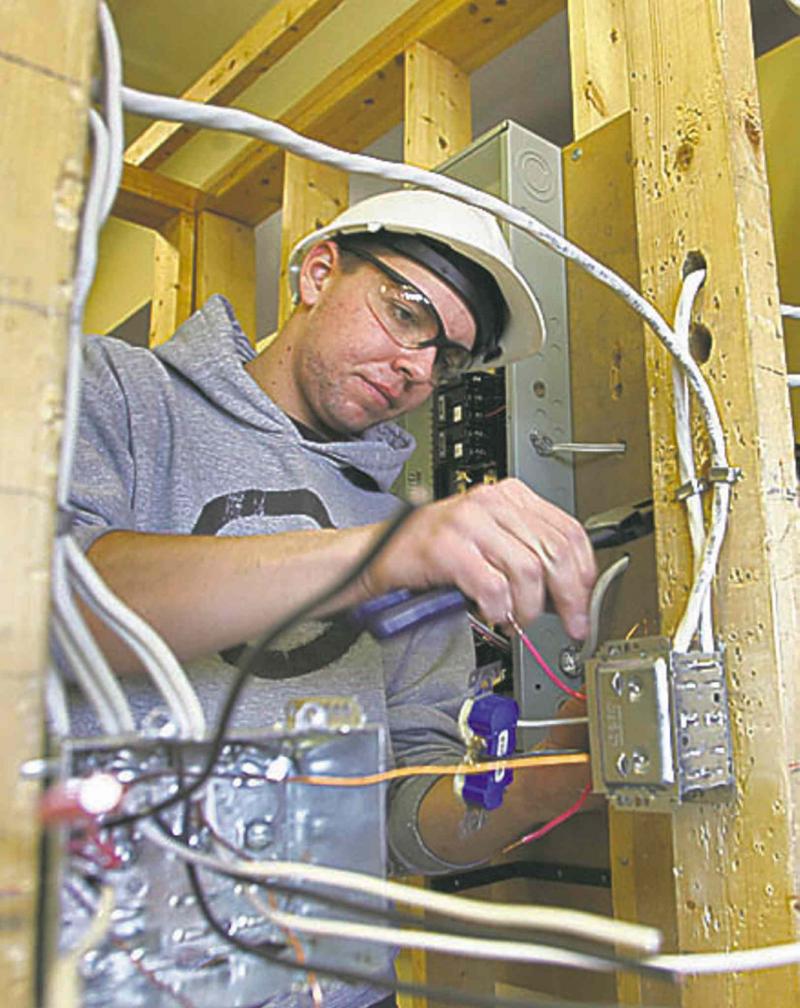
ANSWER: Whoever told you I may be able to help you may be correct, but not in the manner intended by your question. My recommendation is to consult professionals, namely architects, architectural technologists, professional engineers, licensed electricians or builders before making any further plans for construction of your house. While there may be aspects of a new home that fall under the do-it-yourself category, with no knowledge of building codes, planning electrical systems does not fall within your skill set.
Assuming you live in Canada, I am surprised you have not heard of a document called the National Building Code (NBC). This regularly amended set of guidelines is part of the model codes that provide provincial governments the tools to enforce specific rules and regulations for the construction and substantial renovation of buildings within their jurisdiction. These model codes are highly technical and presume users are knowledgeable in construction practices. The Canadian Commission on Building and Fire Codes oversees production of the model NBC, National Plumbing Code and National Fire Code. There are also model codes for electrical and gas, which are developed by organizations such as the Canadian Standards Association (CSA).
Model codes are not enforceable until they are adopted by a government authority within the appropriate jurisdiction. Provinces may adopt the NBC and other codes in their entirety or choose to amend, exempt or expand upon various aspects as they see fit. That allows for regional differences in climate and geography, but the majority of the codes are enforced with minimal changes in many jurisdictions. The codes apply to the major aspects of new building construction and substantial renovations and set out minimum requirements addressing safety, health, accessibility and building protection.
There are indeed specific standards within the electrical codes that are prescribed for the minimum number, location and type of electrical receptacles required for new buildings. There are different requirements for residential, industrial or commercial buildings, and exceptions for some types of farm buildings, but not farmhouses. As found on the Government of Canada website: "The National Farm Building Code of Canada (NFBC) provides relaxations of the requirements in the National Building Code (NBC) to address the particular needs of farm buildings. It applies to farm buildings of low human occupancy and contains minimum requirements on matters affecting human health, fire safety and structural sufficiency. All dwelling units on a farm, as well as farm buildings that do not qualify as a "low human occupancy" (i.e., an occupant load of not more than one person for each 40 square metres) must comply with the NBC or the applicable provincial code."
The previous information should answer your question, as a building with bedrooms will not fall under the low-human-occupancy category. The purpose of the farm codes is to allow buildings such as barns, sheds and other such buildings specific exemptions, not farmhouses. Any dwelling that people occupy for day-to-day living must comply with the applicable codes for health and safety. Adherence to the model codes is critical in preventing fires and risk of injury or death, particularly electrical codes. Improper electrical installations can be a major fire hazard, and inspections by the approved municipal building inspector or electrical utility are absolutely necessary in their prevention.
My question to you is how can installation of more electrical receptacles in bedrooms prevent electrical consumption? Installation of a larger service for a building, 200 amps as opposed to 100 amps, does not create added consumption of electricity, just the capacity for greater use. If you have a desire to use minimal electricity, then conservation is the key, not fewer places to plug in. Receptacles and household wiring use little or no power when nothing is plugged in or energized. Lights do not consume electricity when they are shut off, and the same would apply to most other appliances.
One of the main reasons there are requirements for a minimum number of duplex receptacles in various rooms is to prevent fire and safety hazards. If the receptacles are too far apart, as in many older homes, people have a tendency to overload individual units. Use of splitters to create "octopus" wiring or excessively long extension cords are a couple of common safety issues I see daily in homes with minimal receptacles. In some rooms, such as older kitchens, several appliances with high energy consumption may be plugged into the same circuit, potentially overloading wiring, fuses, or circuit-breakers. Ensuring enough duplex receptacles are installed in these areas will prevent these safety hazards.
I apologize if my answer to your questions has put a damper on your desire to minimize energy consumption in your proposed new house, but you have taken the wrong approach by trying to limit the number of receptacles. Building to current standards and codes will ensure safety of the occupants without compromising your desire for electrical energy conservation. Hiring professional designers and contractors to complete the plans and construction of your new farmhouse according to these codes should ensure it is safe and sound for your family.
Ari Marantz is the owner of Trained Eye Home Inspection Ltd. and president of the Canadian Association of Home & Property Inspectors-Manitoba (www.cahpi.mb.ca). Questions can be emailed to the address below. Ari can be reached at 204-291-5358, or check out his website at www.trainedeye.ca.
trainedeye@iname.com