Walters Gardens photo
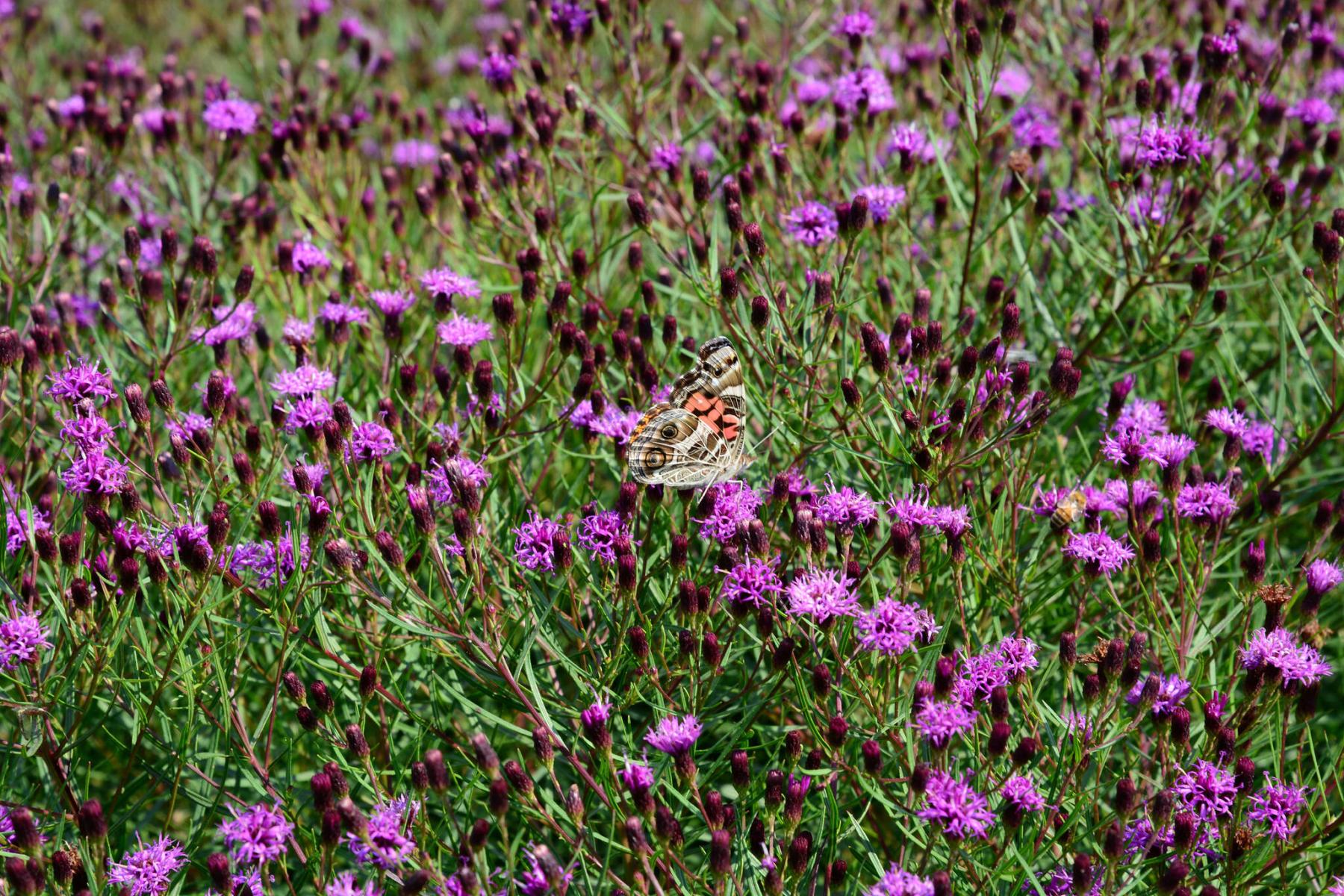
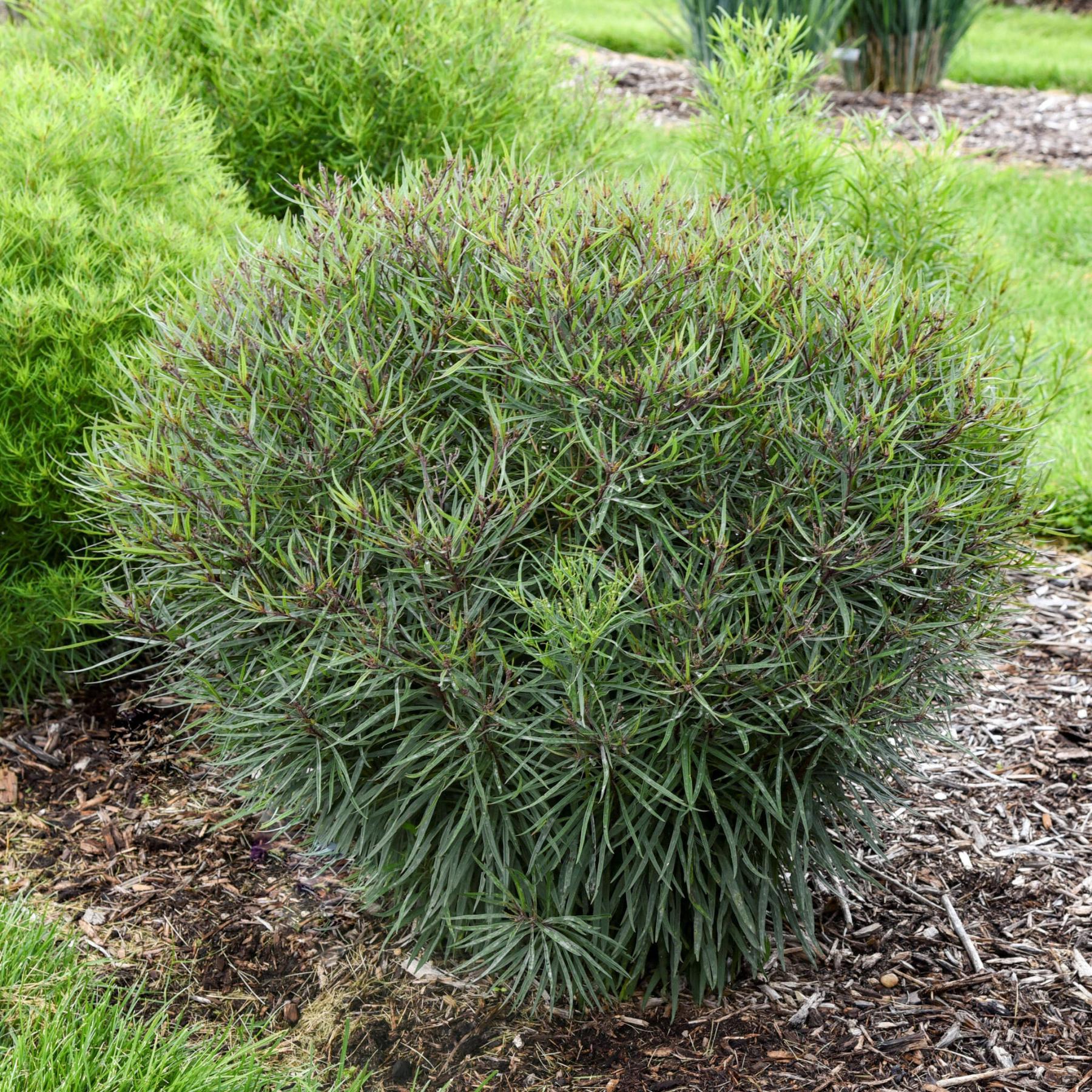
Vernonia Prairie Princess is one of many new ironweed introductions. It is hardy to Zone 4A.
Walters Gardens photo
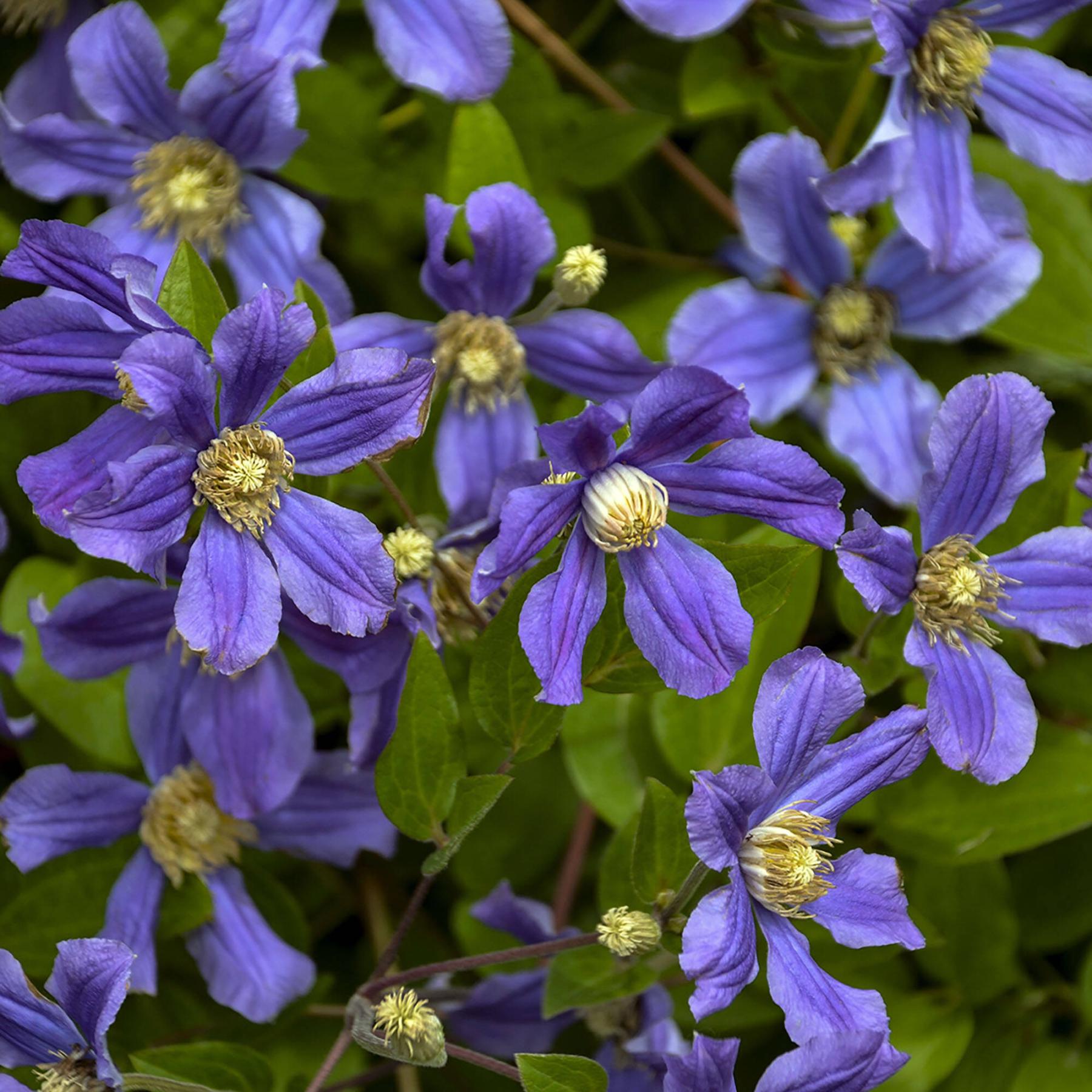
A shorter-growing clematis like Rain Dance is a good companion plant for Vernonia ironweed.
Lyndon Penner photo
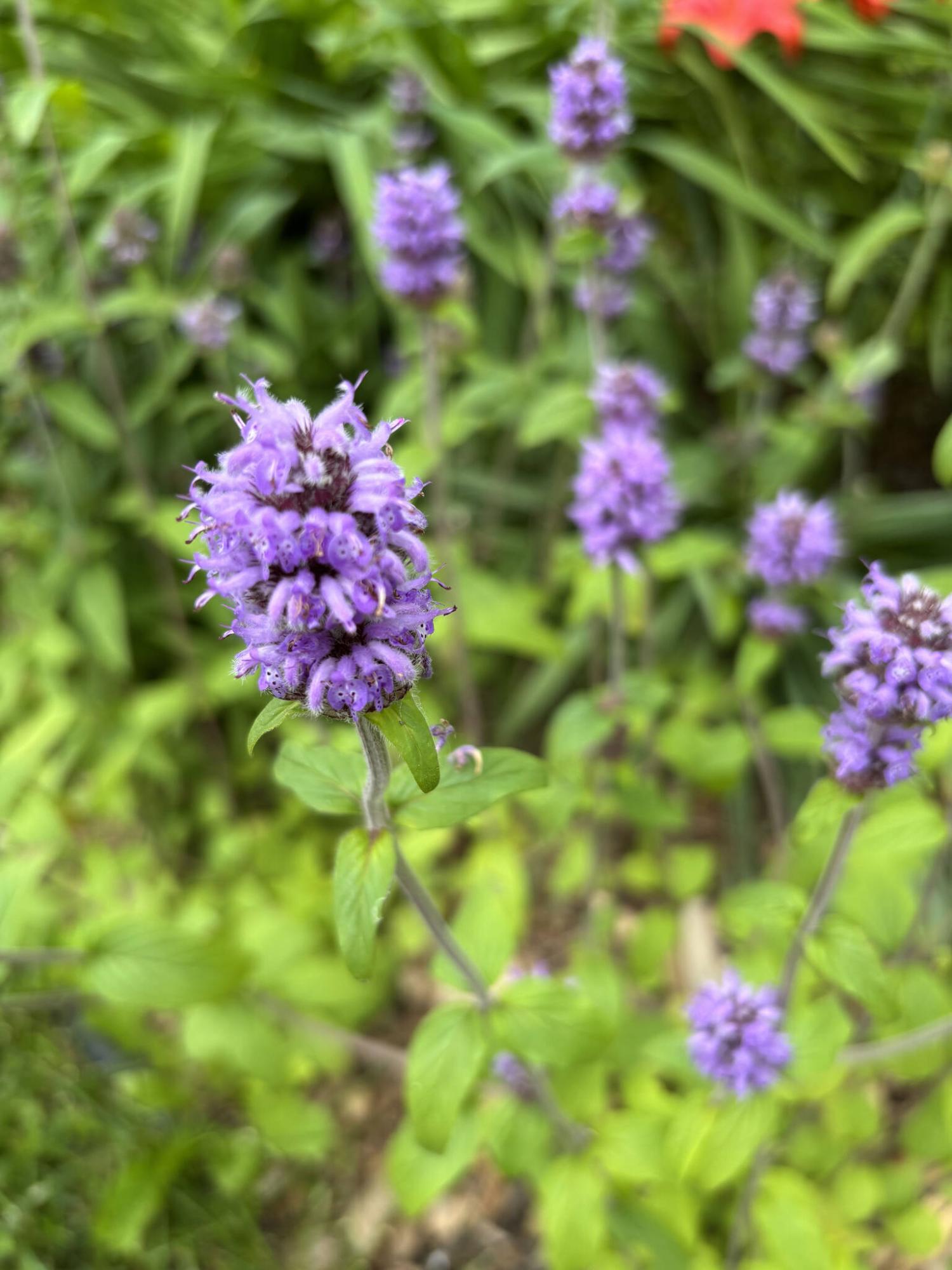
If Lyndon Penner had his wish, Downy Wood Mint would be selected as the perennial plant of the year someday.
There is a surge of interest in Vernonia, commonly known as ironweed, even though many gardeners are unfamiliar with this North American native perennial and even fewer grow it in their gardens.
The Perennial Plant Association has named Vernonia Summer’s Swan Song the 2027 Perennial Plant of the Year.
Vernonia is native across parts of the U.S. and Canada, including southern Manitoba where the species Vernonia fasciculata, commonly known as Prairie ironweed, inhabits areas with moist soils. In the wild, however, species of ironweed can be towering perennials exceeding heights of 1.8 metres.
In recent years, there has been an upsurge in breeding cultivars that are more compact and have stronger stems that won’t flop, as well as improved mildew resistance. However, the real fascination with Vernonia is its bloom period — early-September to mid-October. Vernonia is a proven magnet for butterflies and bees as well as a critical late-season food source. It’s another vital tool in the toolbox, if you will, for supporting late-season pollinators.
Summer’s Swan Song has a tidy habit that grows to 76-91 centimetres. It has distinctly narrow, olive-green foliage on sturdy, reddish stems with fluffy, rosy-purple flower clusters. Another new variety, Vernonia Prairie Princess ironweed, was introduced in 2026. Both are classified as hardy to Zone 4.
Lyndon Penner plans to grow both Summer’s Swan Song and Prairie Princess. He has already planted several Vernonia Prairie Princess plants which he was delighted to find at a Winnipeg garden centre recently.
Penner, an intrepid plant lover and author, lives at Clear Lake where the hardiness zone is 2B.
Late-summer colour
“There are so many species of Vernonia and so many variables in terms of climate, position (micro-environment) and location, I think you should consider most plants hardy until you’ve killed it personally,” says Penner. “If both varieties succeed, it will give me a frame of reference as to which one blooms earlier or is taller or has better winter interest. But if neither succeeds, I’m determined to find one that does. For late-summer colour, ironweed is really striking. I like plants that look great even in early-October.”
Vernonia Summer’s Swan Song originated as a cross between Vernonia lettermannii and Vernonia angustifolia created by Dr. Jim Ault at the Chicago Botanic Garden. “When I was in Chicago in late August, there was a serious amount of ironweed in bloom in the botanical and public gardens I visited,” says Penner. “It was absolutely gorgeous.”
Both Summer’s Swan Song and Prairie Princess are said to withstand wet and dry soils. They are also described as resistant to mildew, deer and rabbits.
“I have a suspicion that when new varieties are being marketed to the entire continent that drought-resistance means once a plant is fully established in the garden,” says Penner. “Mildew-resistance has a lot to do with the climate that you live in.”
Penner’s first experience with growing Vernonia was when a friend sent him New York ironweed seed from her garden. New York ironweed (Vernonia noveboracensis) has iron-like stems and a tall, narrow growth habit.
“I lived in Lethbridge at the time which is very windy. Those stems stood ramrod-straight all winter against Lethbridge’s high winds and high snowfall. The plant was fabulous. I’m always looking for plants that have winter interest and New York ironweed gave me that,” says Penner. But New York ironweed did not fare as well in southwestern Manitoba’s winter when he planted several seedlings.
The fine, dark olive-green foliage of Vernonia Summer’s Swan Song and that of Prairie Princess, as well as their distinct, mounded shape, will set them apart from other perennials in the garden. But that said, not a lot is happening in terms of visual interest when Vernonia is not in bloom.
Clematis as companion
“Some of the less-rampant clematis vines might be good companions for Summer’s Swan Song and Prairie Princess because there is a long season when they’re not in bloom,” says Penner.
Clematis flammula (virgin’s bower), Clematis herachleifolia or integrifolia or some of the bush clematis, like Rain Dance, that need some support but don’t climb very much would work well rambling or scrambling through ironweed.
“Both clematis and ironweed enjoy moist soil and some degree of fertility,” says Penner.
Any discussion of the latest selection for Perennial Plant of the Year inevitably turns to reviewing previous selections. Some have been hits, but others, not so much. Examining their success in southern Manitoba’s cold climate reveals how a previously unknown plant or one that appears to lack cold-hardiness can suddenly be in high-demand. Alternatively, a highly anticipated plant pick may disappear into obscurity.
Karl Foerster Feather Reed Grass is living proof a PPOY (2001) can turn out to be significantly more cold-hardy than initially stated. At the time, it was rated as hardy to Zone 5. Today it is one of the most popular and reliable ornamental grasses grown in Zone 3 — and even Zone 2 — gardens.
“Rudbeckia American Gold Rush, the 2023 PPOY, hasn’t exactly flown off the shelves,” says Penner. For Zone 3B gardeners, Rudbeckia Goldsturm is the more reliable choice.
“The 2025 selection, Pycnanethemum muticum, commonly known as Clustered Mountainmint, is almost as dull as Calamint (Calamintha nepeta subsp. nepeta), the 2021 PPOY,” says Penner. “The way I look at it, gardeners are the landlord. If a plant is taking up prime real estate but not contributing enough to warrant the space it’s given, out it goes.”
I won’t argue — I don’t plan to grow either of these and have yet to encounter them in a local garden.
Echinacea purpurea Magnus coneflower, however, the 1998 PPOY, remains a superb choice, says Penner. This classic coneflower can be relied upon to come back every spring. Is that why it’s so hard to find at garden centres?
Penner is a passionate fan of the 2010 PPOY, Baptisia australis Blue False Indigo. “There is so much to love about this perennial but Baptisia is a desperately underutilized genus,” he says. Blue False Indigo has stunning blue-purple, pea-like flowers and a robust, vase-shaped habit.
Penner says Penstemon digitalis Husker Red, 1996 PPOY, was wonderful. But note Penner’s use of the past tense. “It has deteriorated from its original form,” he says, “but was so fabulous back in the day and really did a lot to get people interested in growing Penstemon.”
If Penner could choose a plant he feels deserves the PPOY honour, it would be Downy Wood Mint. “It has a really unattractive Latin name — Blephilia ciliata — which sounds like a disease that could kill you,” he says. “But it is charming and pretty and blooms over a long period. Pollinators love it.”
Penner is optimistic about growing Vernonia and excited to make room for it in his garden.
How much the 2027 PPOY appeals to local gardeners and adapts to our growing conditions will determine its staying power.
colleenizacharias@gmail.com