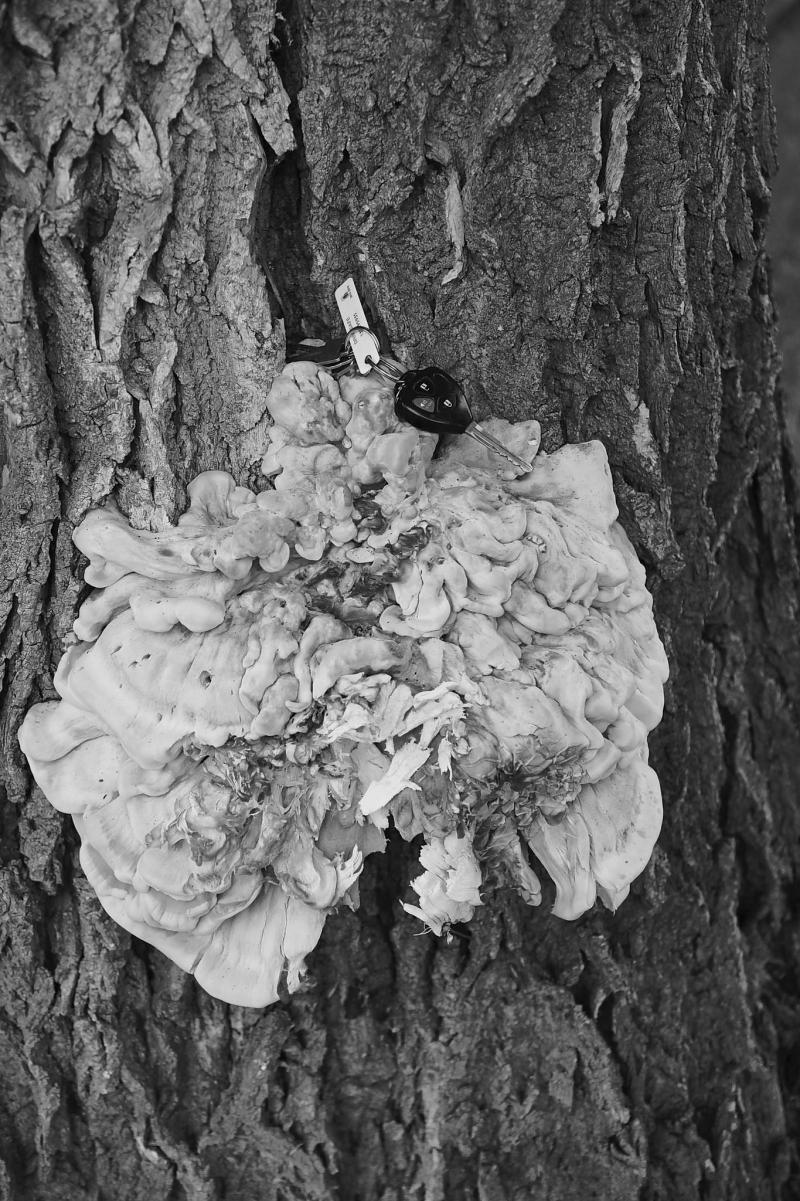
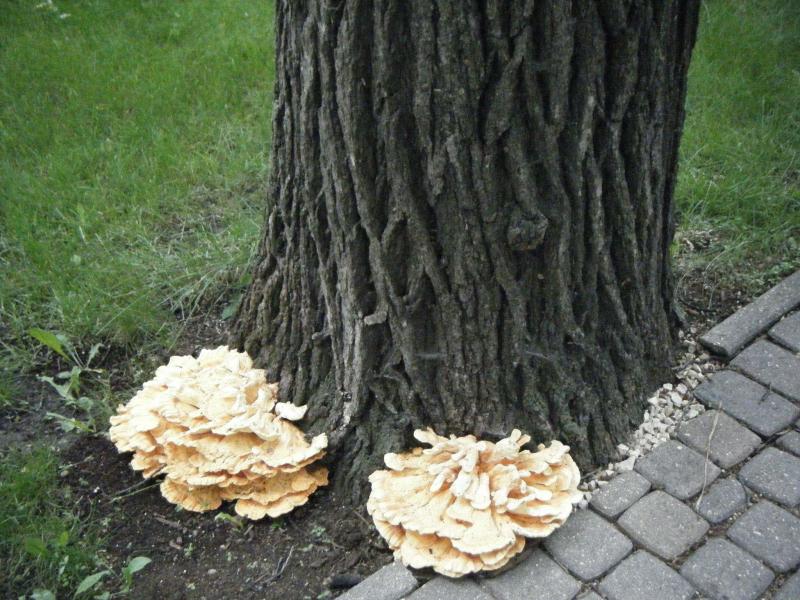
Laetiporus sulphureus is the scientific name for the mushroom, known as chicken of the woods, because it tastes like chicken when cooked.
This year, I have encountered an interesting mushroom that once you see it, you will never forget it. This mushroom is called "chicken of the woods."
Technically this is a fungal gall. The scientific name of this mushroom is called Laetiporus sulphureus.
The mushroom is commonly bright yellow in colour when it starts to develop later in spring and into the summer. The part of the Latin name of this mushroom — sulphureus — comes from its bright, sulphur yellow colour. Extended periods of high humidity favour the development of this mushroom. On occasion, the colours can be incredibly beautiful with red, orange and pale green blending in with the sulphur yellow colours.
The mushroom, as it matures, develops into the shape of a colourful ragged ball with noticeable "shelves." Most of the fungi that I normally encounter are parasitic diseases, in that they progressively kill the tree or shrub. Three of the most deadly tree diseases that are to date impossible to eradicate are Dutch elm disease on the American elm, Cytospora canker disease on Colorado blue spruce and fire blight disease on apple trees — all of these disease start from a fungus.
The chicken of the woods, however, is a fungus called a saprophyte, which normally thrives on dead or decaying organic matter. There are times when this fungus, under the right environmental conditions, can become a weak parasite subsisting on living wood cells feeding inside the tree. At that stage, it can produce a cubical brown rot disease that could ultimately kill the tree. From my research, this parasitic stage rarely occurs in Manitoba, but this past month I saw a prime example. This mushroom is usually stemless, unlike most edible variety of mushrooms. Sometimes a rudimentary or pseudo stem may be present, but it looks as if someone glued the mushroom on to the bark.
Usually this interesting mushroom is found on downed trees, especially near rivers and streams. On a number of occasions over the years, I usually encounter this amazingly coloured mushroom on trees growing in southern Manitoba, especially in the Winnipeg area in private yards. To date, I have only seen this mushroom grow on green ash and bur oak trees. On oak trees, I have only seen this mushroom grow out of a hole near the base of the tree adjacent to the ground. The largest-sized mushroom I’ve seen has been about 15 inches in diameter on a green ash tree. In all cases of my encounters with this mushroom, I have noticed that it initially grows out of, or very close to a slit or hole in the bark. The hole can be caused by squirrels, man, or by large birds such as woodpeckers or northern flickers.
Recently, I saw a large chicken of the woods mushroom growing near a hole that was initially drilled into both sides of a tree so that a galvanized threaded bolt could be placed in the tight-fitting hole. Galvanized nuts and washers held the bolt in place. The nuts, washers and bolt were inserted into the tree so that a nearby deep crack in the trunk could become stabilized. (This procedure does help the tree from splitting apart at the crack.) I suspected that the drilled hole — no longer visible except for a small area of the top of the bolt protruding from the tree — was a source of fungal infection by this mushroom. In the beginning stages, there is not much of a concern; but I do note where these trees are and try to revisit them in about 5 years to see if there has been any significant change to the growth appearance of the tree.
And here is an interesting factoid: young chicken of the woods mushrooms are known to be safe to eat and can be cooked. Some people, however, may be more sensitive to this mushroom than others and could get quite sick. Not surprisingly, the mushroom does have chicken in its name because to many people, it does taste like chicken when cooked. It is recommended though that you should not eat it raw and limit your selections to young mushrooms only. It has been reported that barbecuing older mushrooms can make them much safer to eat. The heat from the barbecue will kill bacteria that may have contaminated the mushrooms during the picking, handling and storage stages.
There are many strange features that suddenly appear on trees from time to time and the chicken of the woods fungus is one this tree diagnostician gets quite a kick out of. As quiet and steady as a tree may be, a tree can be visited by the strangest of visitors (be they animal or non-animal) over the course of its lifetime.
Michael Allen M.Sc.F., RPF (ret’d) is a consulting urban forester, tree diagnostician and certified arborist. He owns Viburnum Tree Experts. He makes house and garden visits, diagnoses problematic and hazardous trees. He can be reached at 204-831-6503 or 204-223-7709, or at viburnumtrees@shaw.ca. His website is treeexperts.mb.ca