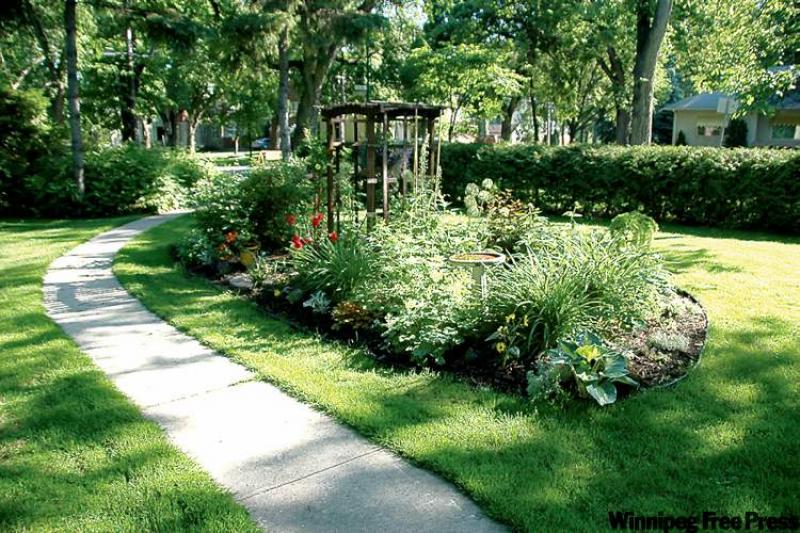
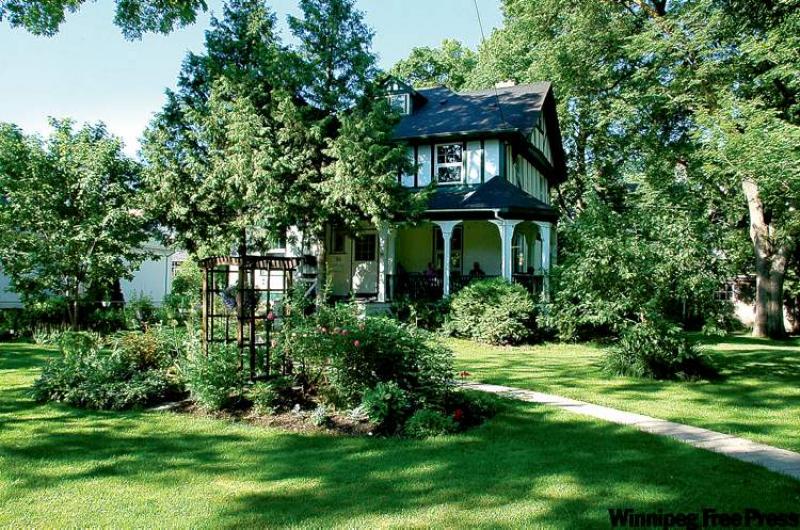
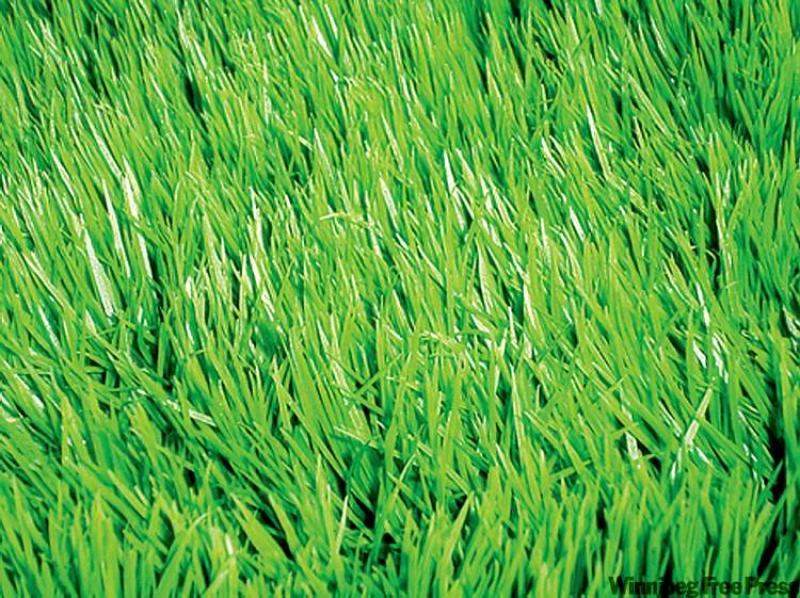
Every homeowner wants a showpiece lawn -- soft, thick, weed-free and green. But where do you start?
Begin in the spring with a thorough raking to remove as much thatch as possible. A specialized de-thatching rake is most effective. If the ground underneath is still frozen or very wet, you have started too early. Raking heavily too early in the season does more damage than good.
For an old or compacted lawn, use an aerator to core the lawn. Do not remove these plugs as they will break up naturally. Mix together two 110-litre bags of perlite, one 110-litre bag of vermiculite and two 3.8-cu.-ft. bags of peat moss to top-dress the lawn. This mix covers about 1,000 square feet.
By using this light, weed-free mixture, the lawn will become less compact and allow the sub-soil to hold more moisture, which results in less runoff when watering and less maintenance. Depending on lawn traffic, the mix should be applied once about every three years.
Grass seed can be applied at this time to help thicken a lawn. A fuller lawn is less susceptible to weed invasion, prevents the soil and nutrients from running off into the sewer system and holds more moisture. Grass seed used as a top dressing should be applied at a rate of two pounds per 1,000 square feet. To save a little work, you can mix grass seed directly into your top-dressing mix.
If you are not aerating, you can still top-dress your lawn. Lighten the mix by including only the vermiculite and peat moss.
Using a lawn roller at this point is recommended to ensure the grass seed is in good contact with the soil. Water the lawn immediately and keep it moist until the grass seed has germinated. This should take about one week for Ryegrass, two weeks for Creeping Red Fescue and three weeks for Kentucky Bluegrass.
A blended mixture of grass seed is normally recommended. The fast-germinating Ryegrass helps to prevent the slower-germinating and more desirable grasses from drying out. Better shade blends will contain about 60 per cent Creeping Red Fescue, while better sun blends will contain more than 60 per cent Kentucky Bluegrass. The best time to seed grass is early spring or early fall (late August and September) as the weather is usually more conducive to seed germination.
Low-maintenance, drought-resistant and reduced-mowing, watering and fertilizing grass-seed blends have received a lot of interest over the last several years. One of the better blends available contains Creeping Red Fescue, Sheep Fescue, Chewing Fescue and Hard Fescue. This blend performs best during the hot, dry days of July and August.
However, when added to an existing lawn, the benefits of these blends (a green lawn with little work) are often masked by the existing grass species. If this is not the direction you want to go, then the old lawn should be removed and a new lawn seeded.
The best weed control for a lawn is thick, healthy grass. But if your lawn has got away from you, there are a number of options available. Dandelions are best controlled in early spring (when the first yellow flowers start to appear) or early fall. Better control of weeds is achieved when they are actively growing. Clover and chickweed tend to be more of a problem in the heat of the summer.
Traditional chemical controls are still available to treat these problems, but care should be taken when applying them. It's best to spray early in the morning or later in the day when there's less wind. You should remain off the lawn until the product has dried, usually two or three hours.
Newer, iron-based organic weed-control products are also available to selectively control weeds in the lawn. Just a few cautions if using these: Since they contain iron, they will stain concrete if accidentally over-sprayed. And you will find it necessary to re-treat with these products.
Pre-emergent weed-control products containing corn gluten, like Turf Maize, are also available for use on the lawn in early spring or fall. In order for the bio weed 'n' feeds to be effective, moisture is required for activation and the application rate is critical to success. Applied at the proper rates, the corn gluten inhibits root development of weed seedlings, leading to the death of the plant.
Depending on the length of the growing season, fertilizing the lawn three to four times a season with a good-quality slow-release lawn fertilizer will lead to a healthy lawn. Nitrogen, the first number on the bag, is necessary for abundant leaf growth.
There are a number of products available, both organic and inorganic, liquid and dry. Generally, inorganic products like Turf Builder Pro (32-0-4), provide a higher percentage of nutrients than organic ones like Grassy Gold (9-0-0). Phosphorus, which is necessary for root development in the lawn, is restricted in its use in Manitoba. Unless soil testing indicates a deficiency, or you are working with a new lawn, products with two per cent or more of phosphorus are not to be used.
Your lawn's health is impacted by a number of different variables, which include quality of the soil bed, drainage, amount of irrigation, mowing height, age, grass type, competition and exposure. If you start with the basics of lawn care, a lush green lawn should result.
Ken Land is co-owner of St. Mary's Nursery.