Molly DeCoudreaux Photography
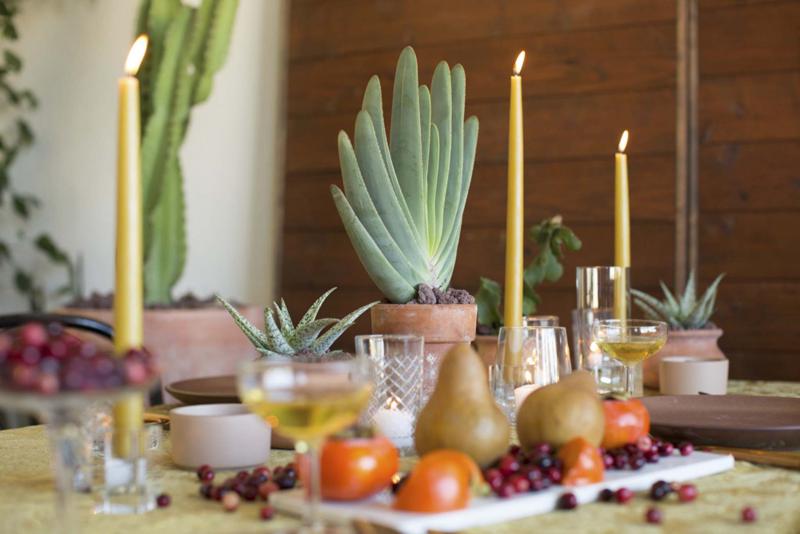
Accent your succulent display with Bosc pears, persimmons and fresh cranberries.
Verde Plant Design
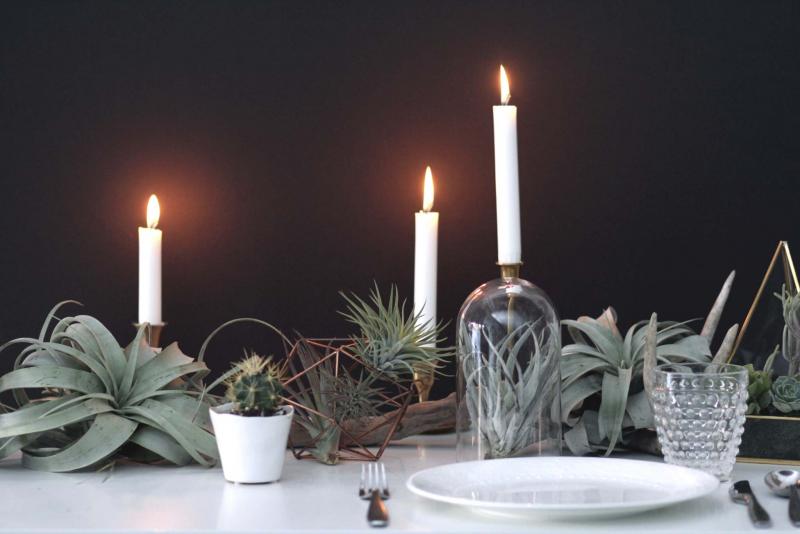
Xerographica’s curly ribbons of silver-green leaves are reminiscent of a lavish bow.
Verde Plant Design
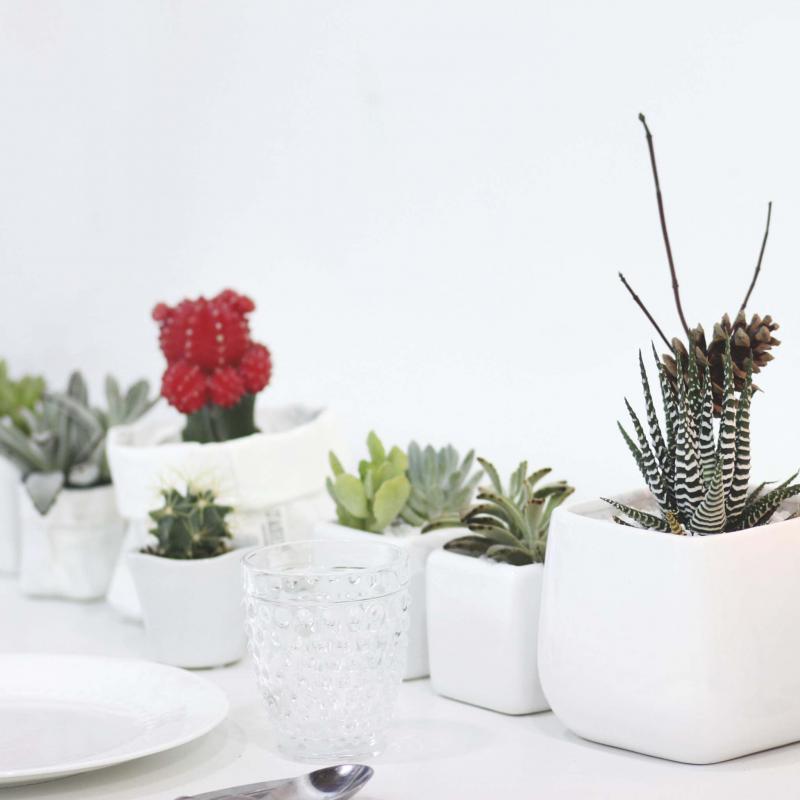
This minimalist cluster of succulents and cacti can be personalized with care cards for guests.
Our Farm Greenhouses
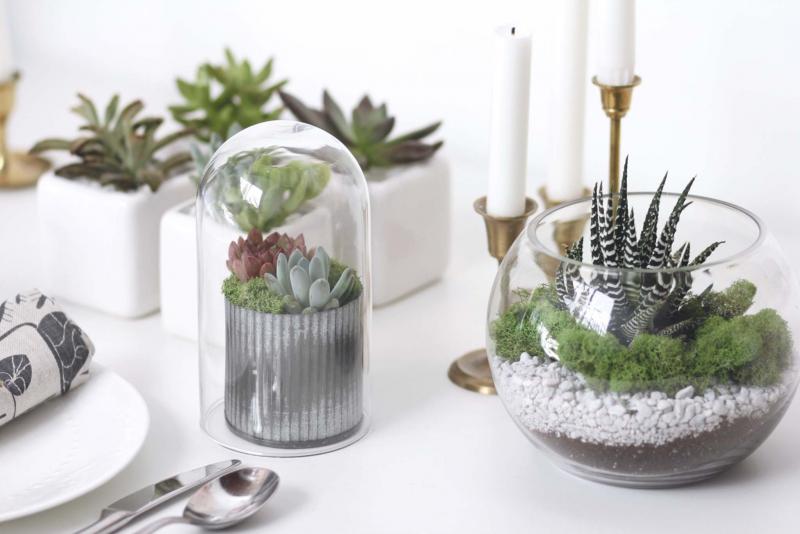
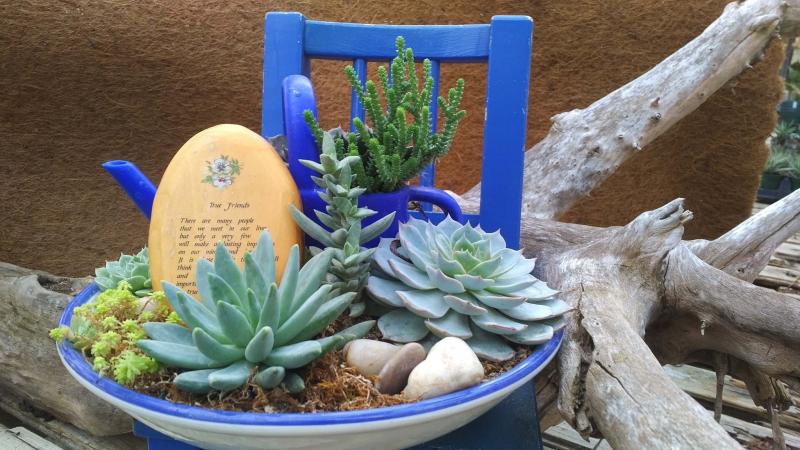
Princess pine and small red carpet crassula are accented by blue rose echeveria in this succulent dish.
The recipes and rituals of the holiday season are synonymous not only with anticipation, but also presentation. The appearance of the holiday dining table — from the centrepiece to small, personal touches at each place setting — is both an invitation and a gift to your guests.
Instead of a centre swath of traditional greenery with baubles and the like, why not decorate your table with a variety of succulents, tillandsia and cacti?
With their infinite textures and unusual shapes, these won’t simply be another seasonal short story that, sans their holiday adornments, gets tossed out with the wrapping paper. Rather, simply relocate these living plants to a sunny windowsill or desk and they will carry on happily into the New Year.
Achieving a beautiful arrangement with succulents, tillandsia and cacti doesn’t have to be difficult or expensive.
Today, Dominika Dratwa explains to us how to create a green feast for the eyes.
Dratwa owns Verde Plant Design (verdeterrariums.com), a plant and flower shop located at 419 Graham Ave. A graduate of the fine arts program at the University of Manitoba, her talents include photography and painting. Seduced, however, by the pleasures of plants and their infinite design possibilities, she now spends her time creating beautiful living arrangements and inspiring others through her successful workshops.
Succulents, tillandsia and cacti, says Dratwa, lend themselves well to a minimalist style. Cool, contemporary and versatile, they need little care and maintenance.
Tillandsias (which comprises a group of plants more commonly known as air plants) don’t require any soil. You can simply arrange your air plant on your table, or place it on a piece of driftwood or inside a glass terrarium or aerium.
A species of plant that belongs to the Bromeliad family, air plants are epiphytes. In their natural habitat, they attach themselves to a host plant, even rocks.
They absorb all their water and nutrients through their leaves.
Children are immediately fascinated by the unusual appearance of air plants and delight in picking them up for a closer look.
Xerographica (pronounced zero-grafika) is an exceptional tillandsia. All you need is one in the centre of your Christmas, Hanukkah or New Year’s table to make a statement. Display three or more, says Dratwa, and you have an engaging conversation starter.
Reminiscent of a lavish bow and substantial enough in size to double as a self-contained bouquet, xerographica is characterized by numerous ribbons of long, silvery-green leaves that curl naturally into a spherical shape.
In one arrangement, Dratwa, together with her daughter Zoë, combined an assortment of tillandsia varieties with pieces of driftwood and DIY geometric holders made from copper tubing. Glass cloches were used as a decorative touch to add another dimension.
Tillandsia is more tolerant of a humid environment than succulents, however, cloches should be used for only a short duration.
For her small, table-top glass terrariums, Dratwa layers a base of specially prepared succulent and cacti potting mix with white pebble stones and reindeer moss.
If the terrarium will be home to tropicals that prefer a moist environment, Dratwa includes a layer of activated charcoal, but says it isn’t necessary to do so for succulents.
She also likes to add decorative elements such as amethyst quartz, glass pebbles or seashells. Dratwa stocks numerous varieties of tillandsia, cacti and succulents at her shop, sourcing them from Our Farm Greenhouses in Portage la Prairie. Ionantha fuego, also known as the sky plant, is a favourite tillandsia. At only two to five centimetres tall and with silvery green leaves, it takes on a blushing cherry red colour during its bloom cycle.
Dratwa also likes low-growing crassula. Some varieties have propeller-like leaves in bright green with brilliant red tips. There are also crassula varieties with triangular-shaped leaves, stacked one upon the other.
Haworthia, with its stiffly pointed dark-green foliage and random cream-coloured spots is a clear favourite and finds its way into many different interpretations of the succulent centrepiece. In one example, Dratwa combined haworthia with a single pine cone and slender stems of dogwood in a small, white cube-like container, adding a top layer of polished white pebbles for a clean look. Using a series of white cubes, she filled each with a variety of succulents including panda plant or kalanchoe tomentosa nigrum, which has velvety, grey-green foliage with stitch-like brown edging.
Each cube stands only eight cm tall. Dratwa tucks in a care card that includes space for a personalized note if you want to send your guests home with a small gift. Dratwa suggests moving the pieces around to give your display a different feel depending on your aesthetic style and the occasion. Cluster your plants and other elements close together, says Dratwa, in groups of three or five or seven. Use reindeer moss for a pop of vibrant green colour. As a small gesture or party favour for your guests, you can tie a bit of twine around a cloth serviette and tuck in a tillandsia, Dratwa says.
Dratwa likes a minimalist design and uses containers and other decorative elements that are neutral — such as wood and glass — so they can be used with any type of decor. "Easy, inexpensive, versatile and noncommittal," she adds. A unique concept, indeed, at this most frenzied time of year. Need more colour? Add a tray or low bowl of bronze-skinned Bosc pears and yellowy-orange persimmons loosely arranged with a scattering of fresh cranberries and an assortment of in-shell mixed nuts.
Shea Doherty, manager of Our Farm Greenhouses, says he is carrying more and more tillandsia in order to meet growing demand. The sky plant is also one of his favourite varieties, which he says has terrific ornamental appeal. One of the most popular varieties of jade plants, or crassula, is small red carpet. Doherty also recommends crassula ovata dollar tree and crassula ovata ‘Hummel’s Sunset.’ During the holiday season, Doherty likes to use princess pine, a crassula variety that resembles a miniature pine tree with its tiny leaves and spreading branches.
Echeveria, of course, with its colourful rosettes in countless colour combinations — including blue-green, purple-blue, metallic or hot pink, to name a few — is endlessly popular in everything from centrepieces to wedding bouquets. For the holidays, Doherty suggests potting up a single echeveria in a vintage china teacup and placing one at each place setting on your dining table. For a centrepiece, Doherty likes to combine Blue Rose echeveria with princess pine and small red carpet crassula.
Miniature cactus varieties to look for include moon cactus, a grafted cactus in vivid, almost neon colours, and old man cactus (cephalocereus senilis). Covered in silvery-white billows of cotton-candy-like hair, prickly old man cactus will surprise and delight your guests.
Although incredibly low-maintenance, tillandsia, succulents and cacti need water to live. Water tillandsia once a week. A 10-minute soak in room-temperature water once every seven to 10 days is all that is needed. The occasional misting promotes deeper colouration. Water cacti and succulents deeply about once every three weeks. Dratwa fills a measuring cup with approximately 177 milllilitres of water. Allow the soil to completely dry before the next watering. Dratwa suggests using a turkey baster when watering plants inside a terrarium or small container.
colleenizacharias@gmail.com