The weather is getting warmer, you're getting outside again and you're noticing that old wooden privacy fence in the backyard has sagged, leaned and the posts have heaved. The only real question isn't whether to replace it, but which way it's going to fall during the next windstorm -- your yard, or the yard next door. This is the perfect time to get together with your neighbours and start talking about what your options are.
That's always the first step when thinking about a boundary fence: Talk to your neighbours who share the property line and find out what they'd like to do -- not only in terms of possible cost-sharing, but in terms of what style they'd prefer and how much privacy they also want.
The next step is to make sure you understand where the property boundary lies and what the local bylaws are that dictate where you can put that fence. Putting it back where it was isn't necessarily the right thing to do: It might have been wrong in the first place, a problem that might come to light in the future when it comes time to sell.
Check your survey and call the local municipal government. You need to know about setbacks and easements that might be on your property, as well as whatever bylaws might control your fence's height and what it looks like. And call before you dig; you can sever video cables or even break a gas line if they haven't been marked.
Then consider the relationship you have with your neighbours. If you don't have peace and harmony, a fence built like the Berlin Wall is probably what you really want. (Keep in mind the maximum fence height bylaws in your municipality might affect your plans to create an impenetrable fortress in your backyard... And no, an electric fence is not an option.)
On the other hand, if you have a neighbourly coexistence with the people over the fence, that's great. Get together over hamburgers and beers and discuss the possibility of rebuilding something that allows you to have a backyard that isn't a walled compound. That way, all those over-the-fence conversations where you only see the tops of each other's heads can be a thing of the past.
Replacing that six-foot-high, pressure-treated wood fence with another one just like it is an option, for sure. But times have changed since that old fence was put up 15 or 20 years ago, and maybe another kind of fence would be more suitable now.
In general, wooden fences have their drawbacks: They are costly, need ongoing maintenance, have environmental considerations and become termite highways if you're in an affected region.
High fences also prevent anything planted directly on their north side getting direct sunlight. So why do we bother building these six-foot-high barriers around our properties? The answer is always maximum privacy. But you can achieve privacy without constructing privacy fences around the entire backyard. You just need to think out of the box.
Where privacy is essential, such as a patio eating area or a hot tub, by all means knock yourself out with as much solid wood fencing as you need to get the job done. You might be surprised to find you really only need 10 to 15 linear feet to block your neighbours' view. (And, by the way, it goes the other way too: Your neighbours may not want to accidentally see you in your swimsuit, either!)
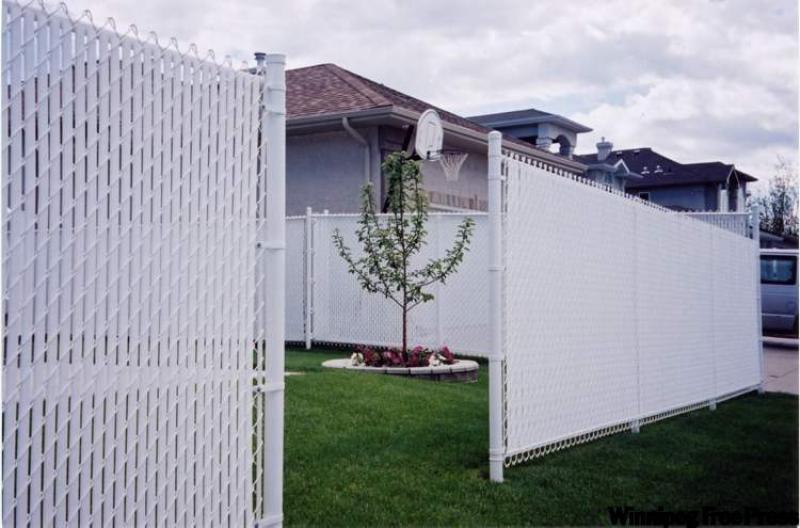
Further along the property line and around the rest of the backyard, you can change the type of fencing to something more practical and even shorter in height. Instead of 6.5 feet, you can go down to four feet high and still have a secure and legal enclosure for pets and kids. There are lots of different metal fence systems that eliminate the problems with wood fences, but their only drawback is you can still see through them.
By planting hedges and bushes strategically around the yard, you can create an effective natural privacy barrier, blocking the direct line of sight from your patio area to the neighbours' windows and patio.
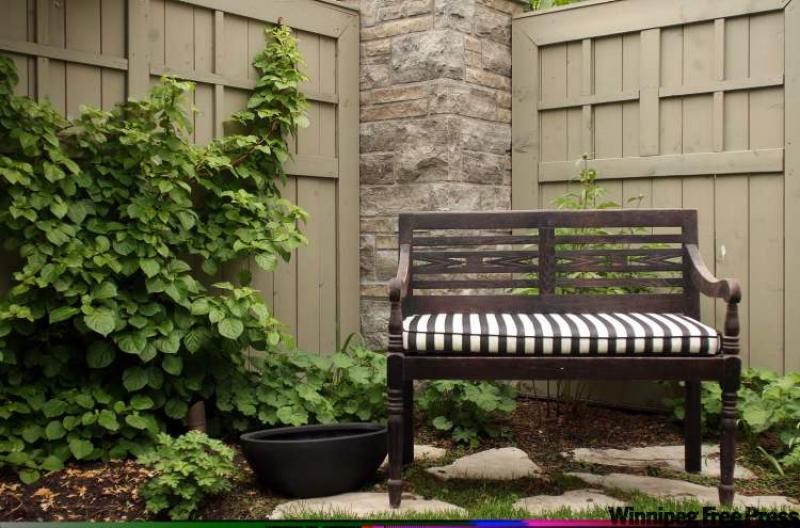
Another strategic privacy option is to build stand-alone lattice screens. I recommend using six-by-six posts so they resist twisting and warping and, because they are free-standing, they need to be anchored solidly with concrete and dug three feet (.9 metre) in the ground. These screens make nice garden features and are a perfect place to grow vines, which add extra seasonal privacy.
Privacy doesn't have to mean a high fenced compound. If you're creative and include your neighbours in the planning, you might just come up with something better than that old wooden fence.
-- Canwest News Service
Catch Mike in his brand-new series, Holmes Inspection, airing Thursdays at 8 ET/PT on HGTV. For more information, visit www.hgtv.ca.
Do you have a question about home renovations? Email mikemakeitright.ca.